
Last updated November 16, 2026
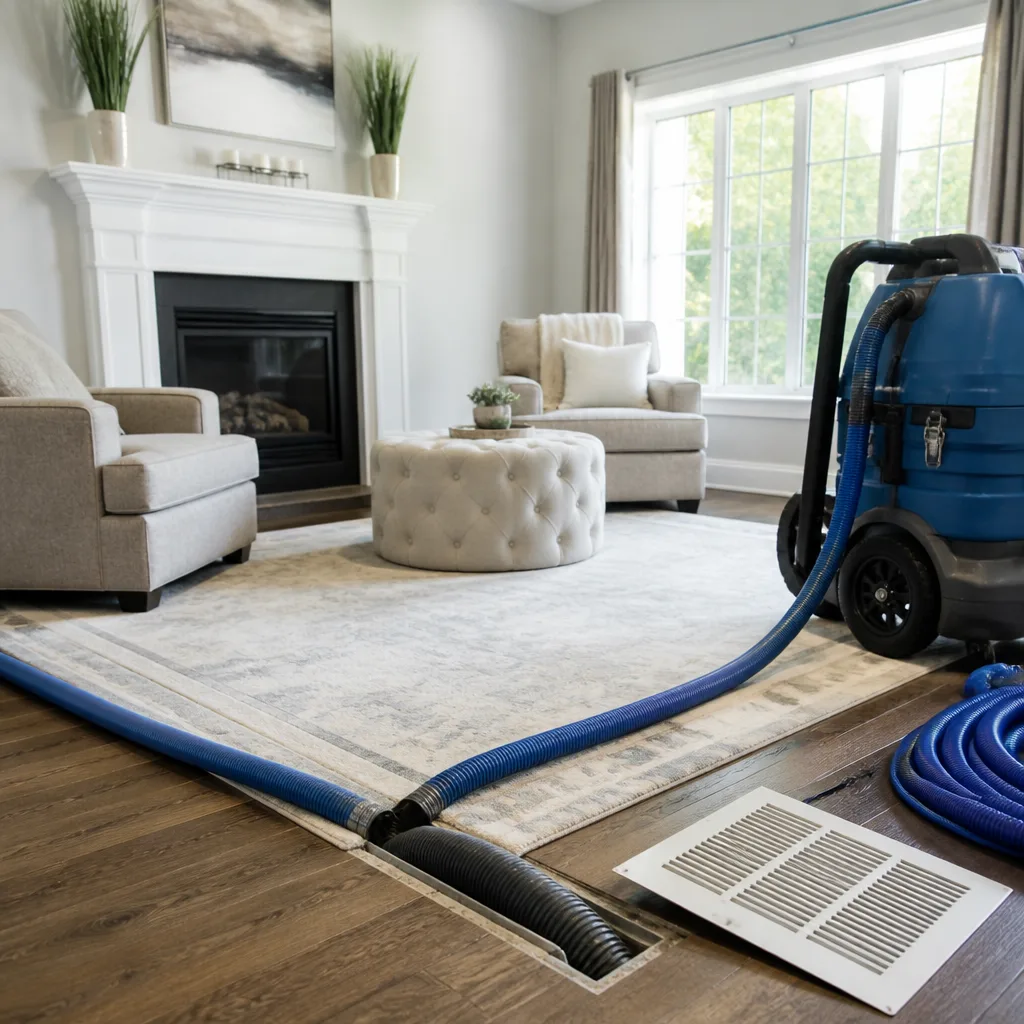 Whole-home duct cleaning
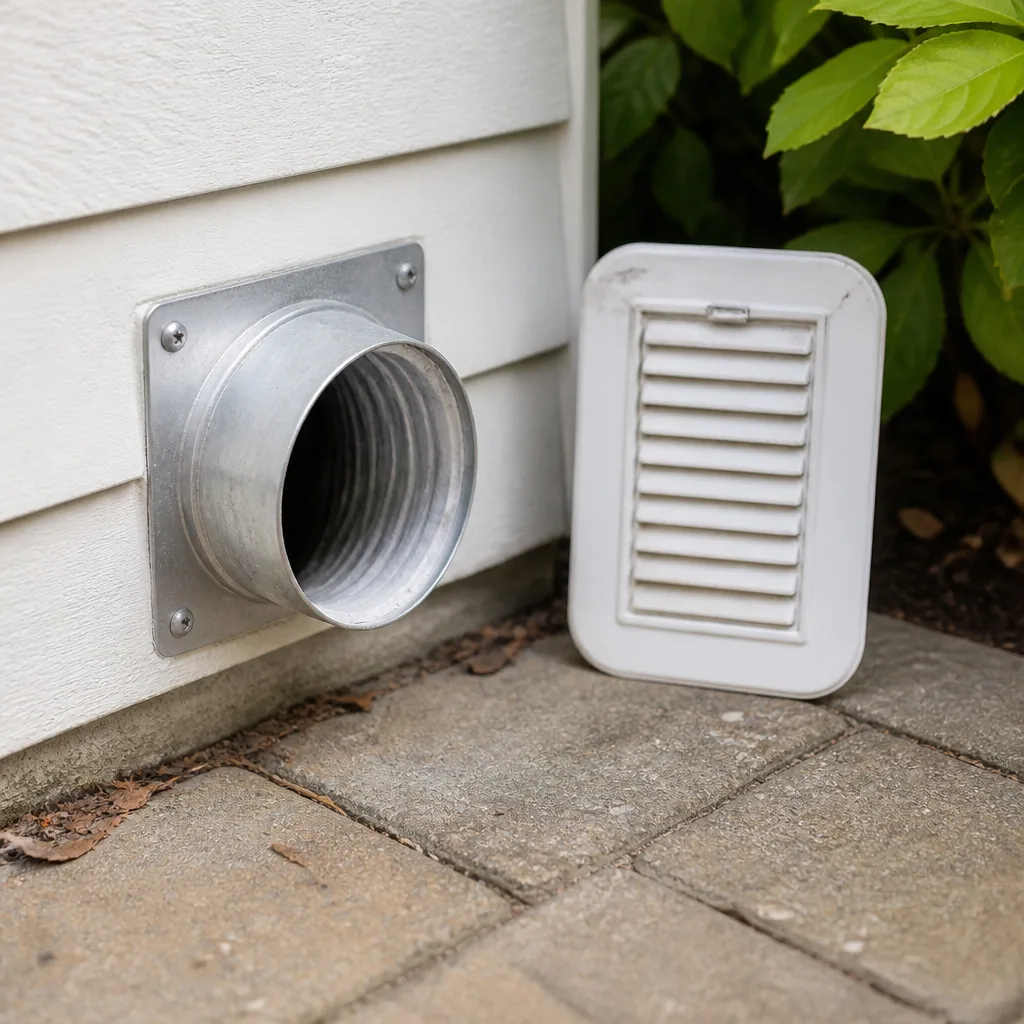 Dryer vent cleaning
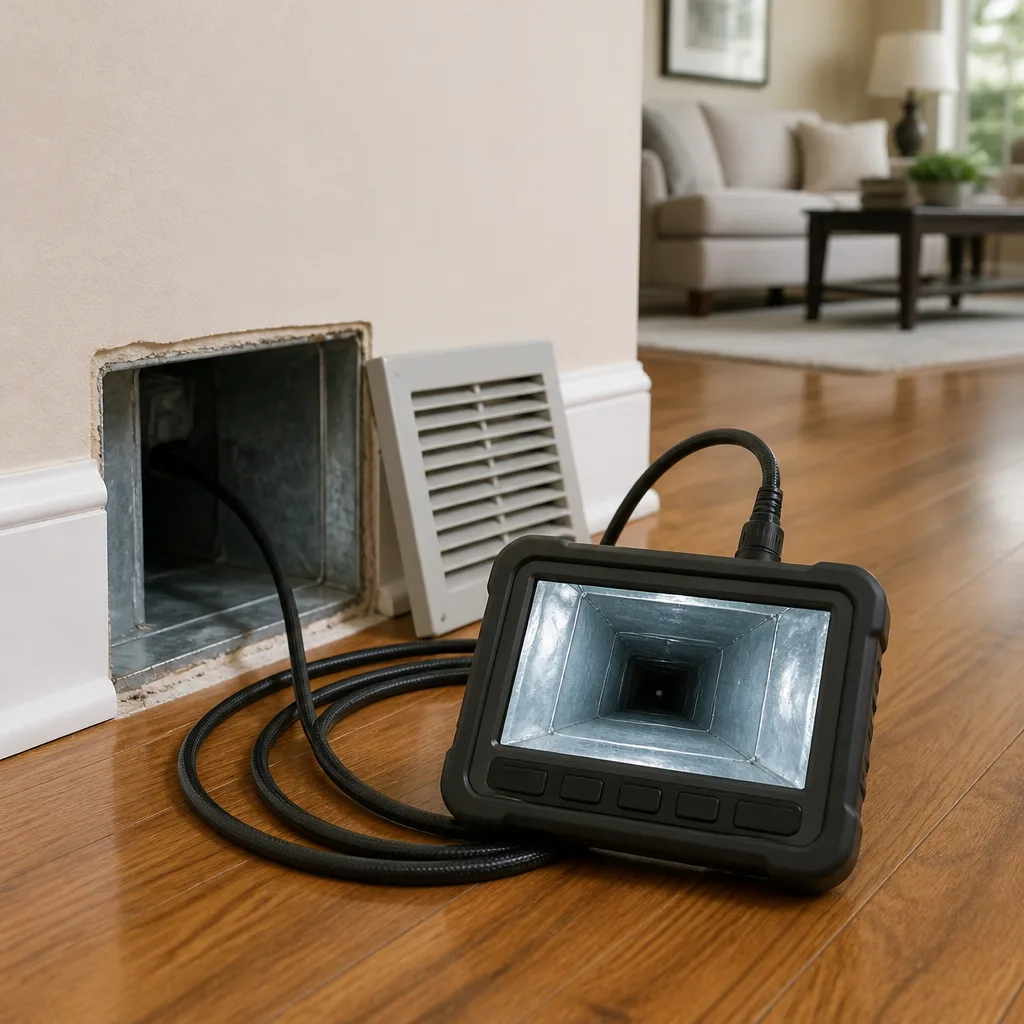 Camera inspection
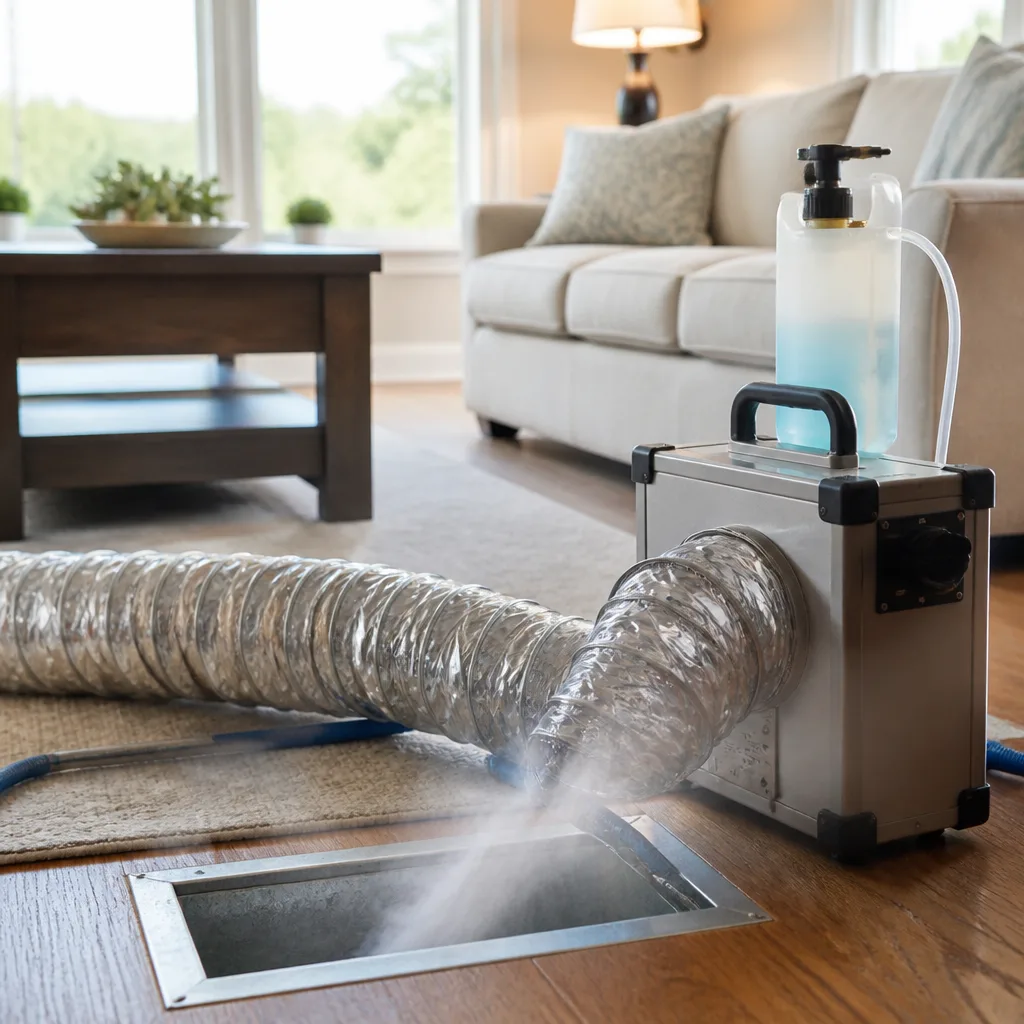 Sanitizing & deodorizing
Whole-system duct and dryer vent check with before-and-after photos - you see exactly what came out of your vents
That "$99 whole-house special" is a bait ad - the real number appears once they are in your hallway, or the "clean" is a shop-vac at the register. We photograph the inside of your ducts before and after instead.
DIY vs Professional Air Duct Cleaning: The Fayetteville Homeowner’s Decision Guide
A shop vac pulls roughly 60 to 80 cubic feet per minute of air. A professional truck-mounted extraction system pulls 3,000 to 5,000 CFM. That gap isn’t something you close with a better vacuum from the hardware store. It’s a threshold, and below it you’re moving dust around inside the duct rather than removing it. Most DIY guides skip that number entirely, then hand you a brush and a hose and wish you luck. This guide covers what consumer equipment can honestly accomplish, where DIY turns harmful, how Fayetteville’s housing stock changes the risk, and what a legitimate professional cleaning actually involves. By the end you’ll know which tasks are safe to take on and which ones you should hand off.
Quick Answer
Consumer equipment cannot generate the airflow or negative pressure needed to extract debris from a duct run, so DIY cleaning works for surface-level tasks like register and grille washing but not for the ducts themselves. For homes with flex duct, allergies, pets, recent renovations, or any sign of moisture, professional cleaning with HEPA-rated extraction and containment is the safer and more effective choice. If you want the short version: clean the parts you can reach, and bring in a professional for the parts you can’t see.
Styles & brands we work with
- Whole-home duct cleaning
- Dryer vent cleaning
- Camera inspection
- Sanitizing & deodorizing
Table of Contents
- Why Airflow and Negative Pressure Decide This Question
- What DIY Cleaning Can Legitimately Accomplish
- Fayetteville’s Flex Duct and the Damage DIY Can Cause
- When DIY Goes From Ineffective to Actively Harmful
- The Honest Cost-Benefit Math
- What a Professional Cleaning Actually Involves
- Questions to Ask Before You Hire Anyone in Fayetteville
Why Airflow and Negative Pressure Decide This Question
Duct cleaning is an extraction problem, not a sweeping problem. Debris settles against duct walls, in elbows, at transitions, and along the bottom of runs. To remove it you have to loosen it and then pull it out of the system entirely while keeping it contained. That means two things happening at once: mechanical agitation from a rotary brush or air whip, and enough negative pressure to carry the loosened material out without letting it escape into the room.
The airflow figures matter because extraction isn’t linear. A consumer vacuum rated at 70 CFM isn’t a lighter version of a professional system pulling 4,000 CFM. It’s a fundamentally different category of tool. At low airflow, a spinning brush inside a five-inch flex run knocks particles loose and they settle again a few feet downstream. Some of it leaks out through the register into the room. You’ve agitated contamination, not removed it.
Professional extraction systems generate enough negative pressure to evacuate a duct run under suction, and they pair that suction with HEPA filtration so the material captured doesn’t blow back into the living space. The equipment we use, including a Rotobrush rotary brush system and Nikro HEPA vacuum equipment, is built around that combination: agitate, contain, extract, filter. That’s the craft, and it’s why the tools resemble restoration gear more than residential cleaning gear.
Here’s the practical consequence for a Fayetteville homeowner:
- Consumer shop vacs: roughly 60 to 80 CFM. Enough to pick up a spill. Not enough to evacuate a duct run against back pressure.
- Consumer “duct cleaning kits” sold online: typically a brush on a flexible rod attached to that same shop vac. Same airflow ceiling, plus a real risk of damaging flex duct lining.
- Professional portable systems: higher airflow and proper filtration, suited to short runs and tight spaces.
- Professional truck-mounted extraction: roughly 3,000 to 5,000 CFM with HEPA filtration. Built to pull the whole run under negative pressure.
The short version: any tool you can buy at a retail store meets the first requirement (agitation) and fails the second (extraction). That’s the whole argument, and everything else in this guide is a consequence of it.
What DIY Cleaning Can Legitimately Accomplish
Registers, return grilles, and dryer vents are three tasks a careful homeowner can handle. They sit at the surface of the system and don’t require pressure you can’t generate. Done right, they actually improve how the system runs and reduce the load on a professional cleaning later on. Done wrong, they push debris deeper into the system, and that’s the part worth getting right.
Step one: register and grille cleaning
- Turn the HVAC system off at the thermostat so the blower doesn’t run while you’re working at the register.
- Remove the register covers. Most are held by two screws; supply registers in Fayetteville homes often sit in the drywall rather than the subfloor, so lift the cover out rather than prying.
- Wash the covers in a sink with warm water and a mild degreaser. Kitchen and nearby registers collect a fine greasy film that attracts new dust.
- Vacuum the boot opening behind the register with a brush attachment. Don’t insert a nozzle into the duct itself.
- Let the covers dry fully before reinstalling. A damp register brings moisture to the duct face.
Step two: return grille cleaning
Return grilles pull air back into the system and collect more dust than supply registers. Vacuum the face with a soft brush attachment, then wipe the grille slats with a damp cloth. If your filter sits right behind the return grille, replace it at this point, and check the filter direction arrow matches the airflow direction (toward the blower). A filter installed backward reduces airflow and stresses the blower.
Step three: dryer vent brushing
Your dryer vent is a fire risk, and surface brushing is a legitimate homeowner task. Disconnect the dryer, brush the short run between the dryer and the wall using a flexible dryer vent brush, and vacuum what comes loose. What you can’t do from the outside is clear a long vent run that climbs or elbows through a wall, and that’s the stretch most likely to hold lint. That’s where a dedicated dryer vent cleaning visit belongs, and it should be treated as its own service rather than a tack-on at the end of a duct cleaning.
What none of these three tasks does is remove the debris sitting inside the duct runs themselves. That’s where the equipment threshold kicks back in.
Fayetteville’s Flex Duct and the Damage DIY Can Cause
A lot of residential construction in Fayetteville uses flex duct rather than rigid metal. It’s cheap, fast to install, and it runs from the plenum through the attic and crawlspace to the boots at each register. It’s also the least forgiving duct type to clean badly. Flex duct has a thin plastic inner liner under insulation, and that liner is what a rough DIY attempt damages first.
Three specific failure modes we see or hear about:
- Puncture. A brush pushed through a bend too fast pokes the liner. Once the liner is punctured, air leaks into the attic or crawlspace instead of the room, and the leak pulls attic air into the system.
- Liner disturbance. The inner liner can peel away from the outer jacket when it’s scrubbed with a stiff brush. Loose liner creates turbulence inside the duct and becomes a dust trap. It also can’t be cleaned effectively once it’s loose.
- Connection failure at the boot. The boot is the transition where flex duct attaches to the floor or wall register. All that brushing force has to go somewhere, and on a flex run that’s usually the duct strap, the mastic seal, or the boot collar. Pull it loose and you’ve got a duct blowing into a wall cavity.
Fayetteville’s hot, humid summers make this worse. Flex duct in a hot attic or a damp crawlspace already sees condensation on the exterior jacket during the cooling season, and a compromised liner gives that moisture a path into the duct interior. Once moisture is inside a flex run, dust and any organic material start to clump, and the surface becomes harder to clean later on. Central North Carolina’s humidity also drives homeowners to run the system harder, which means more airflow moving through those same runs.
None of this means flex duct is bad. It means the work has to match the material: controlled agitation, adjustable suction, and a technician who can feel through the tool where the liner is and isn’t safe. A rotary brush operated by a trained hand at controlled speed is doing a different job than a drill-mounted brush on a flexible rod. That’s the difference that shows up in air duct cleaning work done right versus done fast.
When DIY Goes From Ineffective to Actively Harmful
There are specific situations where a homeowner attempt isn’t just a waste of a Saturday. It moves the problem from one place to another, and the second place is worse. Four situations stand out:
Post-mold situations
If you’ve had a moisture event, a visible leak, or a strange musty smell that traces back to the ductwork, that scenario needs containment, not agitation. A spinning brush on the end of a shop vac, inside a system with existing mold growth, aerosolizes spores and pushes them further through the house. Proper containment means HEPA filtration plus negative pressure established before the agitation starts. If you suspect moisture, mold, or a wet interior liner, stop, and get an inspection before anything spins.
Post-renovation debris
Drywall dust, sawdust, insulation fibers, and construction grit are the heaviest and most abrasive contaminants a residential duct system sees. They don’t lift with 70 CFM. They sit in the runs and elbows and get carried back into the living space any time the blower runs. Construction debris also clogs the filter quickly and stresses the blower. If you’ve just finished a renovation in your Fayetteville home, that’s the moment for professional extraction, not a surface clean. Containment matters here too, because there’s no point pulling the debris out if it blows into the room instead of the collection drum.
Damaged internal liner
Loose, peeling, or damaged liner inside a duct run is a genuine stop sign. Agitating it without containment spreads fragments of that liner, along with everything it holds, through the system. And unlike flexible debris, a torn liner is a repair problem, not a cleaning problem.
Systems with disconnected or crushed runs
If a flex run has pulled loose at the boot or collapsed along its length, cleaning it is pointless until it’s reconnected. Suction applied to a disconnected duct just pulls air from the attic or crawlspace. This is where air duct repair and cleaning belong in the same visit. Cleaning through a compromised run feels productive and accomplishes nothing.
We work with Abatement Technologies equipment precisely because of situations like these. That’s containment-level filtration, the kind of protocol that matters when you can’t afford to relocate the contamination. It’s a step beyond basic residential cleaning, and we reach for it when the situation calls for it rather than treating every job as the same.
The Honest Cost-Benefit Math
The honest comparison isn’t “professional cleaning costs money, DIY is free.” A legitimate professional cleaning runs a few hundred dollars for a whole house, as a rough order of magnitude, with the final number set by a written estimate after a look at your system. To replicate it yourself you’d need:
- A truck-mounted or high-output HEPA vacuum system with the airflow to evacuate a duct run: professional units run $15,000 and up.
- A rotary brush or agitation system matched to duct type and diameter: hundreds to a few thousand dollars.
- Containment equipment and HEPA filtration, plus the fittings to actually connect the vacuum to your duct’s return or a plenum access point.
- The training to operate all of it without damaging flex duct, which is not something you acquire on a first attempt.
That’s not a calculation where you come out ahead. Anything short of that equipment spends time, effort, and money on something that will need professional attention anyway.
We keep the whole-system pricing honest for a different reason. This industry has a reputation problem built on low teaser coupons that turn into a much larger invoice once the technician is inside the house. Our answer is one flat price per system, agreed in writing before any work starts. No per-vent pricing, meaning no charge per register that adds up as the technician walks the house. And before-and-after photos of your own ducts so you can see what came out rather than take our word for it. That’s the standard the industry should be held to, and it applies whether the work is done by Wexford Air Duct Cleaning or by anyone else.
What the estimates typically look like
When you’re comparing quotes in Fayetteville, here’s a quick read on what the numbers usually mean:
- Whole-system cleaning, one flat price: the standard quote format. Ask what’s included, what’s extra, and whether repair is priced separately.
- Per-vent pricing: a way to make the number climb once the technician is inside. Ask for a whole-system price instead.
- Low teaser coupon: ask exactly what’s covered by the coupon and what it costs to actually clean the system. A coupon price on a page tells you nothing about the final invoice.
- Add-ons after the fact: equipment you didn’t agree to before the work started. Reputable quotes specify the whole job up front.
The estimate is free, and the price is set per job by the written estimate. That’s the standard to ask for from anyone you call.
What a Professional Cleaning Actually Involves
Equipment is only half the story. The other half is method, and method is what separates a cleaning that removes debris from one that moves it. Here’s what a proper whole-system cleaning looks like in sequence:
- Inspection first. A technician traces the duct layout, identifies flex versus rigid runs, checks boot connections, and looks for disconnected or crushed runs and damaged liner before any cleaning begins. Any of those gets flagged before the agitation starts.
- Containment setup. The HEPA vacuum connects at a return or a plenum access point, and the system goes under negative pressure so anything loosened goes into the collection drum rather than into the room.
- Agitation run-by-run. A rotary brush, sized to the duct diameter, gets fed through each run at controlled speed. On flex duct this is where technique matters: too fast and you damage the liner, too slow and you don’t pull the debris loose.
- HEPA extraction throughout. The Nikro HEPA vacuum runs continuously through the agitation phase, capturing fine particulate rather than recirculating it into the living space.
- Register and boot cleaning. The accessible parts, cleaned properly after the duct runs themselves are addressed.
- Repair, if needed. If the inspection turned up a disconnected run, a torn liner, or a hardware failure at the boot, the repair happens here. We offer air duct repair specifically so the cleaning isn’t done on a compromised system.
- Before-and-after documentation. Photos of what came out, shown to the homeowner.
The same systematic approach applies to dryer vent cleaning, which we treat as a dedicated service with its own inspection and documentation, not an afterthought tacked onto a duct cleaning package. Dryer vents are a documented household fire risk in their own right, and lint accumulation in a long, bending vent run doesn’t clear itself.
We’re also familiar with Honeywell, Aprilaire, and Guardsman filtration and treatment systems. That familiarity means that during a visit we can evaluate the whole-home filtration setup as well as clean the duct system. It doesn’t mean we install HVAC equipment, don’t do mold remediation, and don’t do water damage restoration. The companies that quietly blur those categories are the ones worth being careful around when you’re hiring.
Questions to Ask Before You Hire Anyone in Fayetteville
Ask these questions before you book a cleaning. Any technician who can’t answer them, or who answers them with a coupon figure, isn’t the right hire. These are the questions a customer who cares about the work asks, and they’re the ones that sort out the companies that take duct cleaning seriously.
- “What does the price cover, and is it one flat price or per-vent?” The answer should be a whole-system price, in writing, before any work starts.
- “What equipment do you use?” You’re listening for a rotary brush system and a HEPA-rated extraction unit, plus a containment setup. If the answer is “a large vacuum,” ask whether it’s HEPA-rated and how it’s connected to the duct system.
- “How do you handle flex duct?” Flex duct requires controlled agitation to protect the liner. A technician who doesn’t ask what material your duct is made of before booking hasn’t done this work in a lot of Fayetteville homes.
- “Can you repair ductwork if the inspection turns up a problem?” A cleaner who can only clean around a damaged run is doing half the job.
- “Will I see before-and-after photos?” Documentation is the honest way to answer the “did they actually do the work” question.
- “Are you insured?” Ask for state-licensed, insured companies. That’s the standard baseline.
One more question that’s worth asking and rarely answered honestly: “How often do we need this in a house like ours?” The fair answer is that a typical home with pets or allergies benefits from cleaning every few years, a home with none of those risk factors may stretch that out, and a post-renovation or post-moisture situation needs it now. Anyone who tells you a fixed interval for every house without looking at yours is selling a plan, not a service.
Common Mistakes to Avoid
- Assuming airflow alone cleans a duct. Turning the system fan on and hoping the dust blows out just redistributes it through the house. The blower moves air through the system, it doesn’t evacuate debris from it.
- Buying a drill-mounted brush kit for a flex duct system. That’s the exact tool that damages the liner under the insulation. In older Fayetteville homes with lots of flex runs in the attic, this is the most common DIY failure.
- Brushing a system that has visible moisture or a musty smell. Agitation before containment spreads spores through the living space. Get the situation looked at before anything spins.
- Cleaning a duct run that’s disconnected at the boot. Suction pulls attic air, not duct debris. The repair comes first.
- Choosing a quote by coupon price alone. The lowest teaser number is the one that becomes the highest final invoice. Ask for the whole-system written price.
- Skipping the dryer vent because the ducts got cleaned. Different vent, different fire risk. They’re separate work.
- Ignoring the filter after a renovation. Construction debris clogs filters fast. Change the filter after the cleaning, not just before.
See the difference
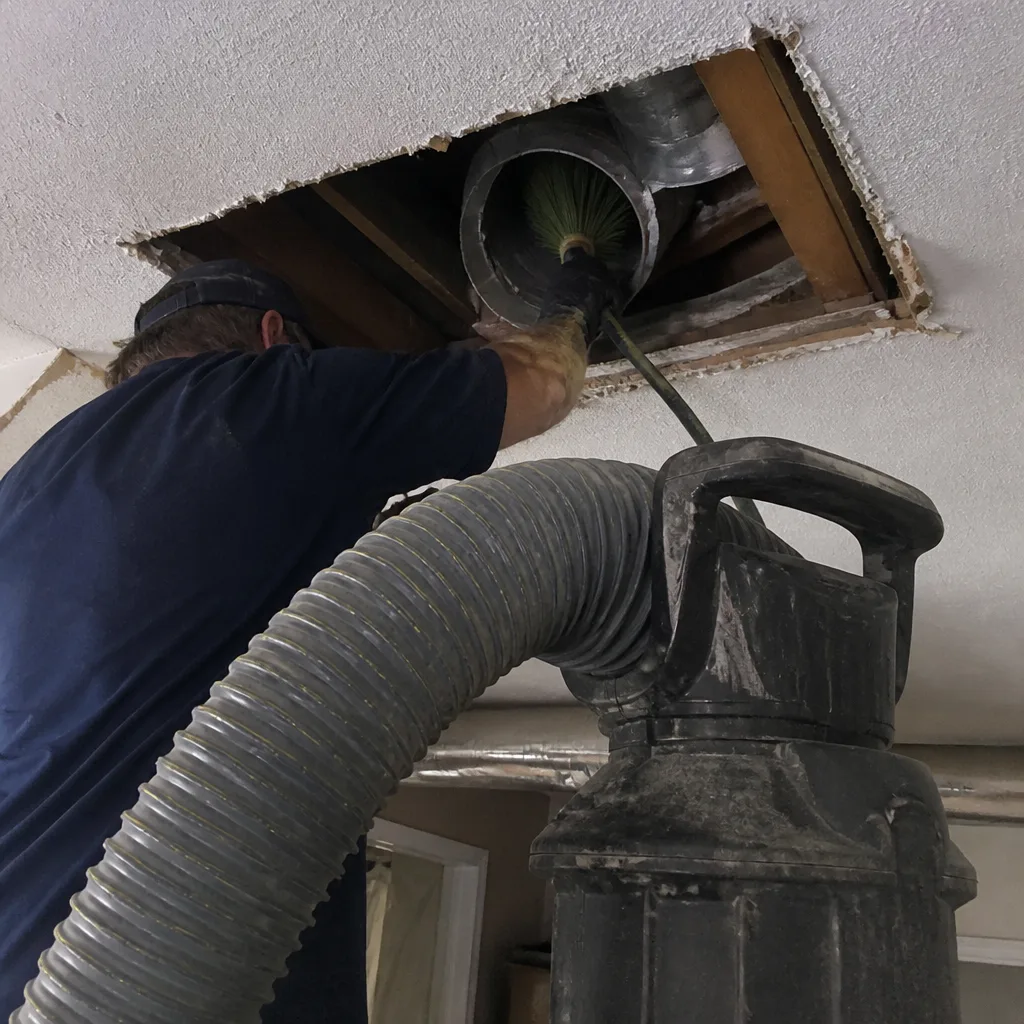 Before
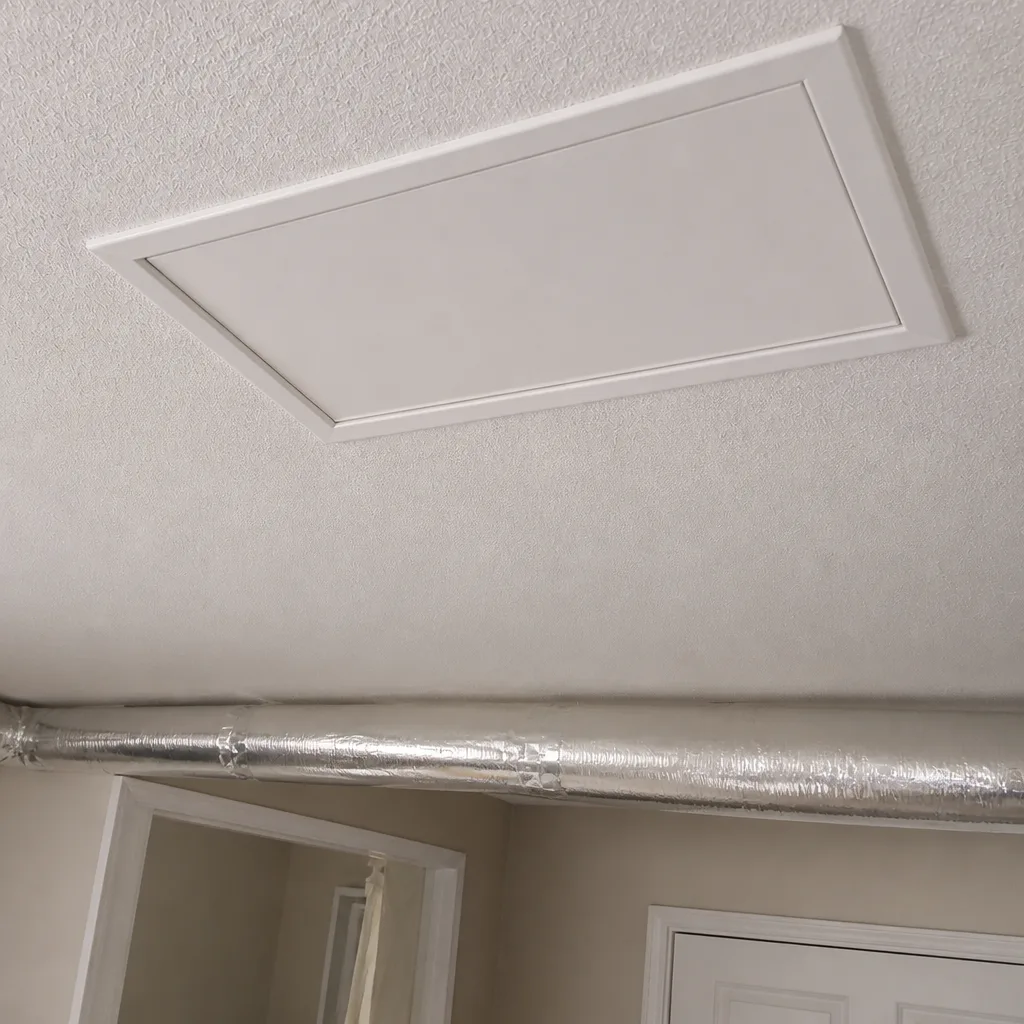 After
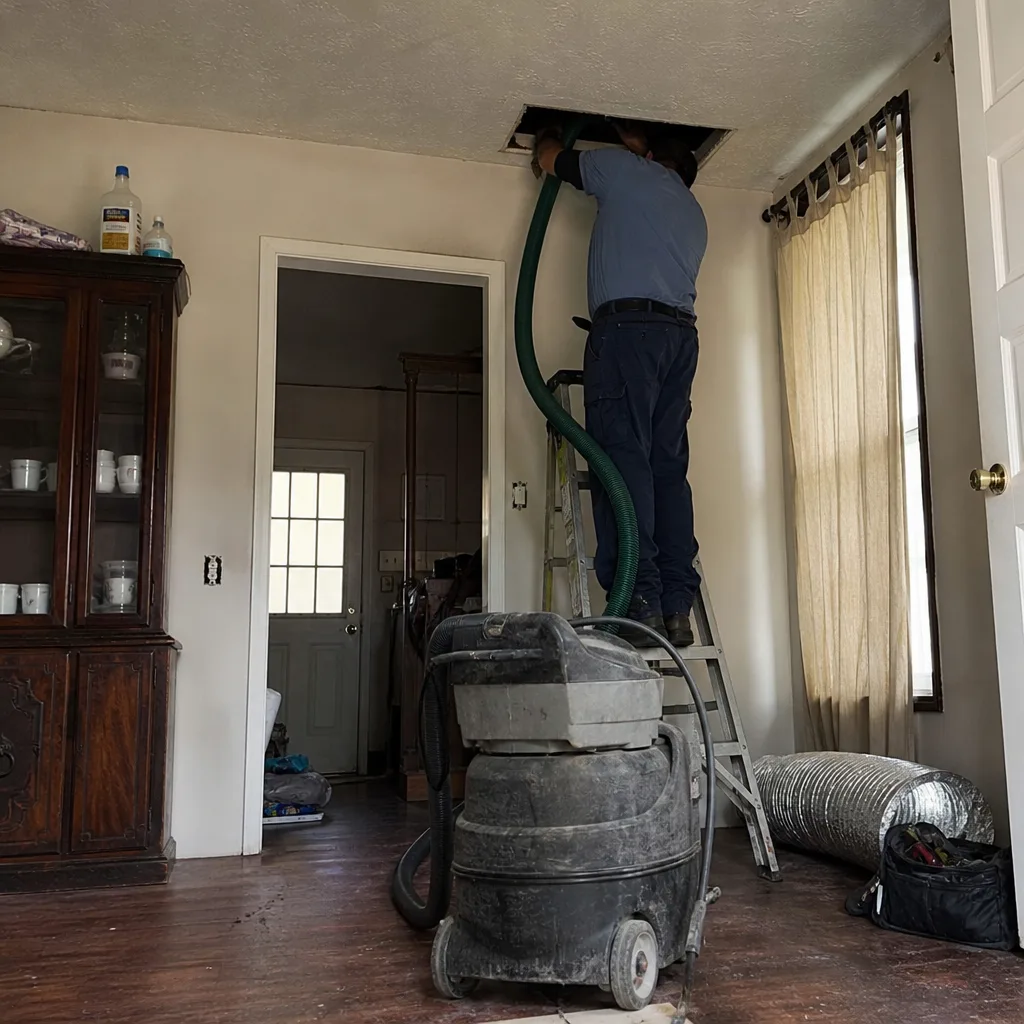 Before
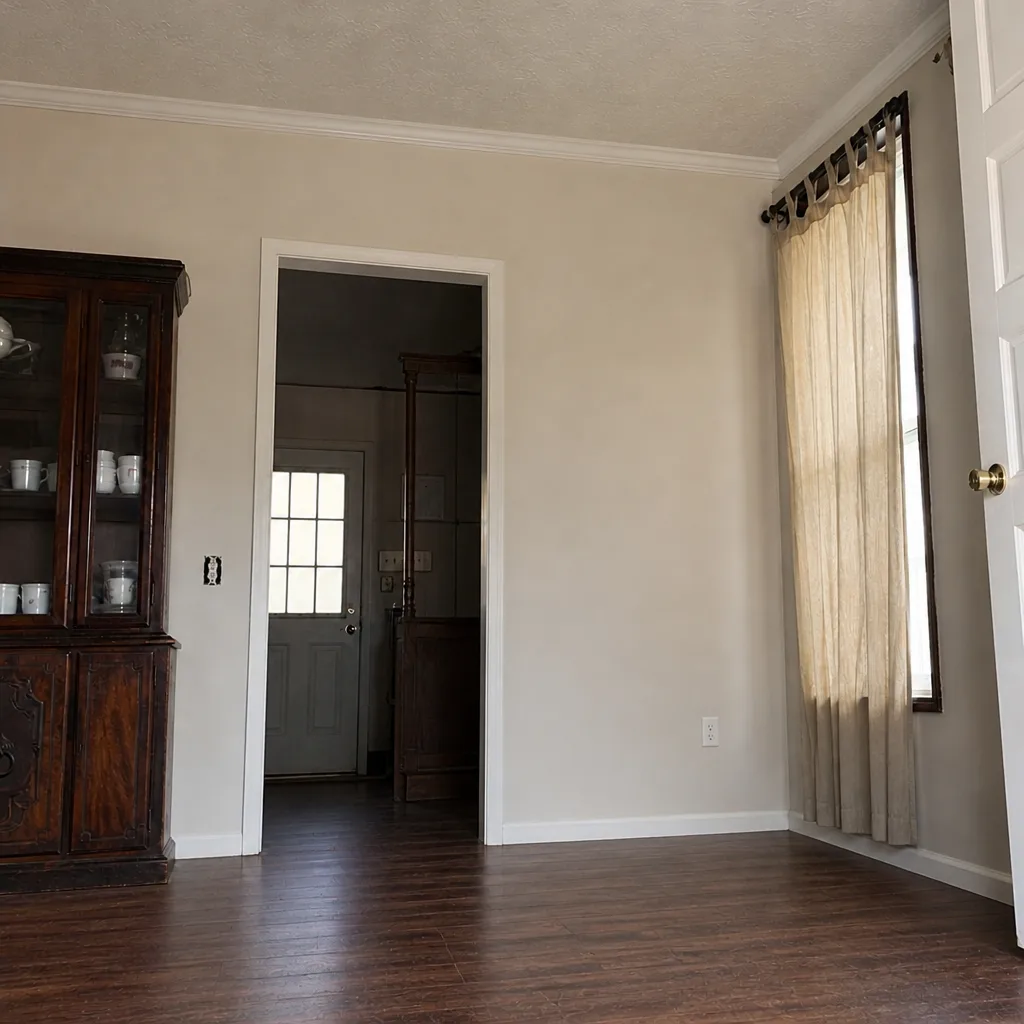 After
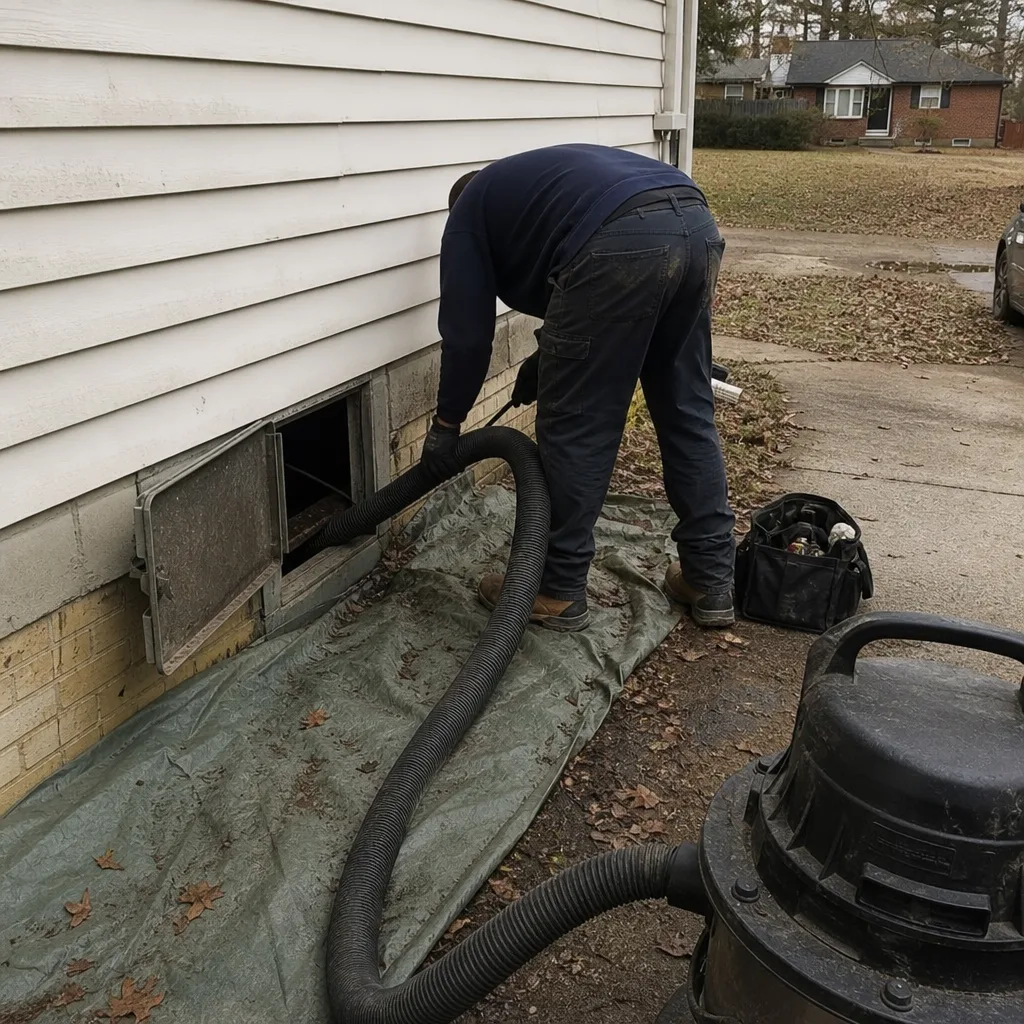 Before
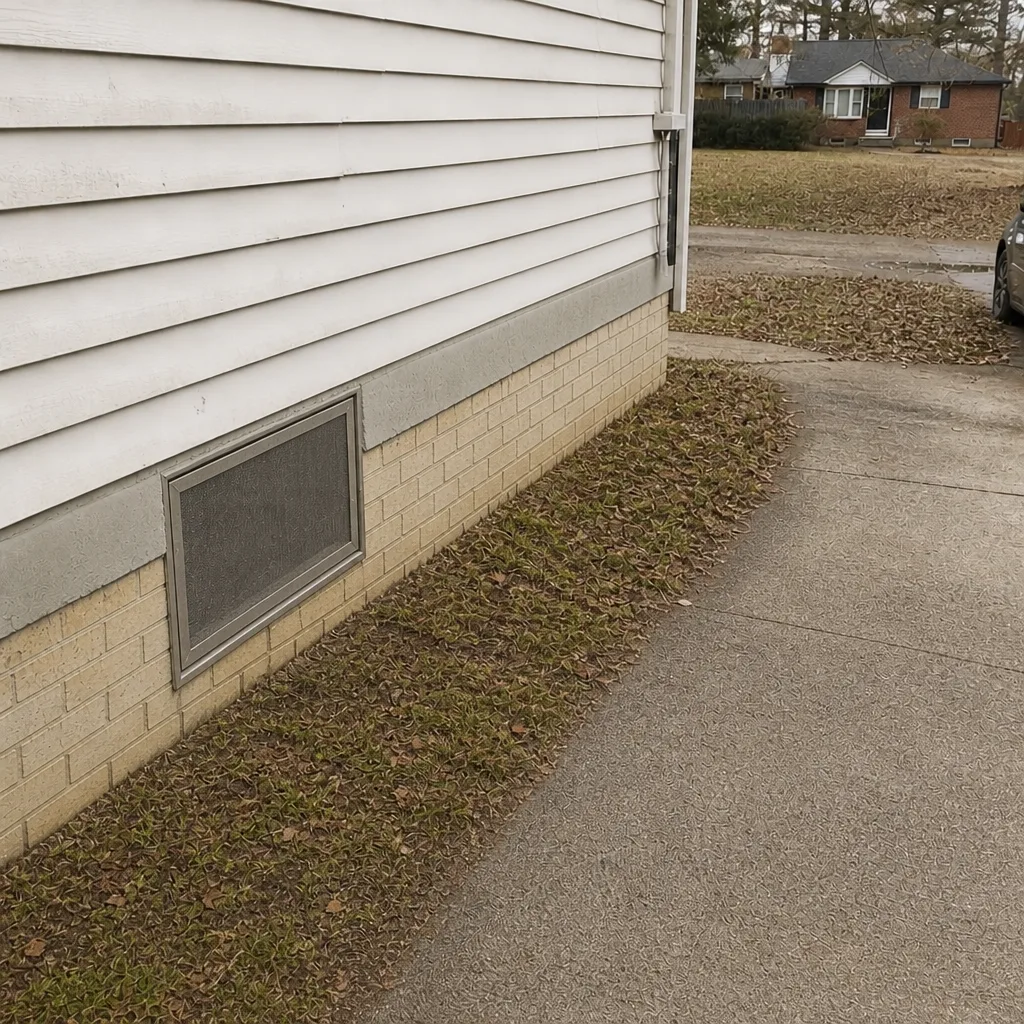 After
When to Call a Professional
Some situations call for a professional visit and some don’t, but these do. Any sign of moisture in the ductwork, a musty smell that won’t clear, or a visible water stain near a register means an inspection before anything else. Post-renovation debris in the system can’t wait for a spring cleaning, and a system with damaged or disconnected ductwork needs repair before cleaning makes sense. If you or anyone in the home has allergies or asthma, or there are pets or young children, the debris load in the ducts is worth addressing with equipment that can actually remove it. And a dryer vent that climbs through a wall or elbows more than a couple of times needs a proper brushing that a homeowner’s short brush can’t reach. Wexford Air Duct Cleaning offers free estimates in Fayetteville. Call (888) 670-4029. We answer 24/7. Fast dispatch from 7am to 7pm, Sunday through Friday.
Frequently Asked Questions
It’s worth doing for the parts you can reach: register and grille cleaning, return grille cleaning, and short dryer vent brushes. It’s not worth doing for the duct runs themselves, because consumer equipment can’t generate the negative pressure needed to evacuate them. Clean the surface, and call a professional for the system. Call (888) 670-4029 for a free estimate on the system cleaning.
No, not effectively. A shop vac generates roughly 60 to 80 CFM, well below the 3,000 to 5,000 CFM a truck-mounted professional system generates, and the gap isn’t a rating you can close with a better model. In a duct run, that low airflow agitates dust rather than removing it, and on flex duct it risks the liner. Call (888) 670-4029 for an exact quote on a whole-system cleaning; estimates are free.
A whole-system residential cleaning typically runs a few hundred dollars, with the final price set by a written estimate after a technician inspects your system, and the estimate itself is free. Per-vent pricing and low teaser coupons are the two ways the final invoice climbs above the quoted number, so ask for one flat price per system before any work starts. Call (888) 670-4029 for an exact quote.
Because they usually aren’t quotes for the same work. A low number is often a coupon price that covers a partial cleaning or a register pass, with the actual system cleaning priced after the technician arrives. A written whole-system price, agreed before work starts, is the number you can compare against. Call (888) 670-4029 for a written estimate.
Before-and-after photos of your own ducts, shown to you at the end of the visit. That’s the honest answer to the trust question, and it’s one reason to ask about documentation before you book anyone. Call (888) 670-4029 and ask what the visit will include.
Every few years is a reasonable range for most homes, and that’s a general guide rather than a fixed schedule. Homes with pets, occupants with allergies, recent renovations, or a history of moisture in the system need it sooner. A technician who inspects the system can give you a better answer than one who quotes an interval over the phone. Call (888) 670-4029 for a free estimate on your specific system.
You can clean the short run between the dryer and the wall with a flexible brush and vacuum, and that’s a legitimately useful homeowner task. Longer vent runs that climb through a wall or elbow multiple times hold lint beyond the reach of a homeowner brush. Dedicated dryer vent cleaning covers the whole run. Call (888) 670-4029 for an estimate.
Because Fayetteville housing includes a lot of flex duct systems, and flex duct connections at boots are the first thing to fail when they’re not cleaned with the right equipment. A disconnected or crushed run can’t be cleaned until it’s reconnected, and cleaning around damage just hides it. If an inspection turns up a compromised run, the repair has to happen first. Call (888) 670-4029 to schedule an inspection and estimate.
The Bottom Line
The DIY versus professional question comes down to equipment physics, not effort. Consumer vacuums can’t generate the airflow or negative pressure to evacuate a duct run, so DIY cleaning at the register is useful and DIY cleaning inside the duct is not. Register and grille cleaning, return cleaning, and short dryer vent brushes are worth doing yourself. Duct runs, post-renovation debris, moisture situations, and flex duct with compromised connections need professional extraction and containment, done by a technician who knows the difference. In Fayetteville, ask for one flat price per system, before-and-after photos, and a written estimate before any work starts. That standard is what separates a real cleaning from a coupon.
Contact
If you’re ready to have your system looked at by someone with the equipment to actually do the work, call Wexford Air Duct Cleaning at (888) 670-4029 for a free estimate. We answer 24/7, with fast dispatch from 7am to 7pm, Sunday through Friday. We’ll inspect, give you one flat price per system in writing, and show you before-and-after photos of your own ducts when the work is done. If you’re in or around Fayetteville and want a straight answer on whether your ducts need cleaning, repair, or nothing at all, we’re happy to come out and tell you.
Written by the team at Wexford Air Duct Cleaning.