
Emergency Air Duct Cleaning Near Me: What Fayetteville Homeowners Should Do First
After a sewage backup, a house fire, or a flooding event, “emergency duct cleaning” sounds like the obvious call. But the type of emergency matters more than the cleaning itself. If your HVAC was running during the event, contamination moved through your duct system in a specific way, and calling the wrong crew first can spread the problem instead of solving it. The right first move is containment, documentation, and cause identification. Cleaning comes after you know what you’re cleaning up.
If you’d rather have someone walk you through it than DIY the triage, call (888) 670-4029. We answer 24/7. Fast dispatch from 7am to 7pm, Sunday through Friday.
Key Takeaways
- Shut the HVAC system off immediately after any smoke, water, sewage, or pest event before doing anything else.
- The type of emergency determines whether duct cleaning is even the correct remediation step.
- Photograph everything and record HVAC runtime before any crew arrives; it affects what insurance covers.
- A legitimate post-event duct cleaning is a multi-hour, containment-driven job, not a two-hour coupon visit.
- Storm-chasers show up after Fayetteville weather events with urgency pressure and minimal equipment.
Why Should You Shut Off Your HVAC Immediately After a Contamination Event?
Shut your HVAC system off at the thermostat and the breaker right after any contamination event. This is the single most important step. A running system pulls smoke, sewage particles, mold spores, or pest debris straight through the return ducts and distributes them across every room in the house. Once that happens, the contamination pathway widens from one room to the whole system, and the scope of the cleanup grows with it.
Homeowners in Fayetteville often run their systems year-round. Our summers are long and humid, and a house with a fire or a water intrusion often has the AC on when it happens. That matters. A system that was running during a fire pushes soot into the supply trunk and branch runs. A system that was running during a water intrusion pulls humid air through the ducts and can set up conditions for mold growth on the interior liner and insulation. A system that was off keeps the contamination more localized to the room where the event happened.
After shutting the system down, don’t run fans, don’t open windows in a smoke event, and don’t run the system “just to see” if it still works. That last one is a common mistake. If you need to test airflow, wait until a technician has assessed the ducts.
What to check while your system is off:
- Confirm the breaker for the air handler and condenser is off, not just the thermostat.
- Look at the return grilles for visible soot, water staining, or debris.
- Check the air filter, but don’t remove it unless the technician asks.
- Note the time and date you shut it off. You’ll want it for your insurance claim.
What’s the Right First Response for Each Type of Emergency in Fayetteville?
The first response differs by emergency type, and getting it wrong can make the cleanup harder. Use this decision tree before you call anyone.
Smoke and fire damage. Shut off the HVAC. Don’t run the system to clear smoke. Soot is acidic and settles into porous surfaces in a few hours. Duct cleaning is almost always needed after a fire that involved smoke in the living space, but the priority is getting an assessor to document soot depth in the returns before any cleaning crew arrives. Fayetteville homes close to a fire often show soot travel through the return even when the fire was confined to one room.
Water intrusion (storm, plumbing, roof leak). Shut off the HVAC. Get standing water out with a wet vac and blowers on the affected areas. Duct cleaning is only the right next step if water actually entered the ducts or the air handler. If the ducts stayed dry, cleaning may not be needed; drying the structure is.
Sewage backup. Shut off the HVAC. Keep the contaminated area closed off from the rest of the house. Sewage carries pathogens, and duct cleaning alone is not the right remediation for a sewage event. The area needs proper disinfection first, and whether the ducts need cleaning depends on whether the backup reached the HVAC or the return system.
Pest infestation. Shut off the HVAC. Seal obvious entry points. Duct cleaning is often the correct step here, but it needs to be paired with a pest control plan or the infestation returns. Priority is removal and decontamination of the ducts, then repair of any compromised ductwork the pests chewed through.
Mold spread through the HVAC. Shut off the HVAC. Don’t run the system on any setting. Mold that’s visible around supply registers or on the air handler coil isn’t something a standard duct cleaning addresses. A proper assessment comes first, and cleaning needs to be paired with fixing the moisture source that caused the growth. If the growth is treated as mold remediation, a remediation contractor leads that scope.
If you’ve triaged your situation and want a technician’s read on whether duct cleaning is the right step, Wexford Air Duct Cleaning offers free estimates.
What Should You Document Before Any Cleaning Crew Arrives?
Photograph and record everything before anyone touches your ducts. Insurance claims after a Fayetteville fire, flood, or sewage event turn on documentation, and what you capture in the first few hours often determines what gets covered.
Capture these before any crew shows up:
- Wide photos of every affected room. Don’t curate. Shoot the mess as it is, then shoot close-ups of the return grilles, supply registers, and any visible soot, water, or debris.
- Photos of the thermostat and the breaker panel showing you shut the system down, with a timestamp.
- HVAC runtime context. Note whether the system was running when the event happened. If you have a smart thermostat, screenshot the runtime history. If your unit is a plain programmable model, note the schedule and the time you shut it off.
- Your insurance adjuster’s name and claim number as soon as you have them. Some adjusters want to see the ducts before any cleaning begins.
- A written note of the sequence of events: when the event happened, when you shut off the HVAC, and who you called first.
Don’t remove the air filter before you’ve photographed it. That filter is evidence of what the system was pulling in. If an insurance adjuster wants documentation the HVAC was off before cleaning, you’ll have it.
One practical note: many Fayetteville homeowners insurance policies distinguish between “the event that contaminated the ducts” and “the duct cleaning itself.” The first is often covered. The second is often covered only if a specific clause applies. Your adjuster can confirm which one you’re in, and having photos and a timeline makes that conversation go faster.
How Do You Spot a Storm-Chaser After a Fayetteville Weather Event?
Spot a storm-chaser by the equipment you can see and the pressure they apply. Legitimate post-event duct cleaning is a specialized job that requires professional-grade tools. A truck with a shop vac and a hose isn’t that.
Red flags to watch for when someone knocks on your door after a weather event in Fayetteville:
- Urgency pressure. “We’re in the neighborhood today only” or “we can do it for this price if you sign right now” is a sales tactic, not a service.
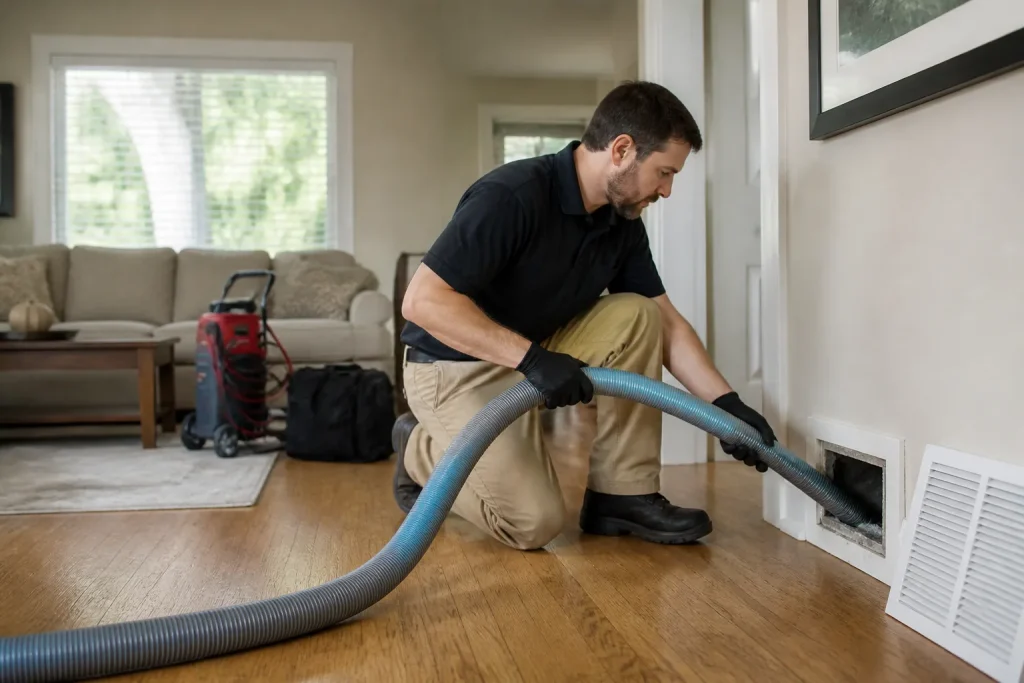
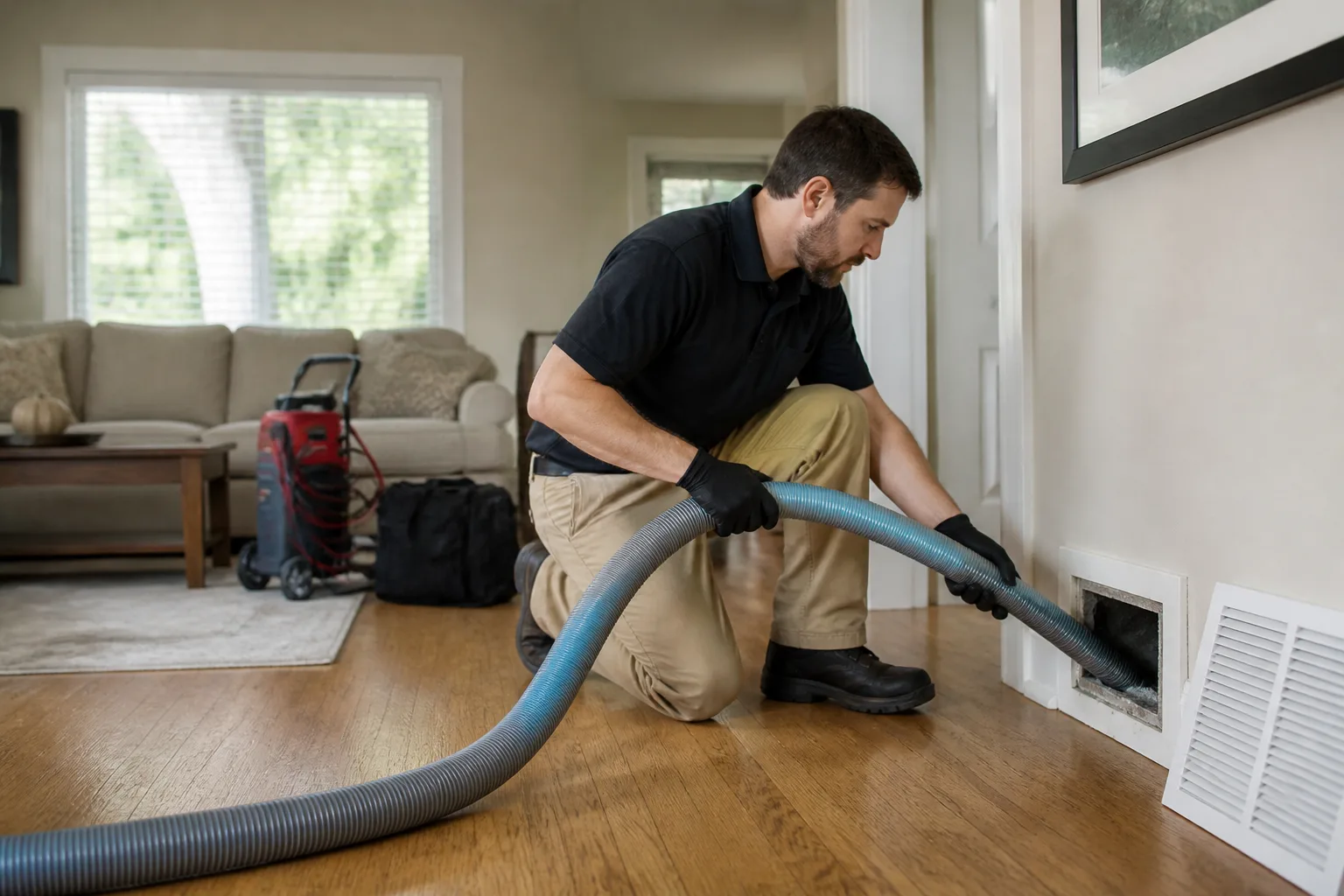
- No visible specialized equipment. Real post-event duct cleaning uses rotary brush systems and HEPA-filtration vacuums. If the crew arrives with consumer gear, they’re cleaning surfaces, not remediating.
- No containment plan. They don’t describe how they’ll keep the debris from recirculating into your living space during the job.
- No written estimate before work starts. Any crew that can’t put the price on paper before starting isn’t one you want in your ducts.
- No ability to inspect or repair ductwork. Post-event duct work often turns up compromised or disconnected sections. A crew that can only clean can’t fix what they find.
What professional-grade looks like: rotary brush systems like the ones from Rotobrush, HEPA-filtration vacuums like Nikro equipment, and containment tools from Abatement Technologies. These are the tools restoration contractors use for the same reason: they hold up to the scope of a real post-event cleanup. If the crew you’re evaluating can’t tell you what equipment they’re bringing, that’s your answer.
If it’s genuinely urgent, better to call a company that can describe exactly what they’ll do. Call (888) 670-4029. We answer 24/7. Fast dispatch from 7am to 7pm, Sunday through Friday.
How Long Does Real Emergency Duct Cleaning Take in Fayetteville?
A proper post-event duct cleaning takes several hours, sometimes most of a day. It is never a two-hour same-day job. If a crew promises to be done in 90 minutes, they’re either cleaning the registers only or they don’t know what they’re doing.
What a real post-event cleaning involves:
- Containment setup first. Sealing off supply and return openings so debris doesn’t migrate during the job.
- Negative pressure on the system so loosened particles get pulled out, not pushed into rooms.
- Rotary brush cleaning of the trunk and branch runs. The trunk line alone takes time; every branch run adds to it.
- Air handler and coil inspection to see what the system pulled in.
- Repair or re-seal of compromised ductwork found during cleaning. A disconnected joint or a chewed flex run needs attention before the system goes back on.
- Filter replacement and system restart inspection.
- Filtration review. If your home already has a Honeywell or Aprilaire system, the cleaning visit is the right time to confirm the filter is sized and installed correctly for your home.
Expect a proper cleaning first, then a conversation about filtration. Homeowners in Fayetteville who live in older homes often find their ducts have more branch runs and more joint leakage than they expected once a crew gets inside. That’s normal, and it’s why we offer air duct cleaning with a repair inspection built in. If the ducts are compromised, we fix them rather than cleaning around them.
When to Call a Pro
Call a professional when the contamination event was more than light dust or a clogged filter. Any smoke, water, sewage, pest, or suspected mold situation in Fayetteville warrants a professional assessment, and most warrant containment-level cleaning with HEPA equipment. Our technicians have up to 12 years of experience handling exactly these situations, and we’ll tell you honestly if duct cleaning isn’t the right next step. If it isn’t, we’ll say so.
A small bit of honesty with a side of duct tape: half the “emergency” calls we assess don’t actually need emergency cleaning. They need the right step first, which is often a fix on the HVAC side or a dry-out, not a brush in the ducts. Calling us to be told you don’t need us is still a good use of a phone call.
Related services in Fayetteville: Fayetteville homeowners often pair post-event duct work with a dryer vent cleaning, since both use the same containment discipline and the same underlying fire-risk awareness. If your post-event cleaning included any dust or debris buildup near the laundry vent, it’s a good time to schedule both.
The Bottom Line
Emergency duct cleaning is real, but it’s the second step, not the first. Shut down your HVAC, document everything before any crew arrives, and identify the type of contamination event before deciding whether cleaning is the right next move. Smoke, water intrusion, sewage, pests, and HVAC-spread mold each call for a different first response, and getting the sequence wrong widens the cleanup instead of containing it. Real post-event cleaning is a multi-hour, containment-driven job using professional-grade equipment, not a two-hour coupon visit.
If you’re in Fayetteville and need help, Wexford Air Duct Cleaning offers free estimates. Call (888) 670-4029. We answer 24/7. Fast dispatch from 7am to 7pm, Sunday through Friday.
Frequently Asked Questions
No. A post-event duct cleaning is priced per job by the written estimate, the same way a routine cleaning is. The estimate reflects the actual scope: number of systems, whether containment is needed, and whether any repair turns up during inspection. The written estimate sets the final price, and there’s no surcharge for the fact that the cleaning is happening after an event. Call (888) 670-4029 for a free estimate.
No. Don’t run the system after a house fire. Soot is acidic, and a running system pulls it through every supply and return run in the house, which widens the contamination. Leave the system off at the breaker until an assessor or cleaning crew has inspected the ducts. Call (888) 670-4029 and we can walk you through triage over the phone.
Sometimes. Coverage depends on the event that contaminated the ducts and the specific language in your policy. Fire and water damage claims often cover duct cleaning if it’s part of the remediation scope; standalone duct cleaning after a pest event is often not covered. Your adjuster decides. Documentation captured before any crew arrives makes the difference. Call (888) 670-4029 for a free estimate you can share with your adjuster.
You may not need cleaning after a storm. If the storm was wind and rain but didn’t push water into the ducts or the air handler, cleaning usually isn’t the right step. What does need attention after a Fayetteville storm is often a compromised duct run discovered on inspection, not contamination. We check what actually reached the ducts before recommending cleaning. Call (888) 670-4029 for a free assessment.
Written by the team at Wexford Air Duct Cleaning.
Need Air Duct Cleaning Help?
Call Wexford Air Duct Cleaning - licensed & insured, here with fast help in Fayetteville.
(888) 670-4029