
Last updated November 16, 2026
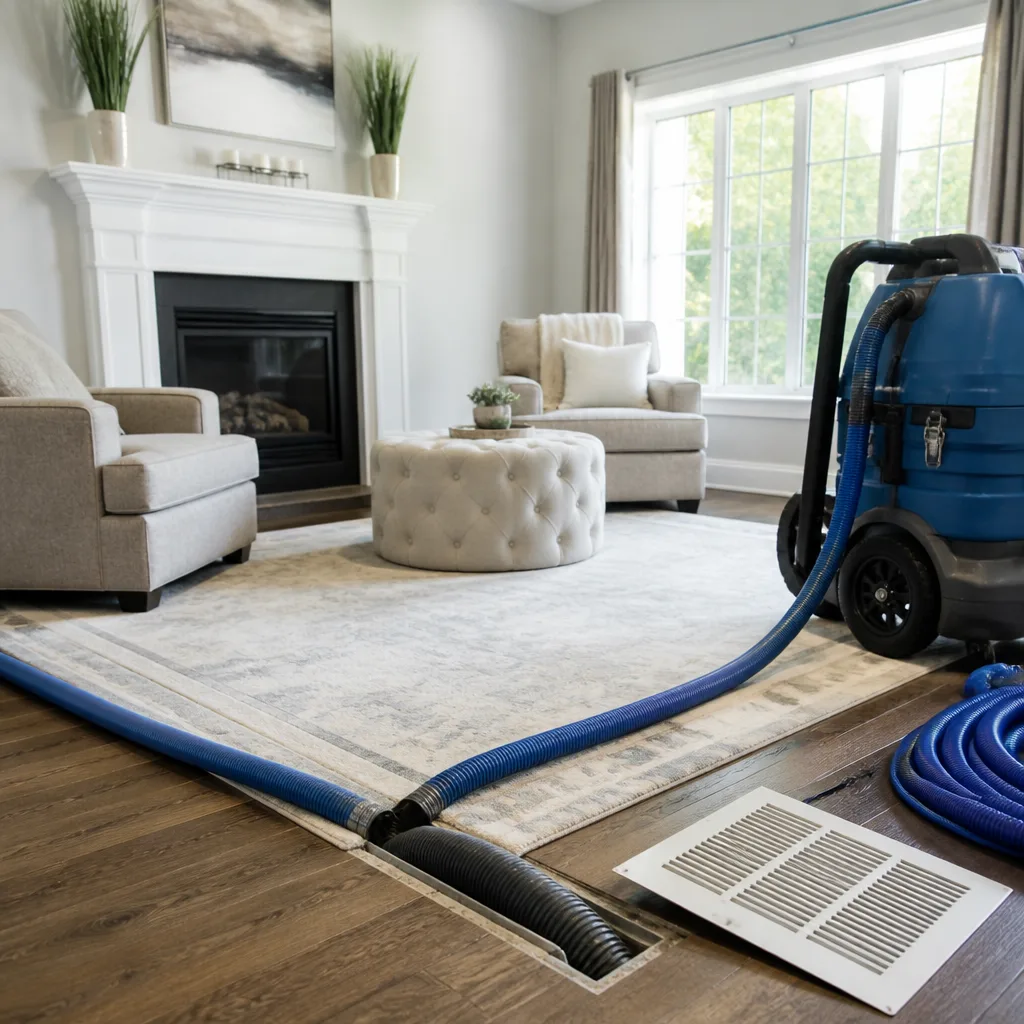 Whole-home duct cleaning
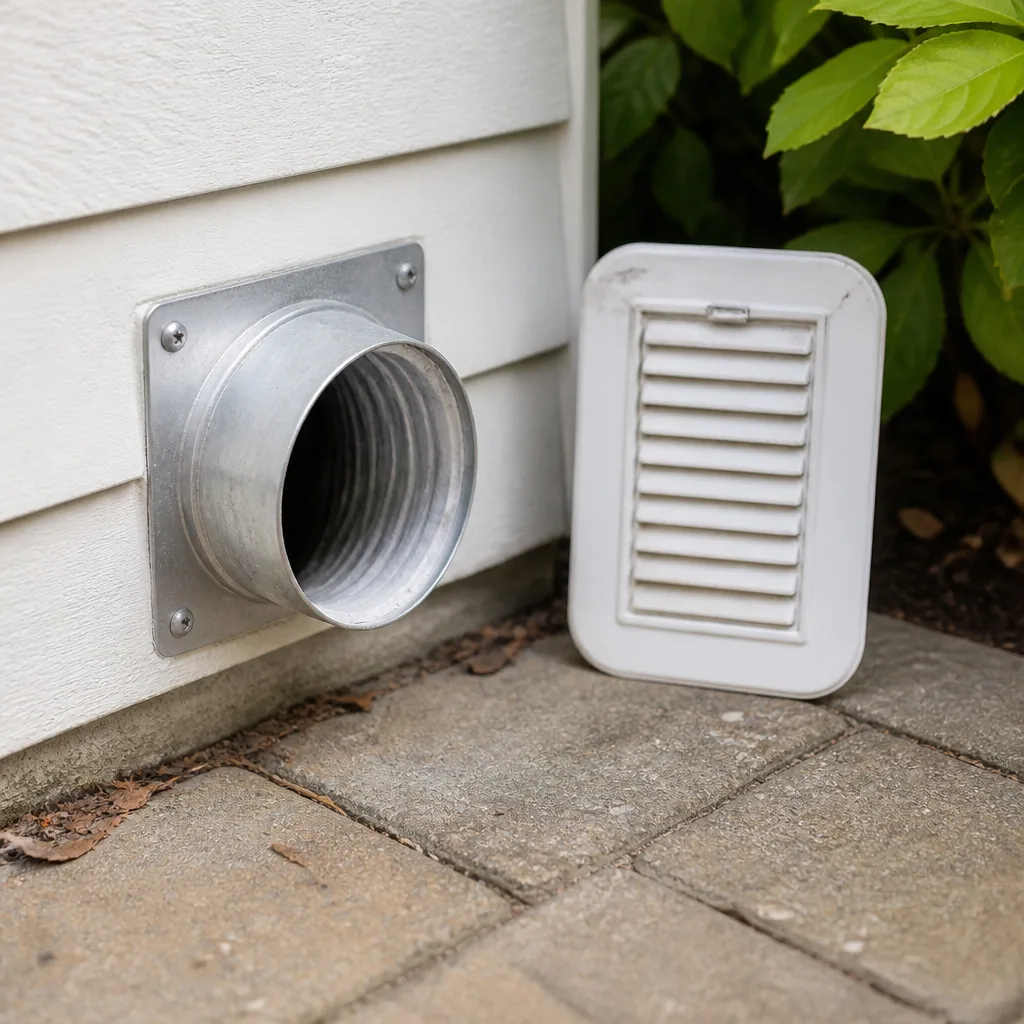 Dryer vent cleaning
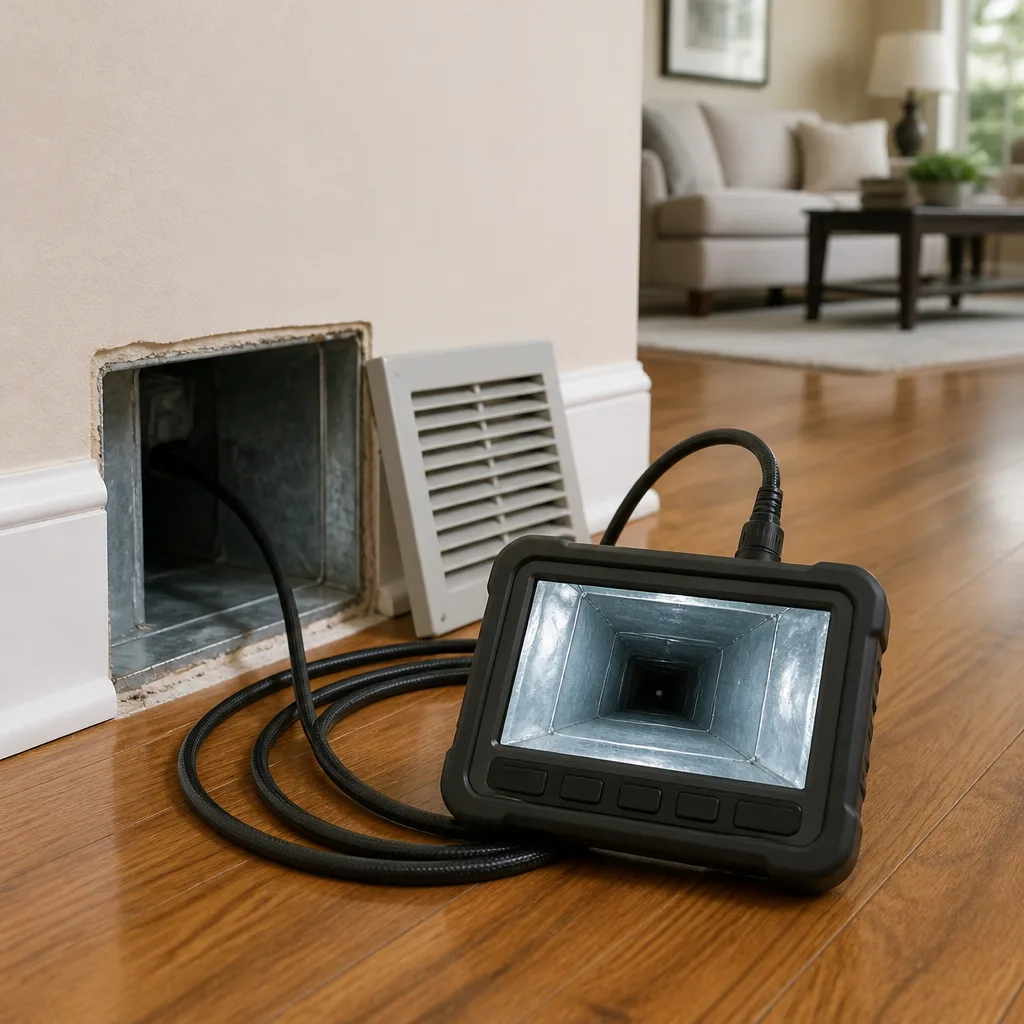 Camera inspection
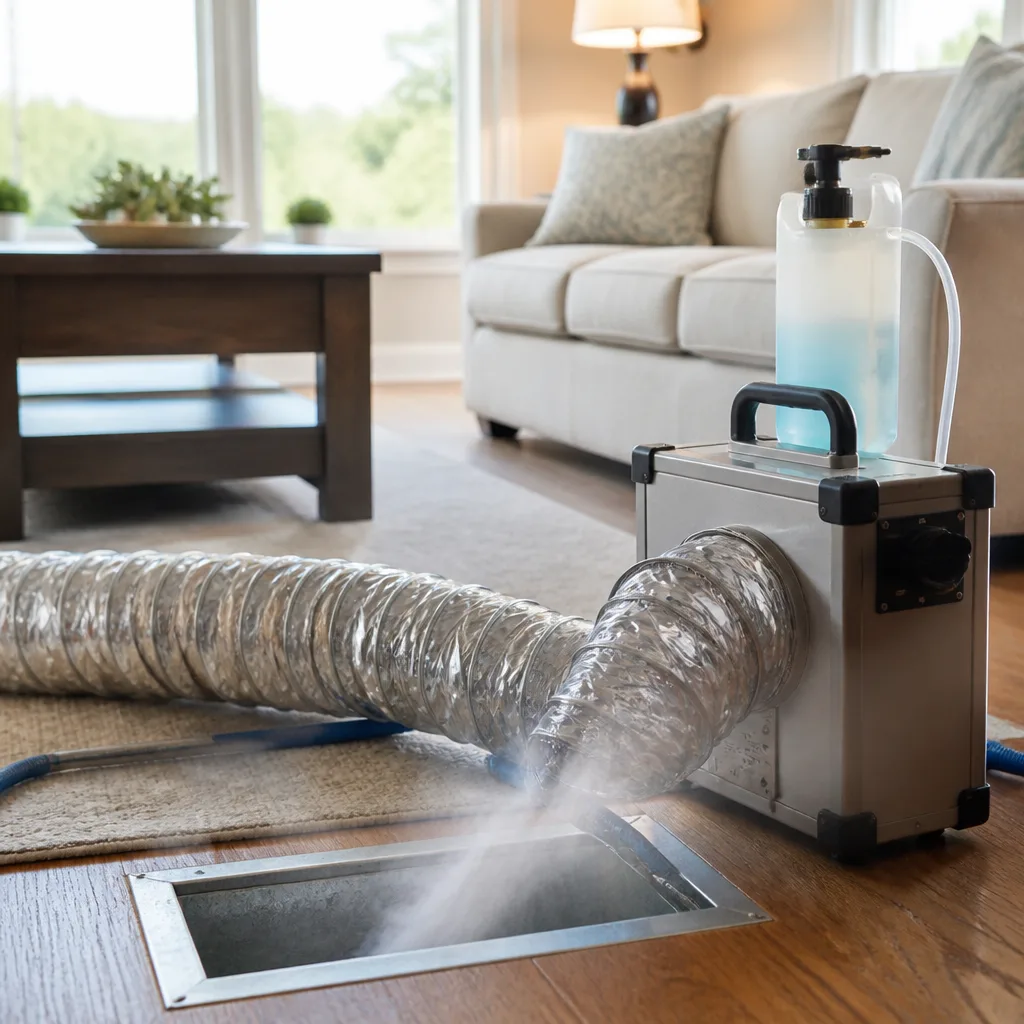 Sanitizing & deodorizing
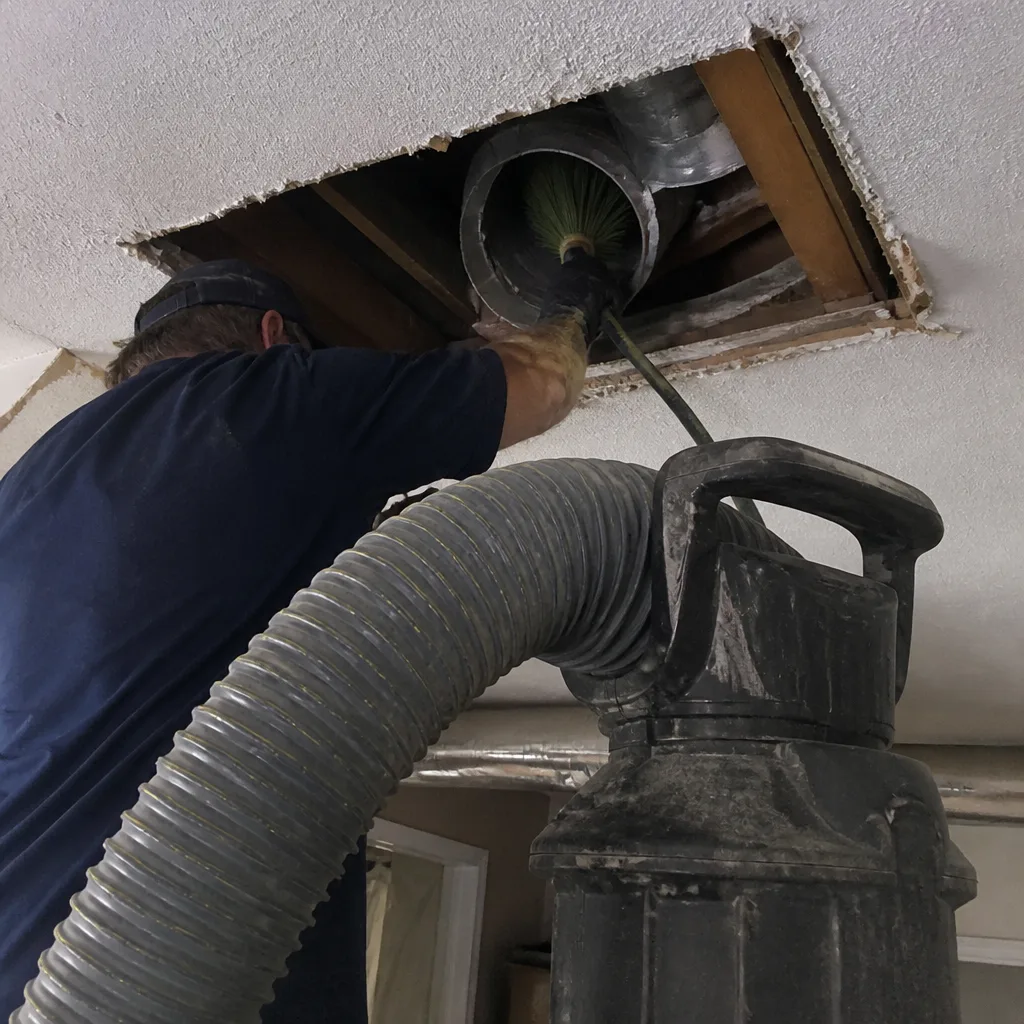
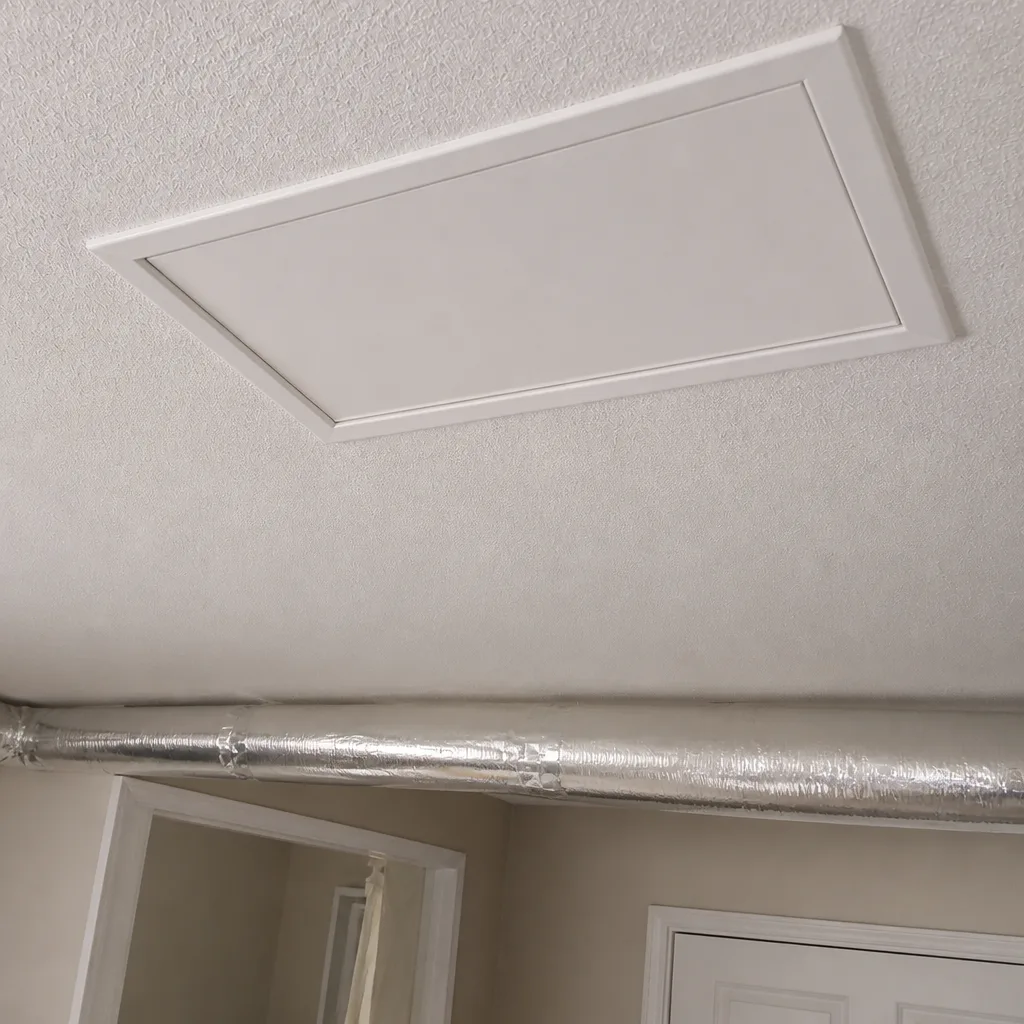
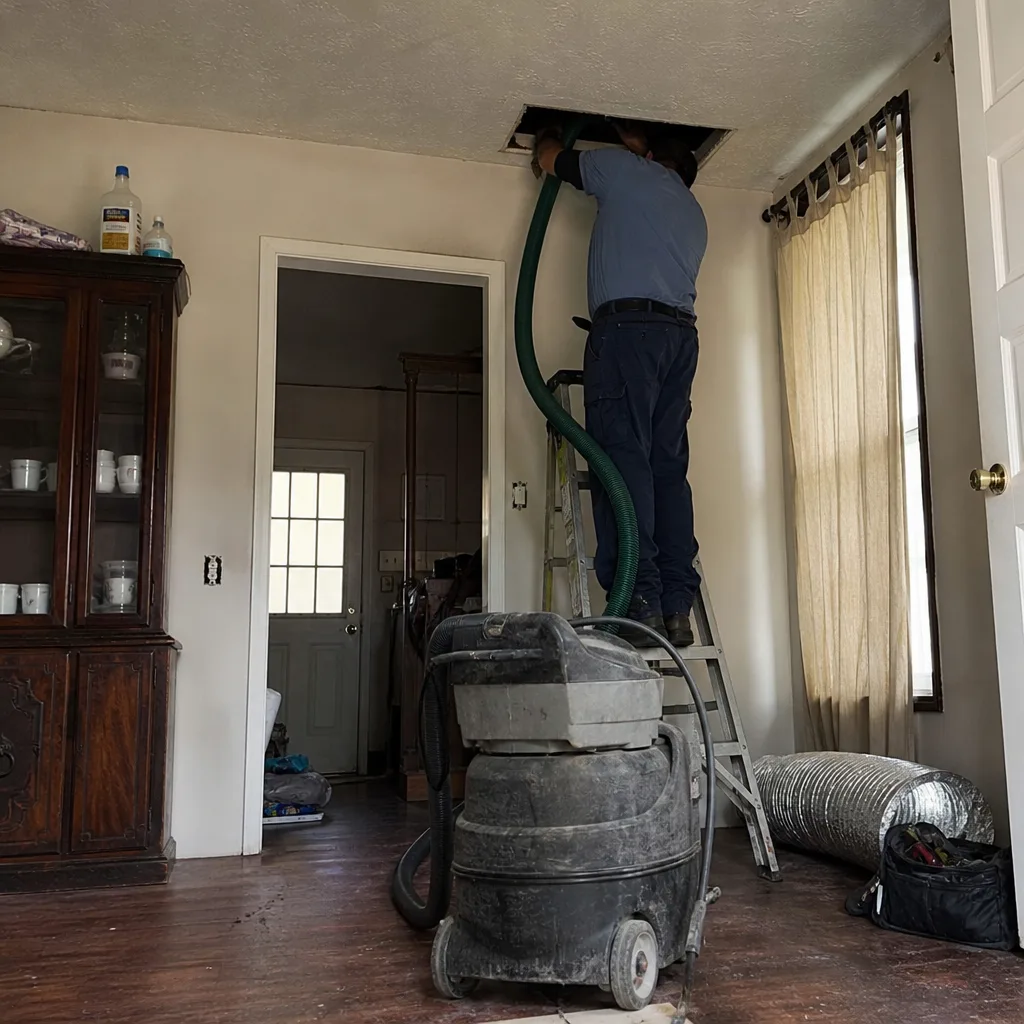
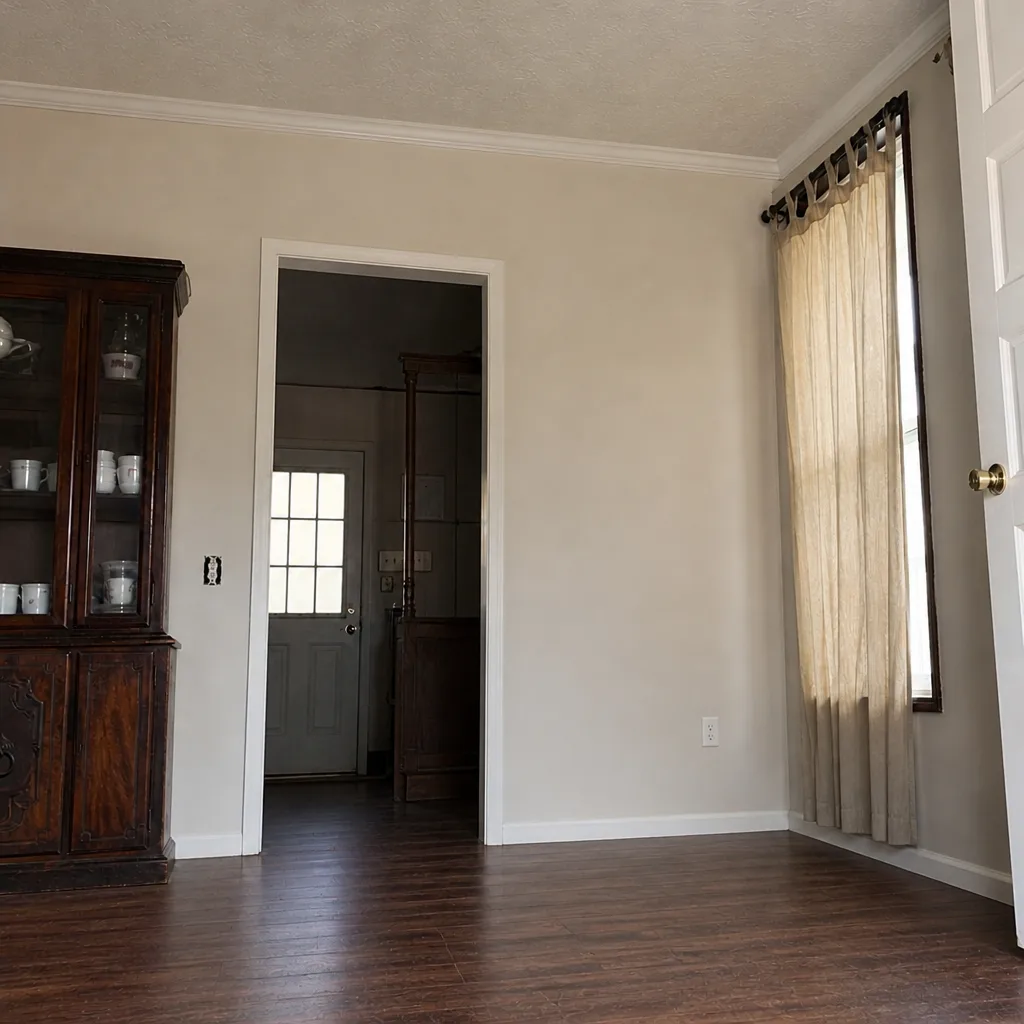
Whole-system duct and dryer vent check with before-and-after photos - you see exactly what came out of your vents
That "$99 whole-house special" is a bait ad - the real number appears once they are in your hallway, or the "clean" is a shop-vac at the register. We photograph the inside of your ducts before and after instead.
Air Duct Cleaning Permits, Codes & Inspections in Fayetteville, NC: What You Need to Know
Here’s the part most homeowners get backwards: routine air duct cleaning in North Carolina doesn’t require a permit. So the question isn’t whether cleaning needs one. It’s whether the work your contractor actually performs crosses into mechanical work that does. That line gets crossed more often than people in Fayetteville realize, usually without anyone flagging it. A technician opens the air handler, cuts out a length of flex duct, replaces a plenum connection, sprays an antimicrobial into a moldy run, and suddenly you’re in different regulatory territory than the cleaning job you thought you booked. This guide walks through where the line sits in the NC State Building Code, how licensing works on the mold side, what Cumberland County inspects, and what paperwork you should walk away with when the work touches anything beyond dust.
Quick Answer
Routine air duct cleaning in Fayetteville, NC does not require a building permit, because it’s classified as cleaning and maintenance rather than mechanical alteration. The moment a contractor modifies ductwork, replaces or alters an air handler component, or performs mold remediation inside the system, different rules apply: mechanical permits through Cumberland County and, for mold work, licensing under NC General Statute 130A-91. Before any work starts, ask which category your job falls into and get it in writing.
Styles & brands we work with
- Whole-home duct cleaning
- Dryer vent cleaning
- Camera inspection
- Sanitizing & deodorizing
Table of Contents
- Where Does Cleaning End and Mechanical Work Begin in North Carolina?
- Does Mold Remediation Inside Ductwork Require a Licensed Contractor in NC?
- What Does Cumberland County Inspect When HVAC Work Accompanies a Duct Cleaning?
- Why Insurance Claims Involving Duct Contamination Need Documented Professional Work
- What to Get in Writing After Work Touches the Air Handler or Duct Connections
- The Questions to Ask Before You Book Air Duct Cleaning in Fayetteville
- Fayetteville Climate, Housing Stock, and Why Duct Contamination Shows Up Here
Where Does Cleaning End and Mechanical Work Begin in North Carolina?
The NC State Building Code treats duct cleaning and routine maintenance as work outside the mechanical permit process. You’re removing accumulated dust, debris, and biological growth from an existing system without changing how that system is built or how it performs. No permit is issued for that, and none is expected. Mechanical alterations are different. Those change the system itself, and the code requires a permit before the work begins.
In practice, the dividing line comes down to whether the contractor is removing contamination or changing equipment and its connections. Here’s how that breaks down in a typical Fayetteville job:
- Cleaning only, no permit: rotary brush contact through the duct runs, negative-pressure HEPA vacuuming at the trunk and branches, cleaning of registers and grilles, and cleaning of accessible interior surfaces of the air handler cabinet without disconnecting or altering components.
- Mechanical alteration, permit required: cutting out and replacing flex or sheet metal duct sections, resealing and reconnecting a plenum, replacing a coil or blower, adding or relocating a return, changing the size or routing of a run, or anything that alters the duct system’s design.
- Grey zone, ask directly: disconnecting a duct at the plenum to clean it and then reconnecting it. Reconnecting a connection that already existed is generally maintenance. Reworking that connection into a different configuration is not.
This is why we ask homeowners in Fayetteville to describe the problem rather than name the service. A rattling supply run in a 1970s ranch off Yadkin Road might be a cleaning job. It might also be a disconnected duct joint that needs repair, and those are two very different scopes with two different regulatory answers. When a contractor is honest about which category the work falls into, you avoid the situation where a “cleaning” invoice quietly hides mechanical changes that should have been permitted.
Does Mold Remediation Inside Ductwork Require a Licensed Contractor in NC?
Yes. Mold remediation performed inside ductwork falls under NC General Statute 130A-91, and the contractor performing that remediation must hold the appropriate North Carolina licensing for mold work. Cleaning dust and debris is one thing. Treating active fungal growth on duct interior surfaces is remediation, and the state treats it as a distinct category of work with its own credentialing.
Here’s where homeowners in Fayetteville get caught. A technician runs a camera through a return trunk, sees dark staining on the interior liner, and tells the homeowner the system has mold. Sometimes that’s accurate. Sometimes it’s condensation staining, dust accumulation along a seam, or a supply run that’s been sweating in a humid crawlspace. The difference matters enormously, because one of those findings is a cleaning job and the other is regulated remediation work.
What you should expect when mold is suspected:
- A clear statement of what was actually found. Not “there’s mold in your ducts,” but where, on what surface, and under what conditions. Photographs of what the technician saw, not of a generic duct.
- Clarity on the licensing question. If the company is proposing to remediate rather than merely clean, ask which license they hold for that work under 130A-91. A company that cleans ducts and repairs ductwork may not be licensed for remediation, and should say so rather than bid the job anyway.
- A written scope separating cleaning from remediation. If remediation is needed, the proposal should say what’s being treated, how containment is handled, and what verification follows.
This is the single most common place where a Fayetteville homeowner ends up with a problem they didn’t anticipate. Cleaning is not remediation. A contractor who blurs those two to close a sale is creating exactly the liability exposure we’d rather help you avoid. Our own work is cleaning and duct repair, and we use professional-grade containment equipment from Abatement Technologies because controlling what leaves the system is part of doing the cleaning properly, not because we’re selling a remediation service.
What Does Cumberland County Inspect When HVAC Work Accompanies a Duct Cleaning?
When permitted mechanical work accompanies or follows a duct cleaning in Fayetteville, Cumberland County performs the inspection on that mechanical work. The cleaning itself isn’t inspected, because it isn’t permitted. The coil replacement, the plenum modification, the new duct runs, the reconnect after a repair: those fall under the county’s mechanical permitting and inspection process.
What that means for you as a homeowner is fairly practical. If a contractor proposes any of the following alongside a cleaning, expect a permit and an inspection in the sequence:
- Replacing an evaporator coil or blower assembly as part of the same visit
- Cutting in new supply or return ducts
- Modifying the plenum at the air handler
- Rerouting a duct run to correct a design problem
- Replacing failed flex duct in a crawlspace or attic
The inspection exists to confirm the mechanical work was done to code, and it protects you on resale. An unpermitted modification can surface during a home inspection or a title search and turn into a scramble. In Fayetteville’s older neighborhoods, where crawlspace duct runs and attic systems often carry decades of patch work, it’s not unusual to find that a previous owner or a previous contractor skipped the permit entirely. You inherit that, which is a good reason to check whether existing duct repairs were permitted before you add more.
One more piece that matters. A permit is pulled by the contractor doing the mechanical work, and the contractor needs to be licensed to pull it. Ask who is pulling the permit before work begins, not after. If the answer is vague, that tells you something. Our role is the cleaning and the duct repair themselves, and where a job requires permitted mechanical work we’re clear with homeowners about that boundary rather than papering over it.
Why Insurance Claims Involving Duct Contamination Need Documented Professional Work
A homeowners insurance claim involving contaminated ductwork usually needs documented professional work with verifiable credentials, not a receipt. That’s the short version. Carriers handling a claim for water intrusion into the duct system, smoke infiltration after a fire, or post-renovation contamination generally want a scope of work, the equipment used, before-and-after documentation, and evidence that the company performing the work is properly licensed and insured.
Here’s why that changes how you choose a contractor. A coupon-driven crew with a portable vacuum and a hose has nothing to submit to a carrier. No documentation trail, no equipment record, no containment protocol, no credentialing. The work might have looked fine to the homeowner in the moment, but when the claim file opens, there’s nothing usable in it.
A few points worth knowing before you file or before you book:
- Documentation is the deliverable. Before-and-after photographs of your actual ducts, a written scope, and a record of the equipment used. We provide before-and-after photos on every job for exactly this reason.
- Insurance requirements vary by carrier and policy. We can work with your insurer and provide the documentation a claim typically requires, but we won’t tell you what your policy covers. That’s a conversation with your adjuster.
- Credentialing should be current. A carrier may ask for proof of licensing and insurance before accepting a contractor’s invoice. Ask for it upfront so there’s no delay when it matters.
- Separate the cleaning from the remediation. If the claim involves mold, the remediation portion carries its own licensing requirement under 130A-91, and a cleaning invoice doesn’t satisfy it.
For Fayetteville homeowners dealing with post-renovation dust or a smoke event, this is where professional-grade equipment matters beyond the cleaning quality. A Nikro HEPA-filtration vacuum captures fine particulate instead of recirculating it, and that difference is documented and legible to a claims adjuster in a way that “we used a shop vac” never will be.
What to Get in Writing After Work Touches the Air Handler or Duct Connections
You should leave with a written record any time the work goes beyond surface cleaning. That means any job that opened the air handler, disconnected or reconnected a duct, replaced a section, or modified a plenum. The record is your protection on three fronts: resale disclosure, future service, and insurance.
Specifically, ask for these items in writing:
- The scope of work performed. What was cleaned, what was repaired, what was replaced, and what was left alone. Specific location, not “cleaned duct system.”
- Before-and-after photographs of your ducts. Not stock images. Your system.
- Equipment used. The brand names of the vacuum and brush equipment. Rotobrush rotary brush systems and Nikro HEPA equipment are identifiable, professional-grade tools, and naming them is more useful to a future buyer or adjuster than “professional equipment.”
- Permit and inspection information, if applicable. The permit number, the issuing jurisdiction (Cumberland County for work in Fayetteville), and the inspection result. If no permit was required, ask the contractor to state that in writing for the work performed.
- Licensing and insurance documentation. A certificate of insurance and the company’s licensing status for the type of work performed. If the job involved remediation, the 130A-91 licensing information.
- Any filtration or equipment findings. If the technician evaluated your whole-home filtration setup, the findings should be in the report. We work with Honeywell and Aprilaire filtration systems, so if either is in your system, the inspection findings regarding filter condition and compatibility belong in the paperwork.
This is a short conversation to have, and it’s a good filter. A contractor who can produce these items without drama is a contractor who expects to be held to them.
The Questions to Ask Before You Book Air Duct Cleaning in Fayetteville
Good questions get good answers, and vague answers are themselves information. Before you book a cleaning in Fayetteville, work through these. You’ll learn fairly quickly which companies are serious about the work and which are running a coupon operation.
- “Will you tell me whether this job requires a permit before you start it?” A straightforward yes is a good sign. A confident “no duct cleaning ever needs a permit” without qualification means the person either doesn’t understand the mechanical distinction or is hoping you don’t either.
- “What equipment will you actually use?” You’re listening for named equipment: Rotobrush, Nikro, Abatement Technologies. A rotary brush system and a HEPA vacuum are the professional standard. A shop vacuum is not.
- “Is this a whole-system price, or per vent?” Per-vent pricing is how a $99 teaser turns into a $900 invoice. One flat price per system, agreed before work starts, is the honest structure.
- “Can I see before-and-after photos of my own ducts when you’re done?” If the answer is no, the work is hard to verify.
- “What happens if you find a disconnected duct or a mold problem?” A company that cleans and also repairs can address a broken duct joint. A company that only cleans will clean around it. On the mold question, the correct answer involves a clear statement about the licensing boundary.
- “Do you offer dryer vent cleaning as a separate service?” Not the main point of a duct job, but it tells you whether the company treats vents as a real service or an upsell. If you’re having the ducts done, this is a natural time to have the dryer vent handled too.
- “Are you licensed and insured, and can you document it?” Ask for it before the visit. Any hesitation here is your answer.
Our technicians have up to 12 years of experience, and in that time the questions above are how customers separate a specialist from a generalist. It’s a fair standard, and we’d rather you apply it.
Fayetteville Climate, Housing Stock, and Why Duct Contamination Shows Up Here
Fayetteville’s climate puts specific pressure on duct systems. The long cooling season means the system runs hard for much of the year, which means more air cycles through the same ductwork and more condensation along the runs. In homes with systems in the crawlspace or attic, the temperature differential between the duct and the surrounding space is significant, and that’s where moisture problems start.
The housing stock adds a second layer. In older Fayetteville neighborhoods, ductwork has often been patched, extended, or reconfigured over the years, sometimes without permits and sometimes with duct tape where proper mastic and mechanical connections belong. In these homes, a duct cleaning often turns up a disconnected flex run, a sagging duct with a low spot collecting condensation, or a return that’s drawing from a crawlspace instead of the living space. Those findings are exactly why a cleaning company that also repairs ductwork is a different proposition from one that only cleans. Our approach is to find and fix compromised ductwork rather than clean around it and hand you a report noting the problem.
Newer construction and recent renovations bring a different issue. Sheetrock dust, sawdust, and construction debris in the system after a remodel is common, and it’s finer and more abrasive than ordinary household dust. That’s a case where HEPA-level vacuum capture matters, because a standard vacuum will pull the fine particulate out of the duct and put it back into the air in the room. Our equipment stack is the same one restoration and remediation contractors work with for that reason.
Whichever category your home is in, the point is the same: the regulatory question is one part of a larger picture. The right contractor for a Fayetteville home is one who understands the equipment, the code boundary, and the local housing patterns well enough to tell you which job you’re actually buying. If your ductwork turns out to need more than a cleaning, air duct cleaning is the entry point, but the repair scope is what we’d want to discuss with you before any work begins. If a dryer vent is on your list, dryer vent cleaning is a separate service we treat with the same systematic approach, because a clogged dryer vent is a documented fire risk, not a maintenance afterthought.
Common Mistakes to Avoid
- Assuming a cleaning permit and a mechanical permit are the same thing. They’re not. Duct cleaning doesn’t require a permit, but the mechanical work that sometimes accompanies it does. Homeowners at Diamondhead and in the Haymount area regularly take the first answer (“no permit needed”) as blanket approval for the whole scope. Ask which work, specifically.
- Accepting a mold finding without written documentation. A verbal “your ducts are moldy” with no photographs from inside your system is not a diagnosis. Ask for the images and ask whether remediation is being proposed, because remediation carries licensing requirements under 130A-91.
- Booking on a per-vent price. Per-vent pricing is how the teaser figure becomes a much larger invoice once the technician is inside. One flat price per system, agreed before work starts, is what honest pricing looks like.
- Not asking who pulls the permit. If mechanical alteration is part of your job and nobody’s pulling a permit, you’re the one exposed at resale. Confirm the contractor and the permit before work starts, not after.
- Skipping the before-and-after photos. If you can’t see your own ducts before and after, you can’t verify the work. We provide photos of the homeowner’s own ducts on every job, and it’s one of the cheapest ways to weed out a bad operation.
- Missing the connection between duct work and dryer vents. In Fayetteville homes with a dryer in an interior closet or a long vent run, the vent is a fire risk that deserves its own inspection. Booking a duct cleaning without at least looking at the dryer vent is a missed opportunity, not a savings.
- Forgetting the insurance angle. If there’s any chance a claim may follow from contamination, water intrusion, or a renovation, gather the documentation now. A receipt with no scope and no equipment list helps nobody at claim time.
See the difference
 Before
 After
 Before
 After
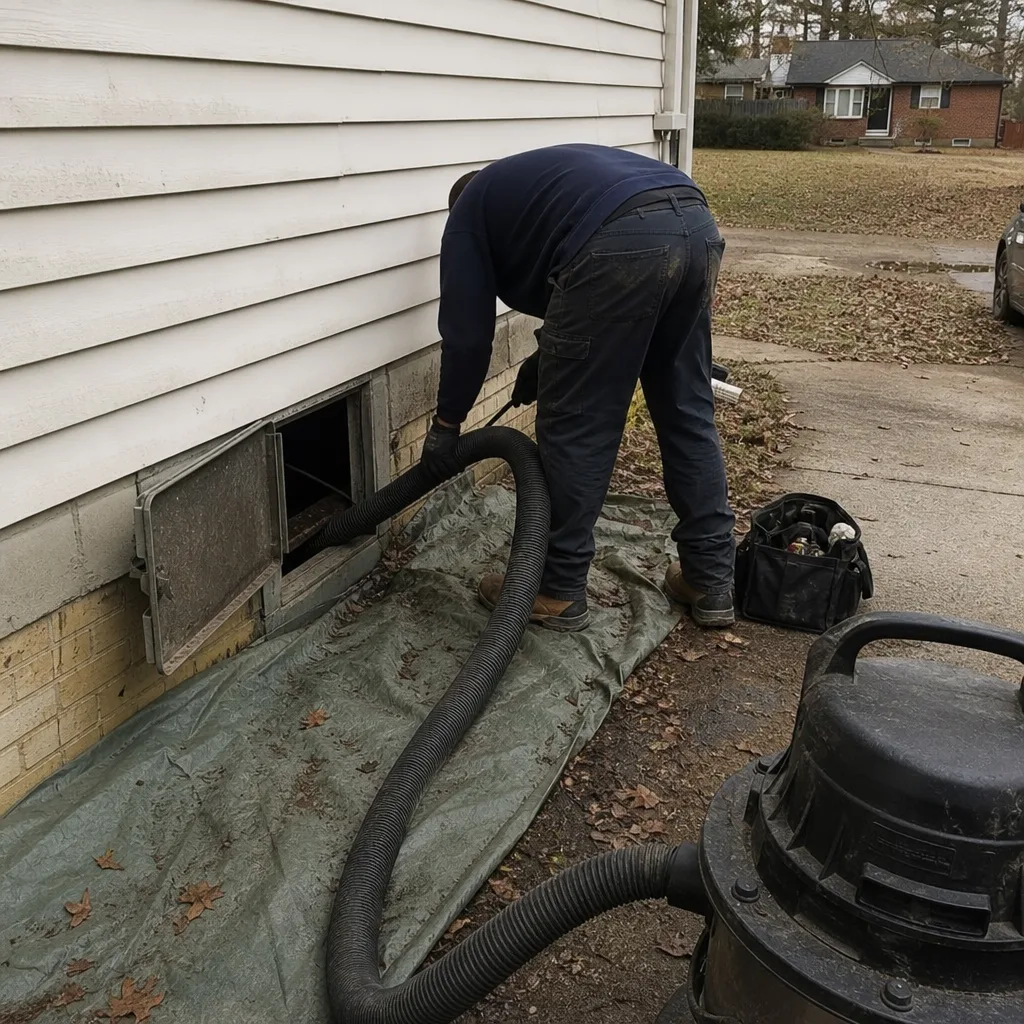 Before
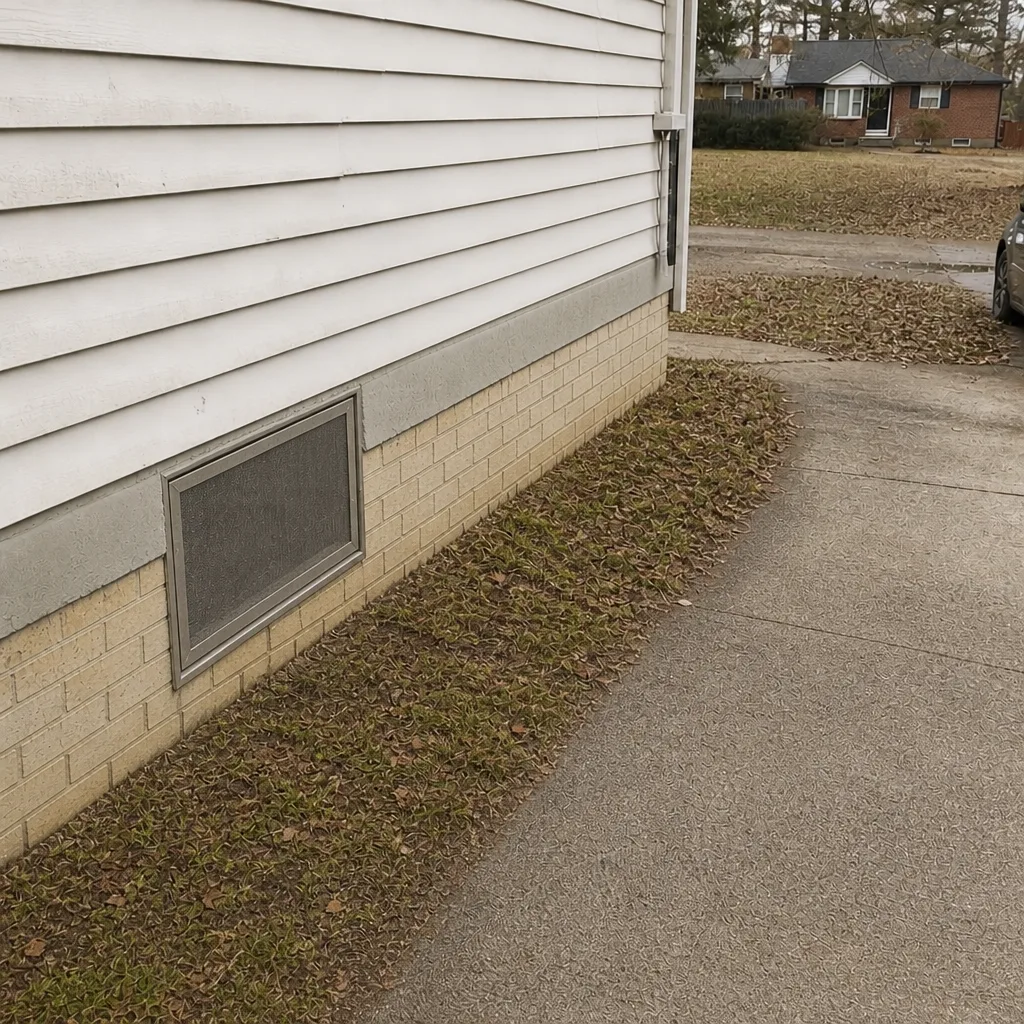 After
When to Call a Professional
Call a professional when you’ve found visible contamination, when the system is blowing debris into rooms, or when a recent renovation or water event has likely pushed dust and moisture into the ductwork. Call when you suspect a disconnected or damaged duct, because cleaning around a break in the system doesn’t fix it and can make the airflow problem worse. Call when you’re preparing to sell and want documentation of the system’s condition. Call if a dryer vent has never been cleaned, particularly in a home where the vent run is long or the dryer takes multiple cycles to finish a load. And call if you’re not sure whether the job in front of you is a cleaning or a repair, because that’s exactly the question a specialist should answer for you before anything starts. Wexford Air Duct Cleaning offers free estimates in Fayetteville. Call (888) 670-4029. We answer 24/7. Fast dispatch from 7am to 7pm, Sunday through Friday.
Frequently Asked Questions
No. Routine air duct cleaning in Fayetteville does not require a permit, because the work is classified as cleaning and maintenance rather than mechanical alteration under the NC State Building Code. A permit becomes necessary when the work includes mechanical changes such as replacing duct sections, altering the plenum, or replacing air handler components. Call (888) 670-4029 for an exact quote on your system, and we’ll tell you which scope you’re dealing with. Estimates are free.
Most Fayetteville homes land in a moderate whole-system range, and the exact price depends on the square footage served, the number of trunks and branches, accessibility of the system, and whether duct repair is part of the job. We price per system, not per vent, so one flat price is agreed before any work starts and the written estimate sets the final number. Cheaper per-vent quotes typically grow once the technician is on site. Call (888) 670-4029 for a free estimate.
Because per-vent teaser pricing is designed to bring the technician through your door, at which point additional charges get added. The other factor is equipment: a portable vacuum and a hose is a fundamentally different tool than a Rotobrush rotary brush system run alongside Nikro HEPA filtration, and the price difference reflects that. A cheap quote isn’t a bargain if the contamination goes back into the living space. Call (888) 670-4029 to talk through a fixed price for your system.
Before-and-after photographs of your own ducts are the standard, not stock images and not a technician’s description. We provide them on every job, and we include the equipment used in the written record so the work is documented. If a contractor can’t produce photos of your actual system, treat the invoice as unverified. Call (888) 670-4029 for an estimate that includes what documentation you’ll receive.
Yes. Mold remediation inside ductwork falls under NC General Statute 130A-91, and the contractor performing remediation must hold the appropriate licensing for that work. Cleaning dust and debris is a separate category. If a company proposes remediating mold inside your system, ask which license they hold, and ask for photographs of what was actually found. If remediation isn’t something we handle at Wexford Air Duct Cleaning, we’ll tell you rather than bid it.
There’s no fixed interval that fits every home. A household with pets, allergy concerns, recent renovations, or a long cooling season with a crawlspace-mounted system typically benefits from more frequent attention than a newer home with a sealed and well-maintained system. Visible contamination, debris blowing from registers, or a recent water event are the reliable triggers. When you’re ready for a professional assessment, call (888) 670-4029. Estimates are free.
The Bottom Line
Duct cleaning in Fayetteville doesn’t require a permit, and the mechanical work that sometimes accompanies it does. That’s the whole framework, and knowing where the line sits protects you on the disclosure, insurance, and resale fronts simultaneously. Mold remediation inside the system is a separate regulated category under NC General Statute 130A-91. Cumberland County inspects the mechanical side when permitted work is done. And the paperwork you leave with matters as much as the cleaning itself. Our recommendation is straightforward: ask the three questions about permit status, equipment, and pricing structure before you book, and hold any contractor to the answers. If you’re ready to have the system looked at, we’d be glad to help. For Wexford Air Duct Cleaning, the priority is cleaning, repairing, and protecting what’s already in your home, with the same professional-grade tools your system deserves. Call (888) 670-4029 to schedule a free estimate. We answer 24/7. Fast dispatch from 7am to 7pm, Sunday through Friday.
Written by the team at Wexford Air Duct Cleaning.