
Last updated November 16, 2026
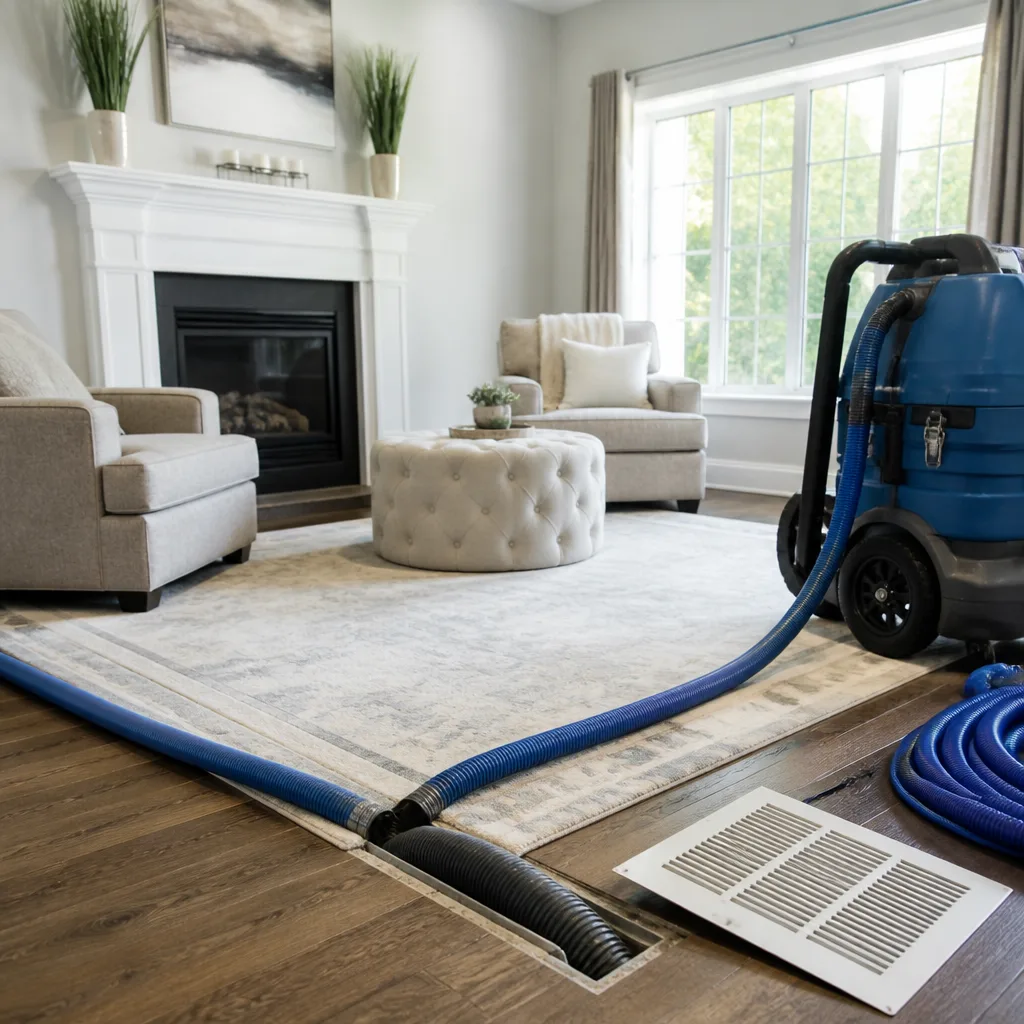 Whole-home duct cleaning
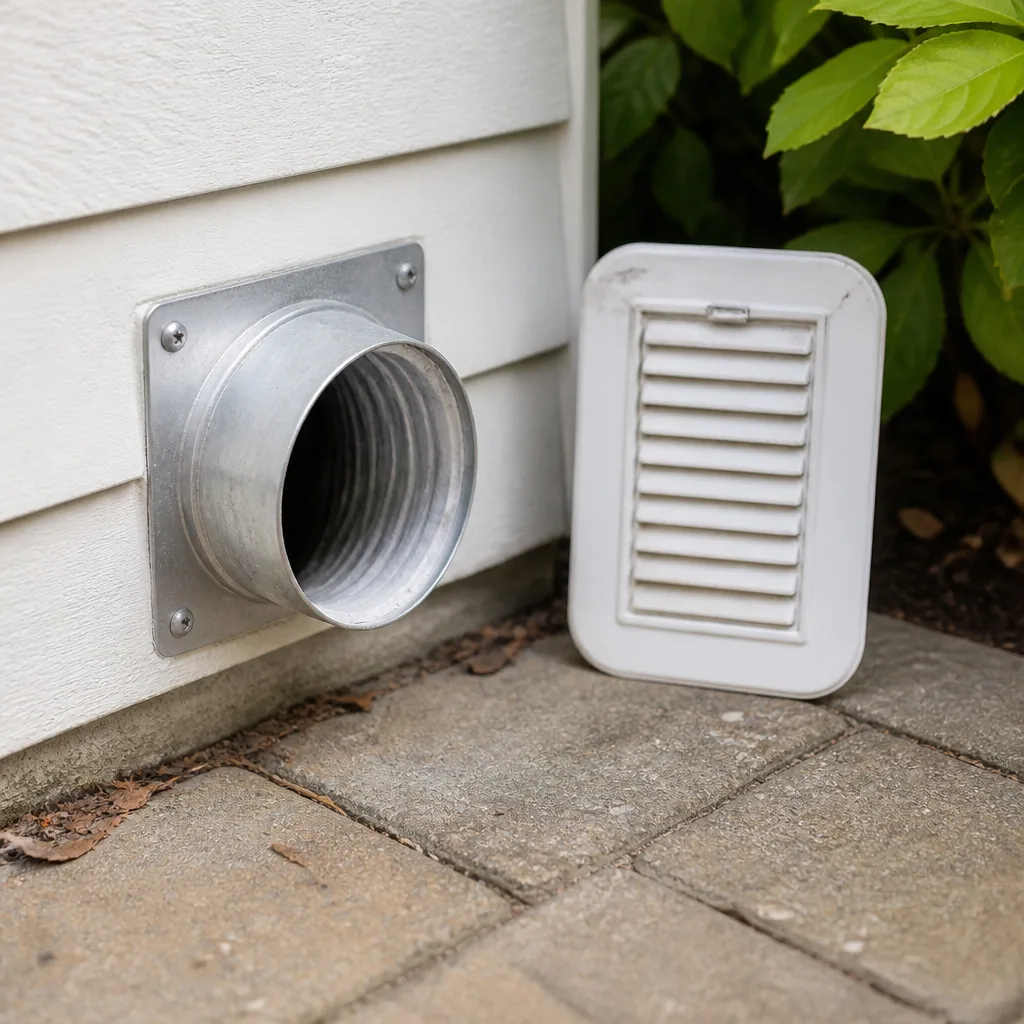 Dryer vent cleaning
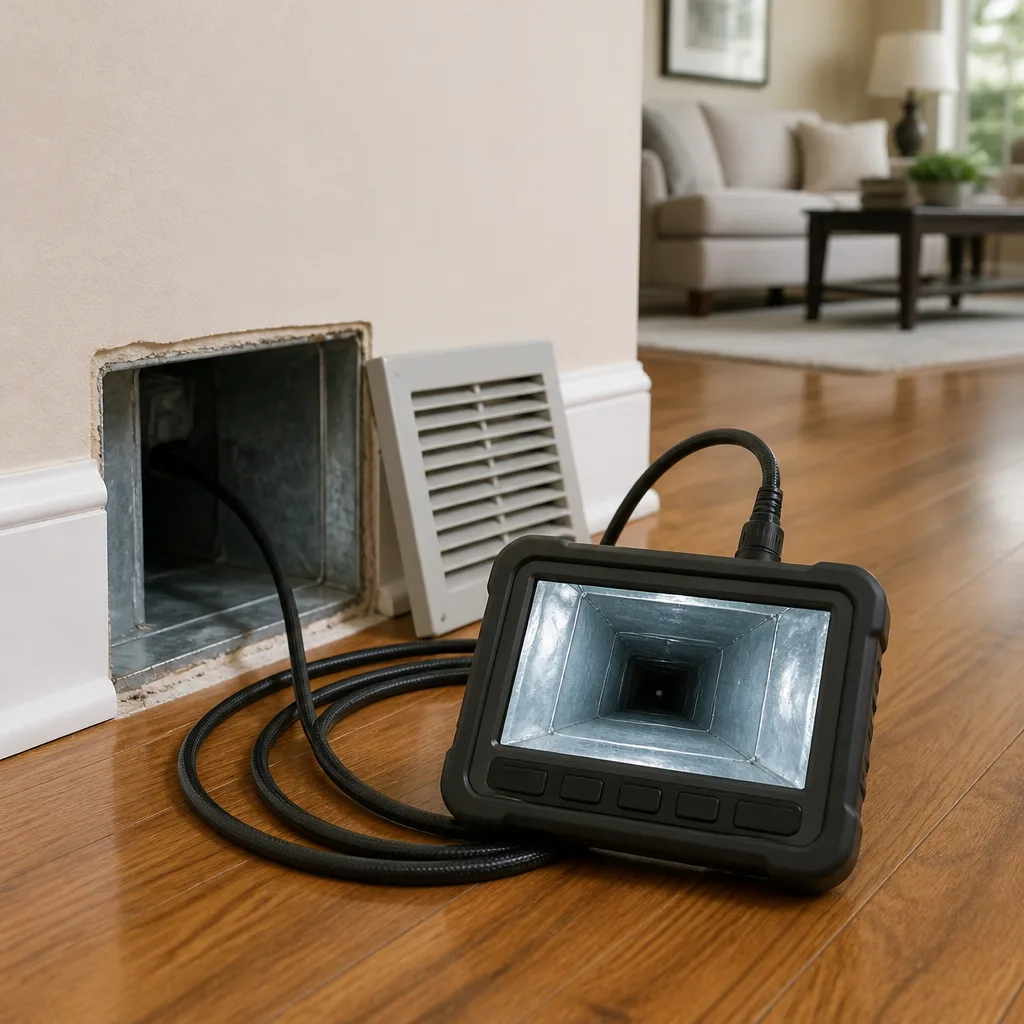 Camera inspection
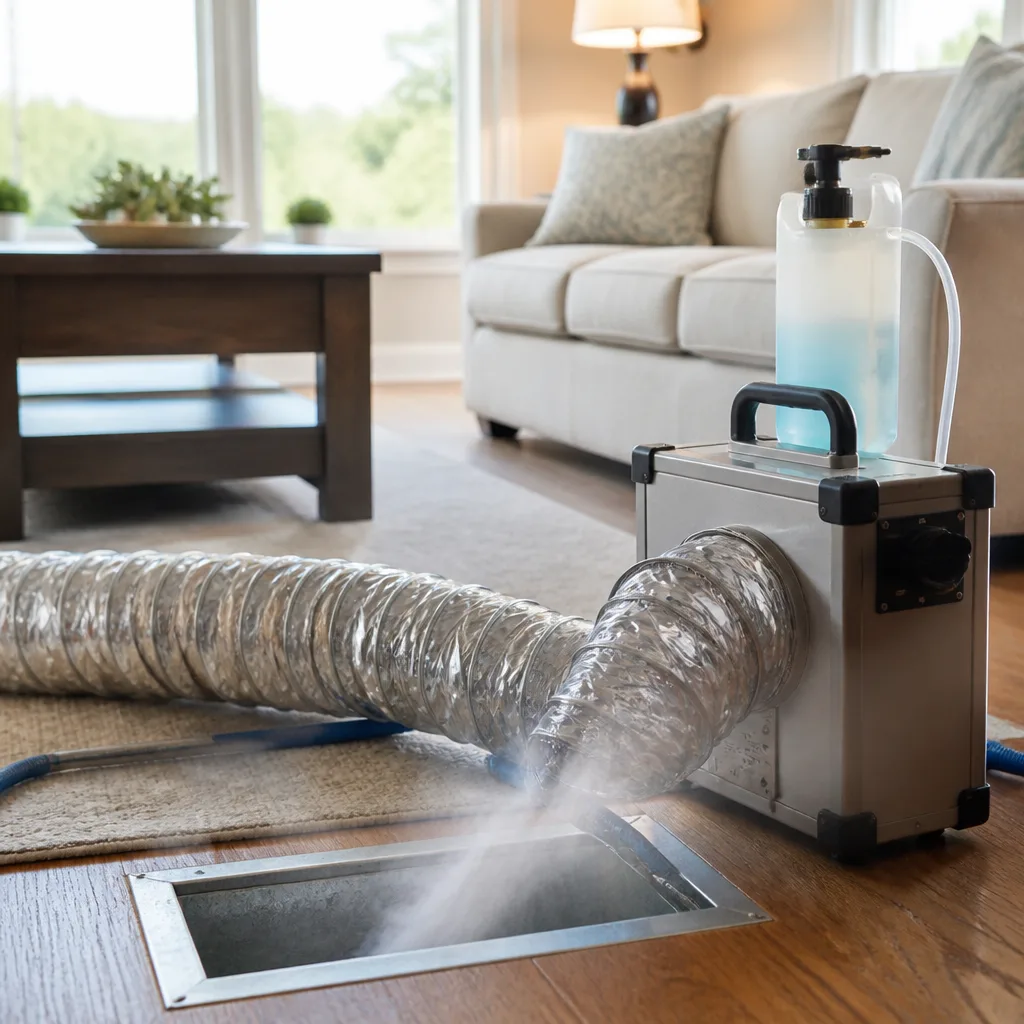 Sanitizing & deodorizing
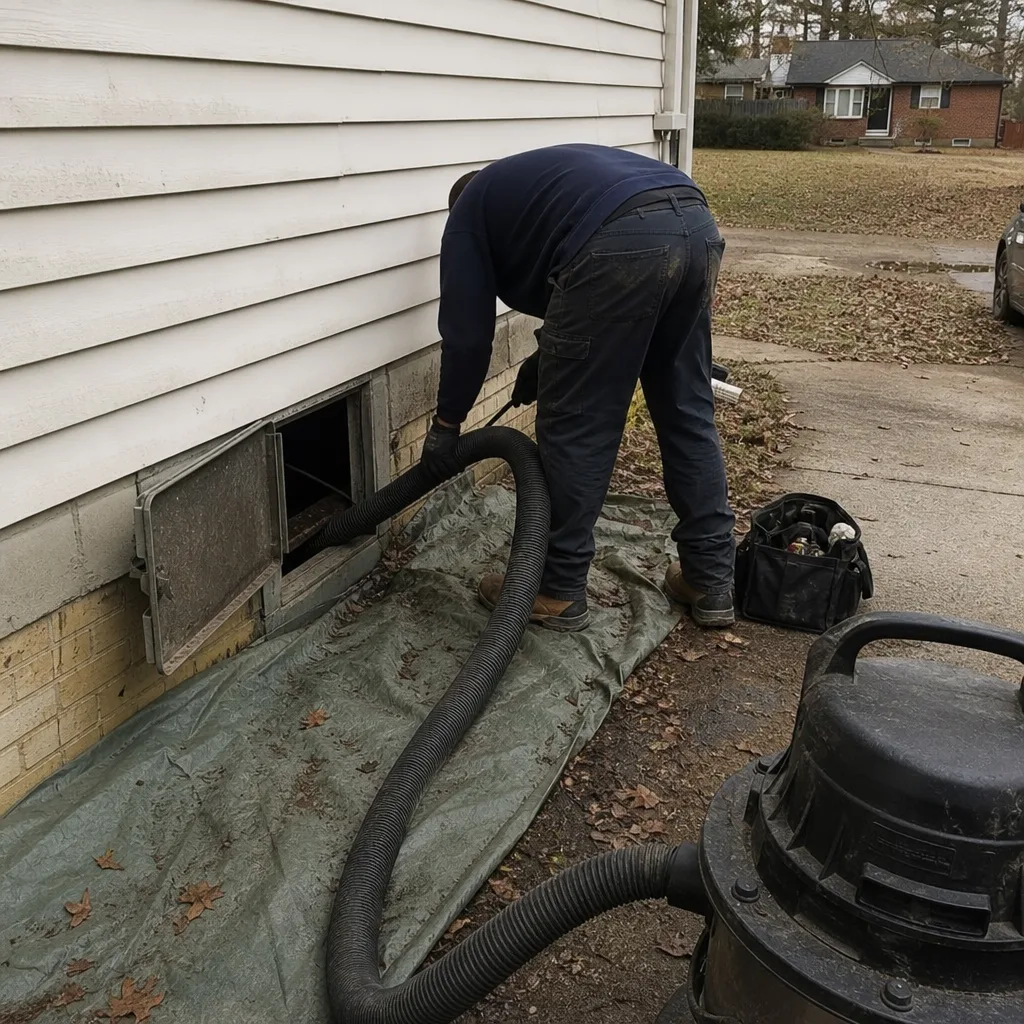
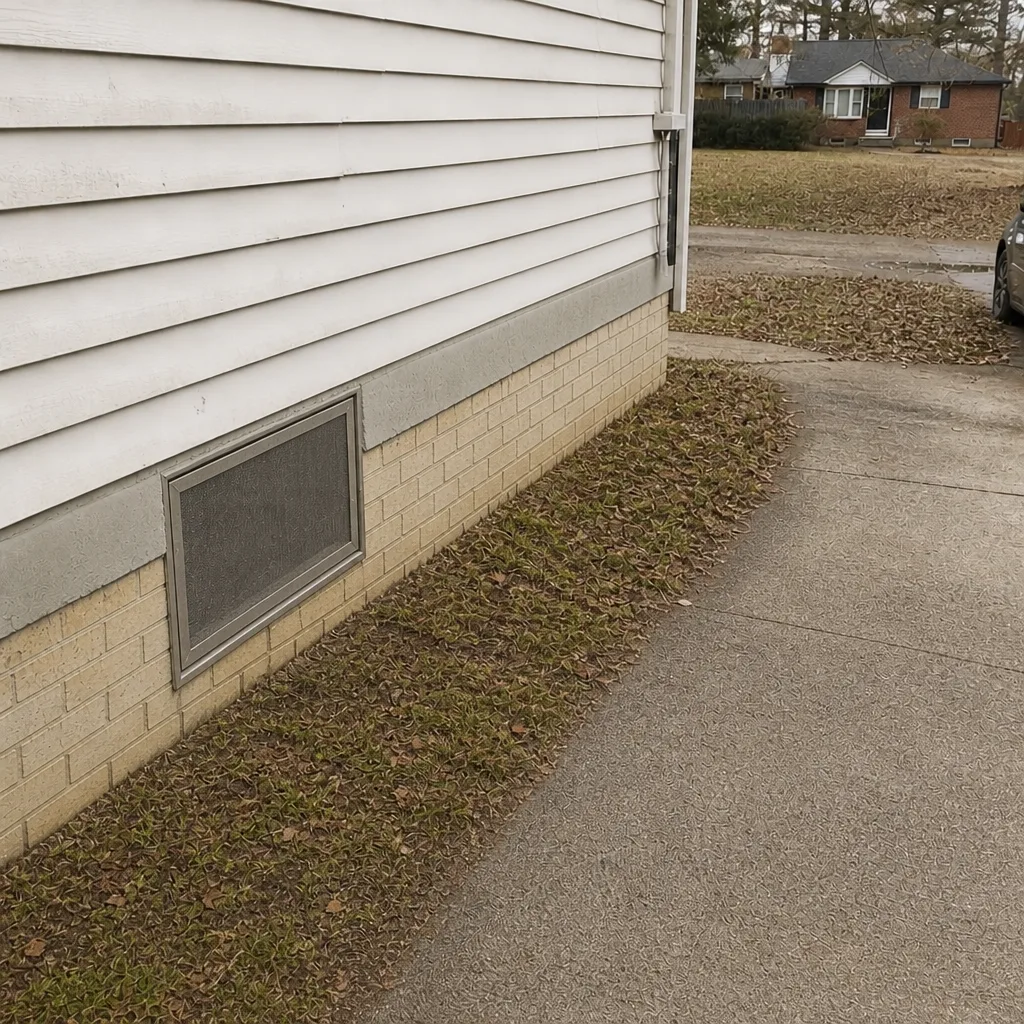
Whole-system duct and dryer vent check with before-and-after photos - you see exactly what came out of your vents
That "$99 whole-house special" is a bait ad - the real number appears once they are in your hallway, or the "clean" is a shop-vac at the register. We photograph the inside of your ducts before and after instead.
Air Duct Cleaning Warning Signs: A Fayetteville Homeowner’s Reference Guide
Visible dust on registers is the warning sign everyone knows. It’s also the least informative one. Every home in Fayetteville collects dust at the supply grilles, and a gray film there tells you almost nothing about what’s happening inside the trunk line three feet away. The signs that actually tell you something are mechanical and observable: a musty smell that shows up only in the first 15 minutes of a cooling cycle, airflow that’s gone uneven between two rooms that used to match, a filter that loads faster this August than it did last August. Those signals point to specific parts of the system. This guide walks through each one, explains what it usually means, and shows you how to check for it yourself without pulling anything apart. You’ll also get the post-renovation signs that matter in a city building as fast as Fayetteville is.
Quick Answer
The warning signs that actually justify professional air duct cleaning in Fayetteville are mechanical, not cosmetic: intermittent musty odor at the start of a cooling cycle, uneven room airflow that wasn’t there before, filters loading noticeably faster than in the same season a year ago, visible debris trails at the register boot, and a recent renovation that ran the HVAC before drywall dust settled. Surface dust on the grille by itself is normal and tells you very little. Our technicians have up to 12 years of experience, and the pattern they see most is homeowners who waited on a real signal because they were watching the wrong one.
Styles & brands we work with
- Whole-home duct cleaning
- Dryer vent cleaning
- Camera inspection
- Sanitizing & deodorizing
Table of Contents
- Register Dust vs. Duct Debris: How to Tell Them Apart
- The First-15-Minutes Musty Odor Test
- Uneven Room Airflow and the Door-Gap Test
- Filter Loading Rate as a Diagnostic Tool
- Post-Renovation Warning Signs in Fayetteville
- When the Ductwork Itself Is Damaged
- How Fayetteville’s Climate and Housing Affect Duct Health
- A Separate Warning System: Your Dryer Vent
Register Dust vs. Duct Debris: How to Tell Them Apart
Dust sitting on the face of a supply register is normal. Dust blown out of the register in a visible stream for the first few minutes after the system starts is a different problem, and the distinction comes down to where the debris originates. On the register face, you’re looking at settled house dust that lands there from room air. Coming out of the grille under pressure, you’re seeing material that was sitting inside the duct trunk and got picked up by moving air.
Here’s how to separate the two at home:
- Wipe a supply register clean with a damp cloth and let it dry completely.
- Leave the system off for a couple of hours, then turn it on and hold a white paper towel a few inches below the register for the first minute of airflow.
- Check the towel. A light even coat of gray dust is normal. Grains, fibers, or dark specks that leave a visible pattern are not.
- Look up into the register throat with a flashlight. A thin uniform film is fine. Clumps, webs, or material peeling off the duct wall mean the trunk line needs attention.
The reason this matters in Fayetteville is the construction volume. New neighborhoods go up around existing ones constantly, and the same open-window months that make spring and fall comfortable here also let in plenty of fine particulate. That particulate settles in duct runs, especially the low-velocity branches that serve bedrooms. When the blower picks it up, you see it at the register within seconds. An air duct cleaning visit starts with a camera inspection of the trunk and branch lines, because the origin point determines whether cleaning alone solves it or whether a repair is involved too.
The First-15-Minutes Musty Odor Test
A musty smell that appears only during the first 15 minutes of a cooling cycle and then fades is the single most reliable sign of moisture sitting somewhere in the air handler or the duct system. It’s different from a smell that’s there the whole time the system runs, and it’s different from a smell you notice only after rain. Timing is everything, and the timing tells you where to look.
When the system has been off, the evaporator coil and drain pan sit at room temperature. If moisture is lingering there, the first blast of cooled air picks up that smell and pushes it through the supply side. Once the coil is cold and condensation is running properly, the smell fades because the moisture is moving down the drain instead of sitting. That’s why the odor disappears. Persistent odor is a separate signal, usually pointing to a different source entirely – a dead animal in a return chase, mold growth in wet flex duct insulation, or contamination in the trunk that isn’t moisture-related.
The distinction matters because it changes what a technician looks at first:
- First-15-minutes odor: moisture at the coil, the drain pan, or a wet section of flex duct. Look for a clogged condensate line or a pan that isn’t draining.
- Persistent odor: contamination in the duct itself or in the return chase. This needs a camera inspection and, in our experience, a cleaning.
- Odor after rain only: humidity infiltration at a disconnected duct joint or a return grille pulling from a crawl space or unconditioned zone.
If the odor is musty and intermittent, resist the urge to cover it with a filter upgrade alone. We work with Honeywell and Aprilaire filtration systems and can support your whole-home filtration, but a filter doesn’t fix a wet coil. It just hides the symptom. Find the moisture first. If the smell persists into a second cooling season or shows up alongside visible staining near the air handler, it’s time for a professional look. Our team uses containment-level equipment from Abatement Technologies on situations where air quality is a real concern, and that’s the right approach when you’re dealing with moisture in a system that serves a family’s bedrooms.
Uneven Room Airflow and the Door-Gap Test
If one bedroom in your Fayetteville home never got great airflow and never will, that’s a design issue in the duct layout. If it used to be fine and now isn’t, that’s a warning sign, and it usually points to a return air problem or a duct that’s come apart somewhere in the run. The difference between a design problem and a system problem is the word “suddenly.”
The door-gap test will tell you whether the return side is the culprit. Here’s how to run it:
- Close the door of the room with weak airflow, with the HVAC running.
- Feel for air moving through the gap under the door with your palm. There should be a clear, steady pull into the room.
- If the gap is sealed off, crack the door an inch and see if airflow from the supply register improves.
- If closing the door kills the supply, the room is starved of return air and the system is pressurizing the room and stalling the supply.
- If airflow improves with the door open but the supply still feels weak, the problem is upstream – a branch duct that’s crushed, disconnected, or blocked.
Rooms that improve dramatically with the door cracked usually need a return air path added, not a cleaning. Rooms that stay weak regardless need a camera inspection of the branch line. In older Fayetteville homes – and the city has plenty of housing stock from the mid-20th century – flex duct sections run through tight attics and get stepped on during other trades’ work. That’s a common source of a collapsed run that no amount of cleaning will fix. This is why we do air duct repair alongside cleaning; finding the problem is only half of it.
Filter Loading Rate as a Diagnostic Tool
How fast your filter loads is diagnostic information, and most homeowners throw it away every time they replace a filter without noting the date. A filter that lasted four months last summer and is clogged in six weeks this summer is telling you something changed. The cause isn’t more dust in the house – it’s dust that’s bypassing the filter or dust that the filter is now seeing more of because of leakage elsewhere in the system.
What a sudden change in loading rate usually means:
- Loading faster than the same season last year: return air leakage is pulling unfiltered air from a crawl space, attic, or garage. The filter is doing its job with dirtier intake.
- Loading slower than usual: the filter isn’t seated properly and air is bypassing it. That’s worse than a dirty filter because the dirt is going into the coil.
- Loading unevenly across the filter face: the return duct is delivering air asymmetrically, which points to a collapsed or disconnected return run.
- Loading fast and the house is still dusty: filter bypass at the air handler cabinet – a common issue with poorly fitted filter doors.
Start writing the replacement date on the filter edge with a marker. Two or three replacements is enough to establish a pattern, and once you have the pattern, a change stands out. If your filter loading has changed noticeably in the past year, that alone is a good reason to have a technician look at the return side. We can’t see your filter history, but we can measure static pressure and inspect the return chase in one visit.
Post-Renovation Warning Signs in Fayetteville
Fayetteville’s active construction market means a lot of homes get renovated in any given year, and a lot of those renovations run the HVAC system before the dust has settled. Drywall dust, insulation fibers, and concrete particulate from masonry work are fine enough to travel through a return grille and coat the coil and the inside of the trunk. Once they’re in, they don’t leave on their own, and they don’t come out with a shop vacuum.
Watch for these signs in the weeks after a renovation:
- Drywall dust visible at the return grille or on the fins of the air handler.
- A white haze of drywall dust inside the supply registers in rooms that weren’t renovated.
- Insulation fibers visible in the register throat, especially from rooms where walls were opened.
- Concrete or mortar dust in the filter after a bathroom or kitchen tile job.
- A musty or chalky smell when the system runs, weeks after the work finished.
Construction crews rarely seal off return grilles before starting work, and even when they do, small openings in a plastic barrier let through plenty. The professional response is containment-level cleaning: negative pressure on the system so dust doesn’t migrate into the living space while the ducts are being cleaned out. That’s what the Abatement Technologies equipment is for, and it’s why a shop vac setup is not the same service. The right time to schedule the cleaning is after the drywall sanding and before the family moves back into the space. If the work is already done and you’re seeing dust trails, the visit is still worth scheduling. It’s just more work by then.
When the Ductwork Itself Is Damaged
Cleaning a duct system that’s already leaking or disconnected is a waste of money. The signs of physical damage are distinct from the signs of accumulated debris, and they show up in how the system performs rather than in how it smells. If two or more of these are present, the job needs a repair, not just a cleaning.
- Whistling or hissing at a register: a joint has opened up or a branch line has partially separated.
- Visible sagging flex duct in the attic: flex duct that’s lost its support straps pinches closed over time and starves the room it serves.
- Air blowing from a joint in the trunk: taping that’s failed or duct board that’s started to delaminate.
- Cold spots in winter or hot spots in summer near the ceiling: supply air is escaping into the attic before reaching the room.
- High energy bills with no change in use: leaked conditioned air is the most common cause in a system with these signs.
Our technicians have up to 12 years of experience, and the repair-vs-clean call is a judgment we make per home after inspecting the run. Rotobrush rotary-brush equipment handles the cleaning side, and the repair capability means the compromised section gets fixed rather than cleaned around. A disconnected run in an attic in Fayetteville, with summer attic temperatures that routinely push past 130 degrees, doesn’t just waste energy – it dumps that attic air into a bedroom.
How Fayetteville’s Climate and Housing Affect Duct Health
Fayetteville sits in a humid subtropical climate with long, hot summers and mild winters, which means the air conditioning runs hard from roughly May through September and pulls a lot of moisture out of the air in the process. That’s the local reality that shapes duct trouble here. The coil and drain pan are working hard through that stretch, and a partially clogged condensate line that would barely matter in a drier climate will cause musty odor and coil moisture problems here within a season.
The region’s soils are largely sandy and drain well, which is why slab-on-grade construction dominates newer neighborhoods, while older parts of town have more crawl space housing. Both layouts have their own duct warnings:
- Crawl space homes: return chases and flex runs in the crawl are exposed to ground moisture and pest intrusion. A return pulling from a wet crawl is the most common source of musty odor we see in older Fayetteville homes.
- Slab homes: ductwork runs overhead in the attic, where the collapse and step-through problems live. Attic runs also see more heat stress on the duct jacket.
- Spring pollen: Fayetteville’s spring brings pine pollen and oak pollen in heavy waves, and a system running through it draws all of it into the return. A filter that looks tan in April is doing exactly what it should.
The practical takeaway is that duct warning signs look a little different depending on where in Fayetteville you live, and the crawl space homes around the historic districts deserve the most attention on the return side. This is the kind of local knowledge that shapes how we approach Fayetteville homes. Our approach starts with inspecting the return before anything else.
A Separate Warning System: Your Dryer Vent
Your dryer vent shares some warning signs with the duct system, and the stakes are higher. A dryer vent that’s clogged with lint is a fire risk, and it’s the leading cause of residential dryer fires in the country. The signs are worth knowing because they’re distinct from the supply duct signs covered above.
- Clothes taking two cycles to dry: the most common early sign. Lint has reduced the vent’s carrying capacity.
- The dryer itself is hot to the touch: heat isn’t escaping the way it should.
- Lint building up behind the dryer or around the vent flap outside: lint that’s not making it out of the house is collecting somewhere in the run.
- A musty or “burnt” smell in the laundry area: this one warrants immediate attention.
- The exterior vent flap doesn’t open when the dryer runs: air can’t move through at all, and lint is packing in.
Dryer vent cleaning is a dedicated service for us, not something tacked onto a duct cleaning visit. The same systematic inspection and professional vacuum equipment applies, and the standard is the same: clear the entire run, verify airflow at the exterior cap, and show you the material that came out. In our experience, dryer vent cleaning is the single duct-adjacent service most often postponed past the point where it should have been done. If your dryer is taking twice as long as it used to, that’s the sign to act on.
Common Mistakes to Avoid
- Judging duct health by what’s on the register face. Surface dust on the grille is normal house dust and tells you almost nothing. Check the register throat with a flashlight and watch for a visible debris stream at startup instead.
- Replacing the filter every time without writing the date on it. The loading rate is diagnostic. You can’t spot a change if you don’t know when the last one went in.
- Booking a cleaning from a coupon without an inspection first. A price quoted over the phone before anyone has looked inside the system is a guess. The right sequence is inspection, camera footage, then a written estimate.
- Running the HVAC with windows open during Fayetteville’s spring pollen peaks. The system pulls the pollen straight into the return and loads the filter in a fraction of the normal interval. Leave it off while the windows are open, or accept the filter cost.
- Letting a renovation crew start work without sealing the return grilles. Drywall dust is the most common post-renovation duct problem we see. Ten minutes of plastic and tape before the crew arrives saves the trunk line.
- Ignoring the dryer vent because “the dryer still works.” The dryer working is the floor, not the goal. Long dry times and a hot dryer are the warning signs, and the fire risk is real.
- Assuming uneven airflow is a cleaning problem. Uneven airflow is usually a return-side or a damaged-duct problem. Cleaning a disconnected run doesn’t fix it – repair does.
See the difference
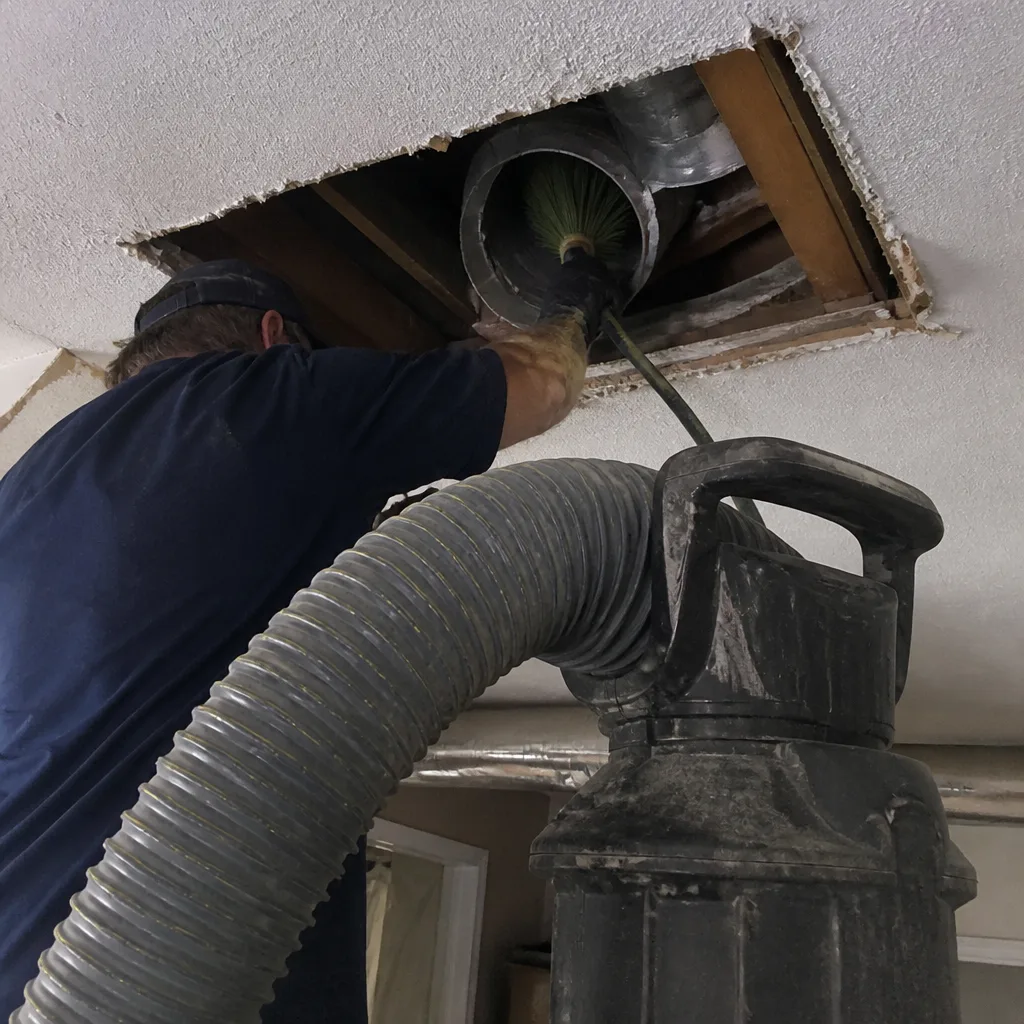 Before
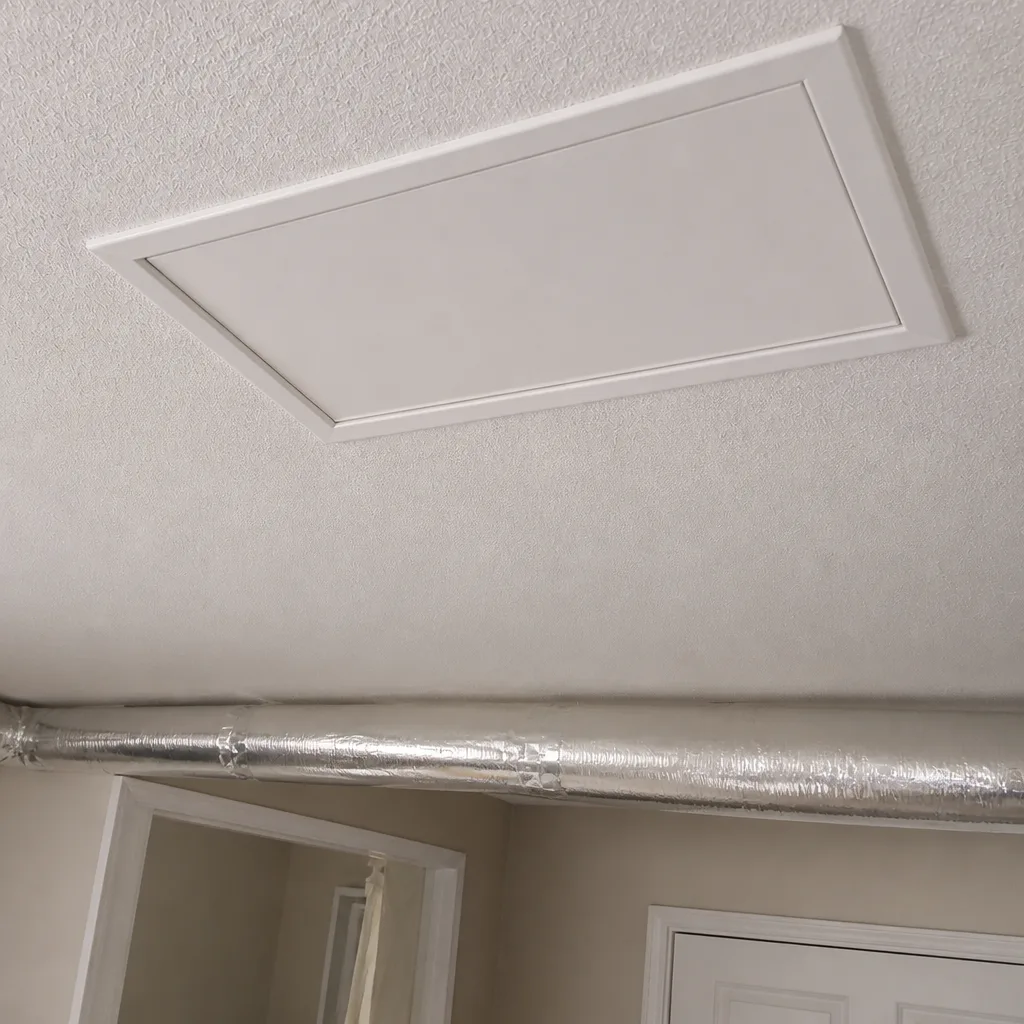 After
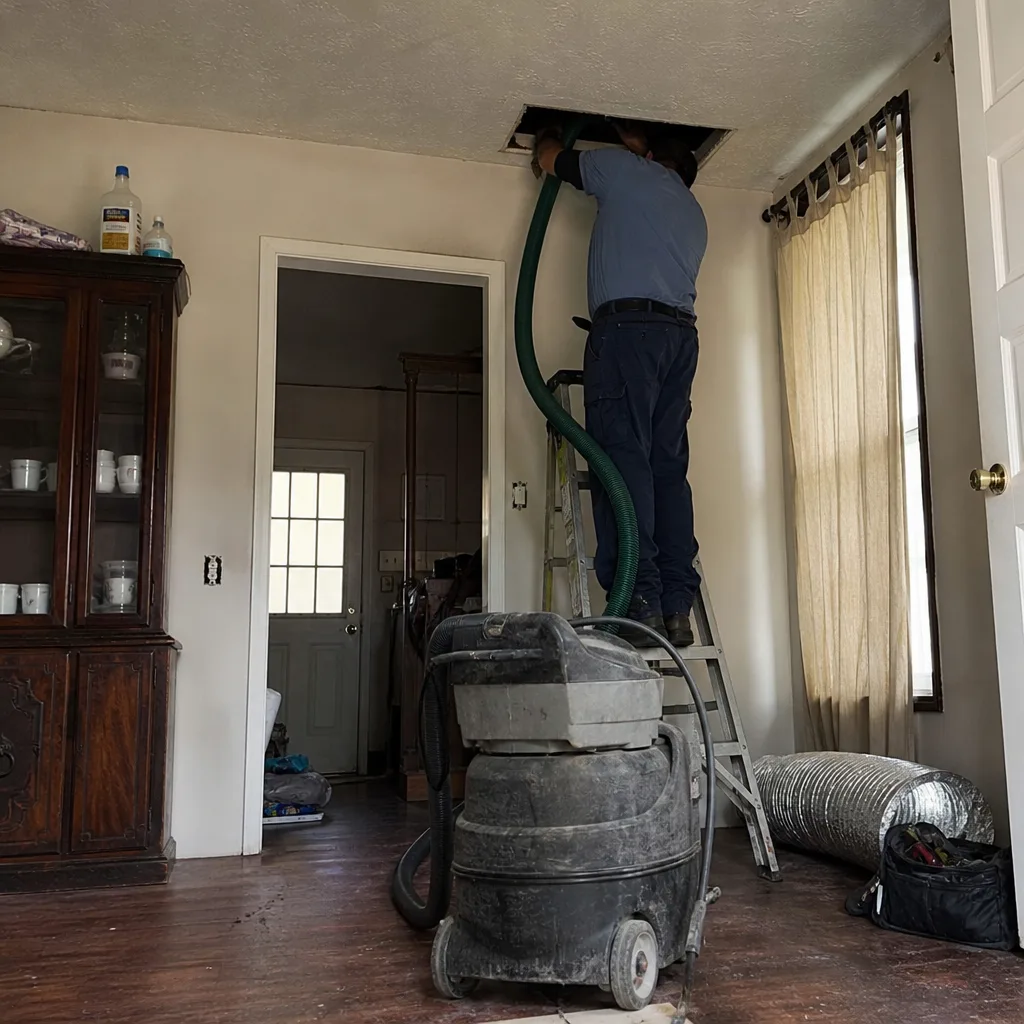 Before
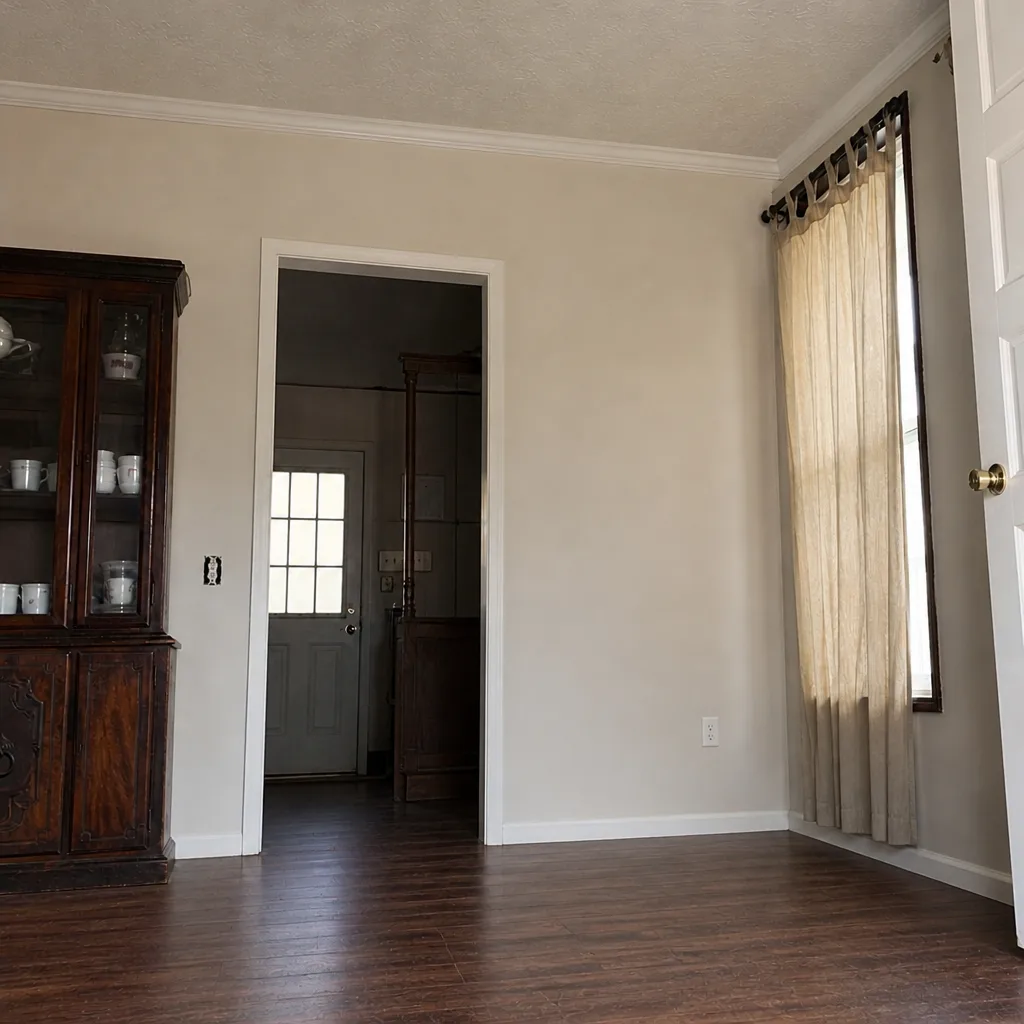 After
 Before
 After
When to Call a Professional
Call us when you’ve got a signal that points to the inside of the system and you can’t resolve it with an external check. The specific triggers are: musty odor that appears in the first 15 minutes of a cooling cycle, airflow that’s changed noticeably between rooms, filters loading noticeably faster than the year before, visible debris at the register throat, a renovation that ran the HVAC during the dusty phase, a dryer that takes two cycles to dry clothes, or a return that smells like a crawl space.
Wexford Air Duct Cleaning offers free estimates in Fayetteville. Call us at (888) 670-4029. We answer 24/7, and fast dispatch runs from 7am to 7pm, Sunday through Friday. The estimate is free, the price is set per job by the written estimate, and you get before-and-after photos of your own ducts so you can see what came out. Our Wexford Air Duct Cleaning team uses Rotobrush rotary-brush systems and Nikro HEPA equipment on every job – the same tools restoration and remediation contractors rely on, not consumer gear.
Frequently Asked Questions
The mechanical signs are intermittent musty odor at cooling startup, uneven room airflow that changed recently, filter loading faster than the season before, visible debris in the register throat, and a recent renovation. Those point to something inside the system. Surface dust on the register face does not, and neither does the general “you should clean your ducts every few years” advice you’ll see everywhere. Call (888) 670-4029 for an exact quote – estimates are free.
Typical whole-home estimates in the Fayetteville market run from a few hundred dollars on a small branch system up to roughly a thousand dollars on a large home with a complex layout and multiple supply trunks. We don’t price per vent, and we don’t quote over the phone before an inspection. The written estimate after the inspection sets the final price – there’s no surprise invoice once the work is under way. Call (888) 670-4029 for an exact quote – estimates are free.
A very low quote is almost always a per-vent price that grows once the technician is on site, or a setup too small to actually clean the trunk line. A truck-mounted unit in a consumer van draws through a short hose, which means the trunk and branch connections aren’t getting the airflow and containment that a professional job needs. We give one flat price per system, agreed before work starts. Call (888) 670-4029 for an exact quote – estimates are free.
Ask for before-and-after photos of your own ducts. Every job we do includes photos of the register throats, the trunk line, and the material the vacuum pulled out, so you’re seeing the specific evidence from your home, not a stock image. A company that can’t produce photos of what it did shouldn’t be doing the work. Call (888) 670-4029 for an exact quote – estimates are free.
There isn’t a fixed interval. Most homes go years without needing it, and the right trigger is a warning sign – an odor, a changed filter loading rate, an airflow problem – rather than a calendar. Renovations, new pets, and crawl space return issues can all push the timing up. Watch for the signs in this guide rather than counting years. Call (888) 670-4029 for an exact quote – estimates are free.
Not necessarily, but it deserves its own inspection. Dryer vent cleaning is a standalone service we offer, and the warning signs are different from duct signs – long dry times, a hot dryer, lint accumulation, a flap that doesn’t open. A clogged dryer vent is a fire risk, so it’s worth checking at the same time as the duct inspection even if it’s a separate job. Call (888) 670-4029 for an exact quote – estimates are free.
The Bottom Line
The signs worth acting on in your Fayetteville home are the mechanical ones: a musty smell in the first 15 minutes of cooling, airflow that changed, filters that load faster than last season, debris in the register throat, post-renovation dust, and a dryer that takes two cycles. Those tell you where the problem is and what it needs. Surface dust on the register face doesn’t. If you’re seeing one or more of the real signs, the right next step is a professional inspection with a camera in the trunk, a written estimate before anything starts, and photos of what came out afterward. That’s how the job should run.
Call (888) 670-4029 for a free estimate. We answer 24/7. Fast dispatch from 7am to 7pm, Sunday through Friday.
Written by the team at Wexford Air Duct Cleaning.