
Last updated November 16, 2026
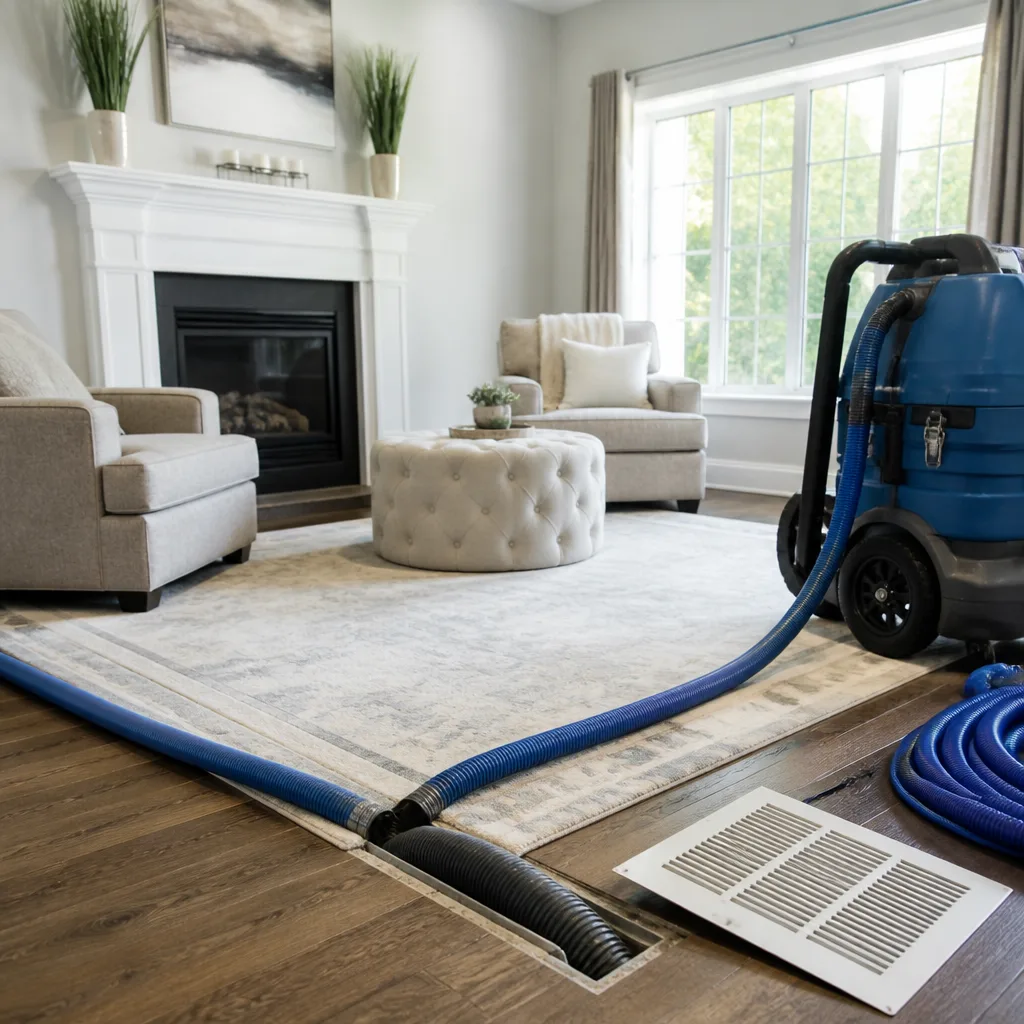 Whole-home duct cleaning
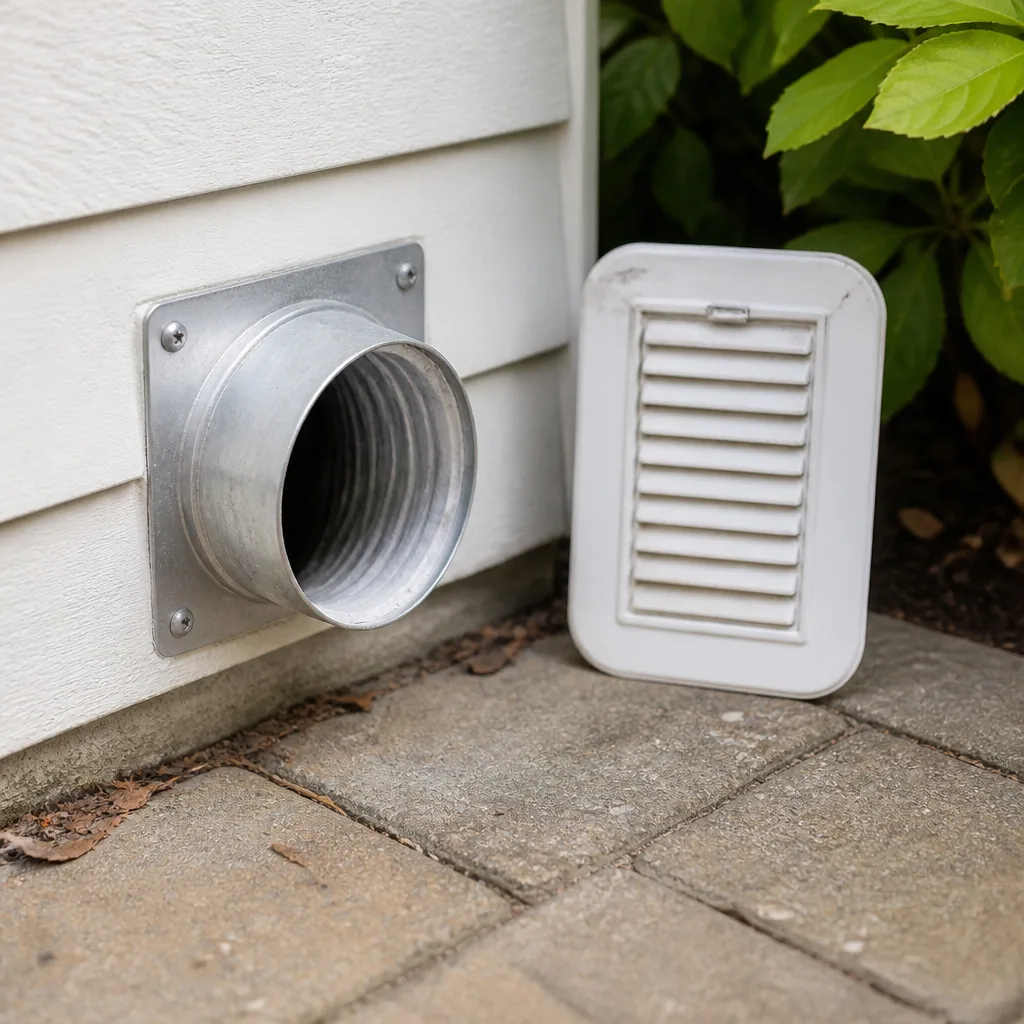 Dryer vent cleaning
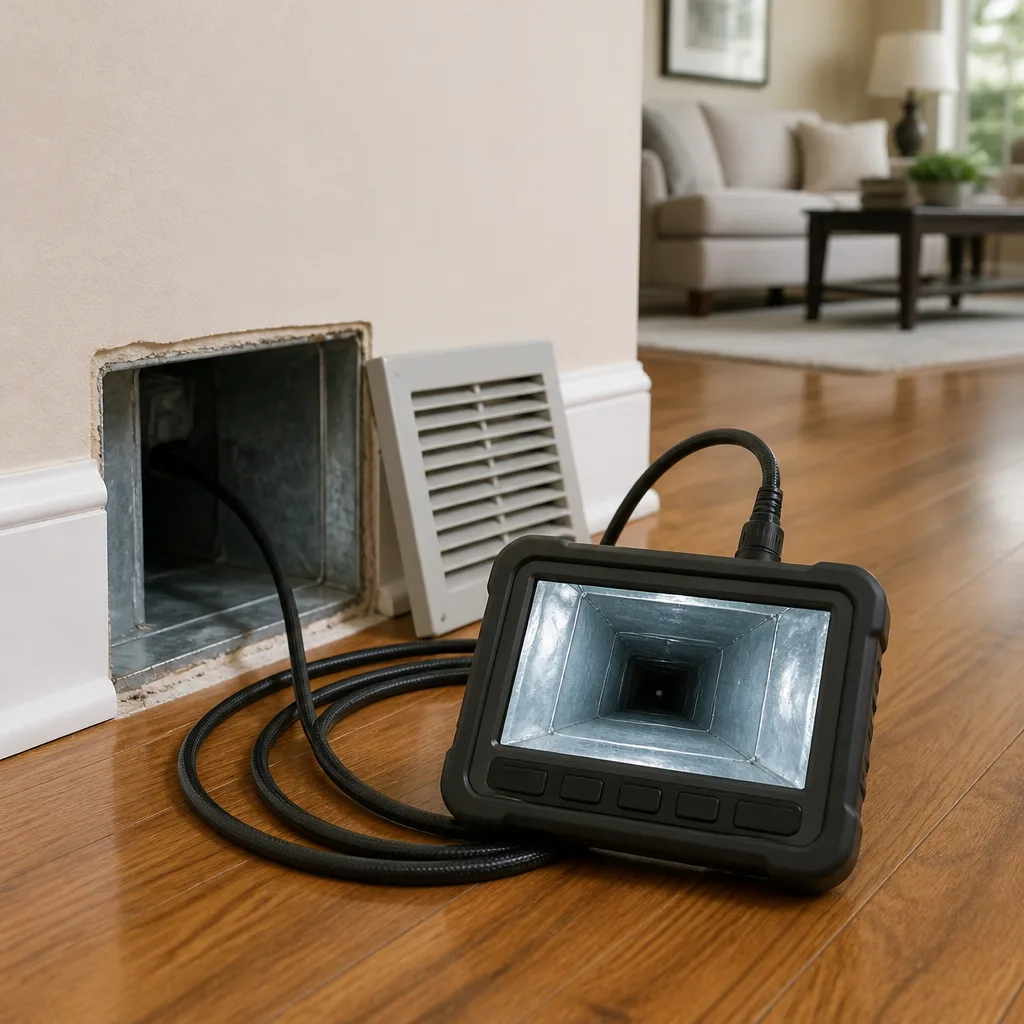 Camera inspection
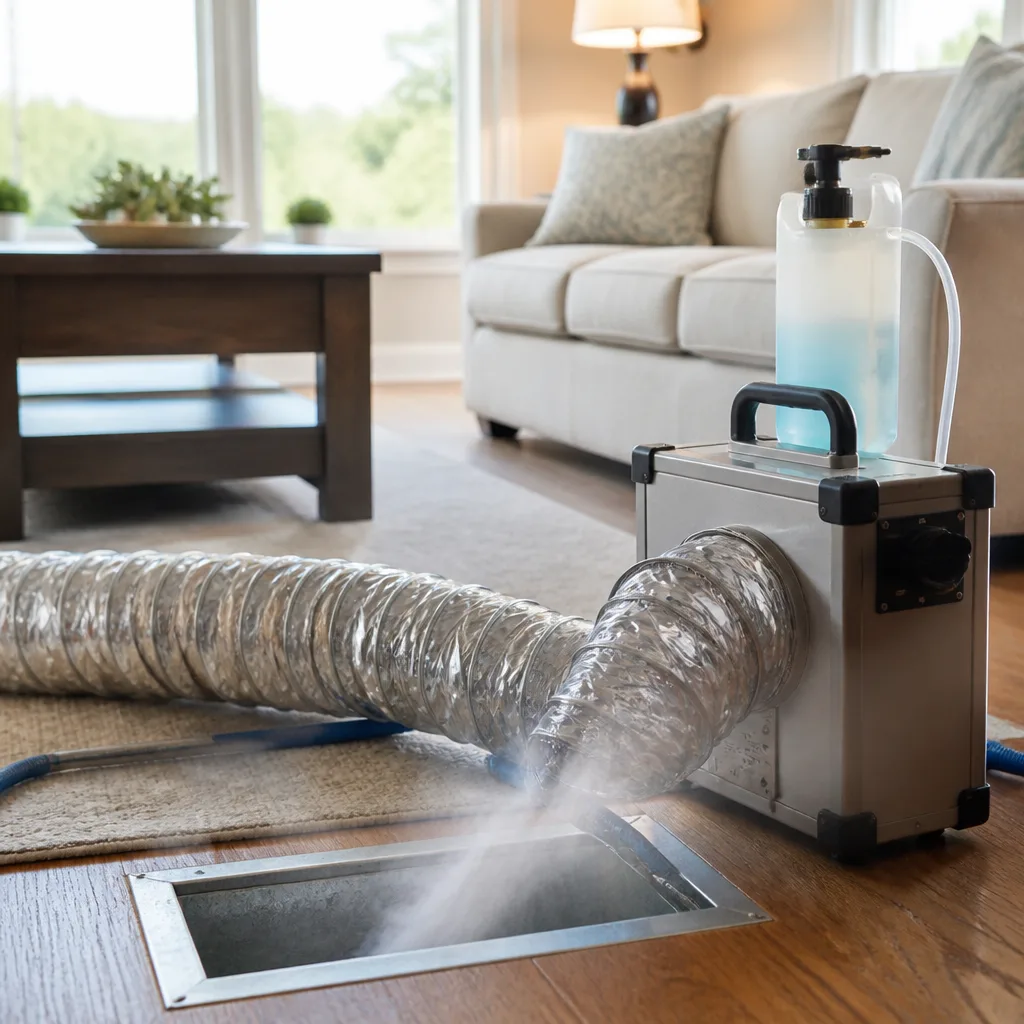 Sanitizing & deodorizing
Whole-system duct and dryer vent check with before-and-after photos - you see exactly what came out of your vents
That "$99 whole-house special" is a bait ad - the real number appears once they are in your hallway, or the "clean" is a shop-vac at the register. We photograph the inside of your ducts before and after instead.
Air Duct Cleaning Emergency Preparedness Guide for Fayetteville Homes
After a flood event, the instinct is to get the air conditioning running as fast as possible. That instinct is wrong. A duct system that sat humid or wet during an extended outage is a distribution network for whatever grew in it, and running the system before it’s inspected turns a contained problem into a whole-house one. Fayetteville sits in a region that sees named storms, sustained power outages, and flooding, and most homeowners have never been told what to do with their HVAC after one. This guide covers the post-storm protocol, how to tell whether you need emergency intervention or a standard cleaning, what happens inside flex duct during high humidity, and the documentation that protects an insurance claim.
Quick Answer
Before restarting your HVAC after a storm, flood, or extended power loss, keep the system off and have the ductwork inspected first. A duct system that sat humid or wet can hold moisture, debris, and mold, and running the blower pushes all of it through every room in the house. If the air handler or ductwork was submerged, wet, or sitting in high humidity for days, call a professional for assessment before you flip the thermostat back on.
Styles & brands we work with
- Whole-home duct cleaning
- Dryer vent cleaning
- Camera inspection
- Sanitizing & deodorizing
Table of Contents
- Why Fayetteville Homes Face Specific Post-Storm Duct Risks
- What to Do Before Restarting Your HVAC After a Storm
- Emergency Intervention vs. a Standard Cleaning: How to Tell
- What Happens Inside Flex Duct in Extended Humidity
- Documentation for Insurance: What to Photograph and What to Request
- Pre-Storm Preparation That Reduces Post-Event Risk
- When Duct Repair Matters More Than Cleaning
- When Ductwork Should Be Replaced, Not Cleaned
Why Fayetteville Homes Face Specific Post-Storm Duct Risks
Fayetteville’s climate works against duct systems in a way that shows up most clearly after a storm. Summers here are long, hot, and humid, and that humid air is exactly what a duct system is most vulnerable to once the power goes out and the air conditioning stops moving dry, conditioned air through the house. Without the system running, the indoor humidity climbs, and the cooler surfaces inside flex duct, the air handler cabinet, and every plenum become places where condensation forms and stays.
The region also sees named storms and flooding events, which add two things to the picture: wind-driven rain that finds its way into attic ductwork and crawl spaces, and standing water that can reach low-mounted air handlers and floor registers. When we talk with homeowners across Fayetteville, the same pattern comes up. The house loses power for several days. The humidity inside climbs. Then the power comes back and the first thing everyone does is turn on the air to cool the house down and dry it out. That single action can circulate whatever colonized the ductwork during the outage through every bedroom, kitchen, and living space.
The goal of this guide isn’t to alarm anyone. It’s to give Fayetteville homeowners a clear, practical protocol so that a storm doesn’t become a much longer and more expensive problem than it needs to be. Preparation before the storm and inspection before restarting are the two habits that change outcomes the most.
What to Do Before Restarting Your HVAC After a Storm
What you do in the hours after a storm matters as much as what you do during it. Here’s the sequence we walk homeowners through.
- Keep the system off. Don’t run the air conditioning, the fan, or the heat until you’ve done a visual inspection. If you’re not sure whether water reached the system, leave it off.
- Check the air handler for water. Look at the cabinet and the platform it sits on. Any standing water, damp insulation, or visible staining at the bottom edge is a sign water got in. Don’t run the blower.
- Look at floor and wall registers. Pull the grilles off a couple of registers. Water, grit, leaves, or fine sediment inside means storm material entered the duct. Note which rooms show it.
- Smell the air near the returns. A musty or earthy smell at the return grille is a strong signal that moisture sat inside the system and something started to grow.
- Check the attic duct runs if you can safely reach them. Look for sagging flex duct, torn insulation jacket, or visible condensation on the inside of the jacket. Don’t walk on ceiling joists you can’t see.
- Photograph everything before you touch it. Photos of the air handler, any water line, registers, and attic runs are gold for a claim later.
- Call for a professional inspection before restarting. A trained eye can catch what a visual check at floor level misses.
If you’re going to need air duct cleaning after an event, this sequence also makes the job faster and cheaper because the technician knows what they’re walking into. Our technicians have up to 12 years of experience, and we use professional-grade equipment on every job, not a shop vac and a hose.
Emergency Intervention vs. a Standard Cleaning: How to Tell
Not every post-storm duct situation is an emergency. Some houses come through a storm needing nothing more than a standard cleaning. Others need professional containment-level intervention before anyone runs the AC. Here’s how to tell which side you’re on.
Signs you need emergency professional intervention
- Standing water anywhere near the air handler, or a visible water line on the cabinet.
- Wet, matted, or collapsed insulation inside or around the ductwork.
- A persistent musty smell at multiple return grilles, not just one.
- Sewage, mud, or floodwater reached the floor registers or any low duct.
- Visible mold growth on the air handler cabinet, plenum, or register boots.
- The system was running while the house was still wet or was turned on before drying out.
Signs a standard cleaning is likely enough
- No water reached the air handler or ductwork; the house lost power but stayed dry.
- Debris is limited to dust, dry leaves, or grit pulled in through return grilles.
- No odor at the returns, or only a mild dust smell that clears within minutes.
- Ductwork is intact, with no tears, sagging, or disconnected sections.
If any of the first list applies to your Fayetteville home, have the system assessed before you turn it on. When the situation calls for containment-level care, we bring Abatement Technologies equipment to keep fine particulate from spreading during the work, and we run Nikro HEPA vacuums so what comes out of the duct stays out of the room.
What Happens Inside Flex Duct in Extended Humidity
The duct system in most Fayetteville homes is flexible, insulated flex duct, and flex duct has a specific behavior in high humidity that homeowners should understand. The outer jacket is a vapor barrier and the inner liner is a smooth or corrugated plastic. Between them sits insulation, and that insulation performs its job only as long as the barrier stays intact.
When the air conditioning is running, cool air inside the duct keeps the inner surface cool, and the vapor barrier keeps humid attic air from condensing on it. Once the system stops during a power outage, two things shift. The attic heats up and humidity rises, and without the blower moving air, any moisture that does get in has nowhere to go. If attic humidity stays high for many hours, the risk of condensation forming at the liner and in the insulation climbs. A vapor barrier with even a small tear or a loose joint gives humid air a path to the insulation, and that’s where the real trouble starts. Damp insulation is very difficult to dry in place, and it becomes a surface where biological growth can take hold.
That’s the specific threshold the practical rule of thumb points at: any period where the barrier is compromised and humidity stays elevated for many hours is the window when contamination risk becomes real. The general advice we give Fayetteville homeowners is this. If your attic ductwork sat in a hot, humid attic for days without the system running, and you can see any damaged jacket or condensation, treat it as needing assessment.
Documentation for Insurance: What to Photograph and What to Request
Insurance claims for duct damage after a storm succeed or fail on documentation. The carrier needs to see what happened, when it happened, and what was done about it. Here’s what to capture and collect.
Photograph before any cleanup
- Every exterior wall at the flood line, with a tape measure for reference if you have one.
- The air handler cabinet from multiple angles, including any water line on the metal or cabinet.
- Every floor and wall register with the grille removed, especially any showing water, grit, or sediment.
- Attic ductwork from a safe vantage, showing any sagging, torn jacket, or visible condensation.
- The indoor thermostat and any smart thermostat history showing when the system first ran after the outage.
- Photos of any debris, leaves, or mud that entered through returns or registers.
Records to request from the professional
- A written inspection report describing what was found at the air handler, plenum, trunk, and branches.
- A written post-remediation report documenting what was cleaned, with the method described, and what was left in place.
- Before-and-after photos of the duct interior, which our team captures on every job.
- An invoice that clearly separates cleaning from repair work, so each line maps to a scope item.
- Any recommendation for follow-up work, in writing, with the reasoning stated.
A written report matters more than most homeowners realize. If a claim is denied or a dispute arises later, that report is the record of what condition the system was in and what was done about it. The carrier can’t reimburse for work that isn’t documented.
Pre-Storm Preparation That Reduces Post-Event Risk
A few hours of prep before a named storm can save days of cleanup afterward. Here’s what we recommend for Fayetteville homeowners as a storm approaches.
- Seal the registers on the ground floor. Tape over floor registers and low wall grilles with plastic film and painter’s tape. This keeps wind-driven rain, grit, and flood sediment out of the duct system if water reaches the lowest level of the house.
- Shut off the air handler at the breaker. Turn the HVAC breaker off before the storm arrives so the system can’t kick on automatically after power is restored. This single step prevents the exact situation this guide is about.
- Photograph your ductwork and equipment now. Take clear photos of the air handler, the thermostat, and every register before the storm. Those images make the “before” side of a claim much stronger.
- Move portable equipment and furniture away from registers. Anything that could sit in water against a register or return should go up on blocks or to a higher floor.
- Know where your filter is and have spares. After a storm, a fresh filter is the first line of defense once the system is cleared to run again.
- Save a copy of this protocol on your phone. Reading it while the power is out beats trying to remember it.
If you’re prepping a home in Fayetteville that’s been through a storm before, you already know the drill. What most people skip is the breaker. Leaving the system live and letting it restart on its own after an outage is the most common way a manageable situation turns into a full duct replacement.
When Duct Repair Matters More Than Cleaning
Cleaning can only help a duct system that’s structurally sound. If the ductwork itself is failing, cleaning does nothing useful and the system keeps recontaminating itself. Duct repair is what fixes the underlying problem.
The signs that repair comes first:
- Visibly disconnected sections at a joint, collar, or boot.
- Sagging or partially collapsed flex runs where the inner liner has kinked or closed off airflow.
- Torn or missing insulation jacket, especially in the attic where the barrier is the system’s primary defense against condensation.
- Leaks at the plenum or trunk that pull attic air directly into the distribution system.
- Runs that were rerouted or crushed during a renovation, storm, or previous repair.
We offer air duct repair alongside cleaning, which means a compromised run gets fixed rather than cleaned around. The order matters. A cleaned system with a torn jacket or a disconnected run is only a clean system until the next hot, humid afternoon.
When Ductwork Should Be Replaced, Not Cleaned
Some ductwork is past the point where cleaning and repair make sense. If a run has been wet long enough that the insulation is saturated and can’t be dried, if a section collapsed during a storm, or if the liner has deteriorated so badly that it’s flaking inside the duct, replacement of that section is the honest answer.
The decision usually comes down to the condition of the insulation and the integrity of the barrier. If the interior of the duct can be cleaned and the jacket and joints can be restored, cleaning plus repair is the practical path. If the insulation has absorbed water that can’t be dried, or the inner liner has failed, cleaning won’t fix it and you’ll be back in the same situation next season. A professional inspection should tell you clearly which path applies to your home, in writing. That’s part of what we do on a Fayetteville job, and we don’t recommend replacement when repair and cleaning will do the job.
Common Mistakes to Avoid
- Turning the AC on the moment power comes back. This is the single most common mistake we see after a Fayetteville storm, and it’s the one that turns a contained moisture problem into a whole-house one. Wait for inspection first.
- Skipping the air handler check. Homeowners often look at the registers and stop there. The air handler is where water damage starts, and it’s the piece most likely to be overlooked.
- Running a standard shop vac through the returns. A consumer vacuum recirculates fine particulate back into the room. Professional HEPA equipment exists because the fine fraction is the part that matters.
- Cleaning damaged ductwork before fixing it. Cleaning a torn jacket or a disconnected run just recontaminates the system on the next hot afternoon. Repair comes first.
- Photographing nothing until after cleanup. A claim without before photos is a claim with a weak foundation. Take photos of every wet surface before anything is touched.
- Trusting a verbal report. A written inspection report and a written post-remediation report are the documents a carrier will look at. Anything verbal is nearly useless if the claim is questioned.
- Forgetting the filter. A dirty filter after a storm reduces airflow through the whole system and puts extra load on equipment that may already be stressed. Replace it before the system is restarted.
See the difference
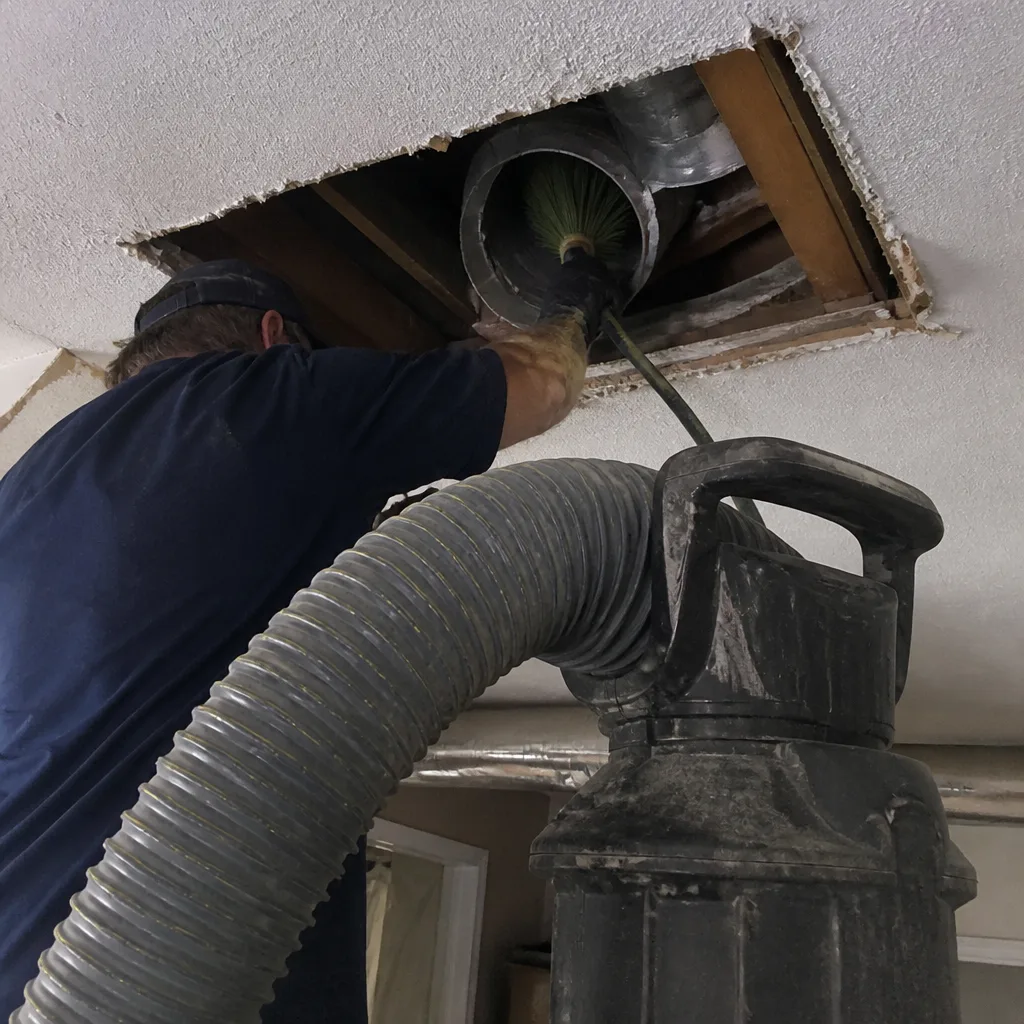 Before
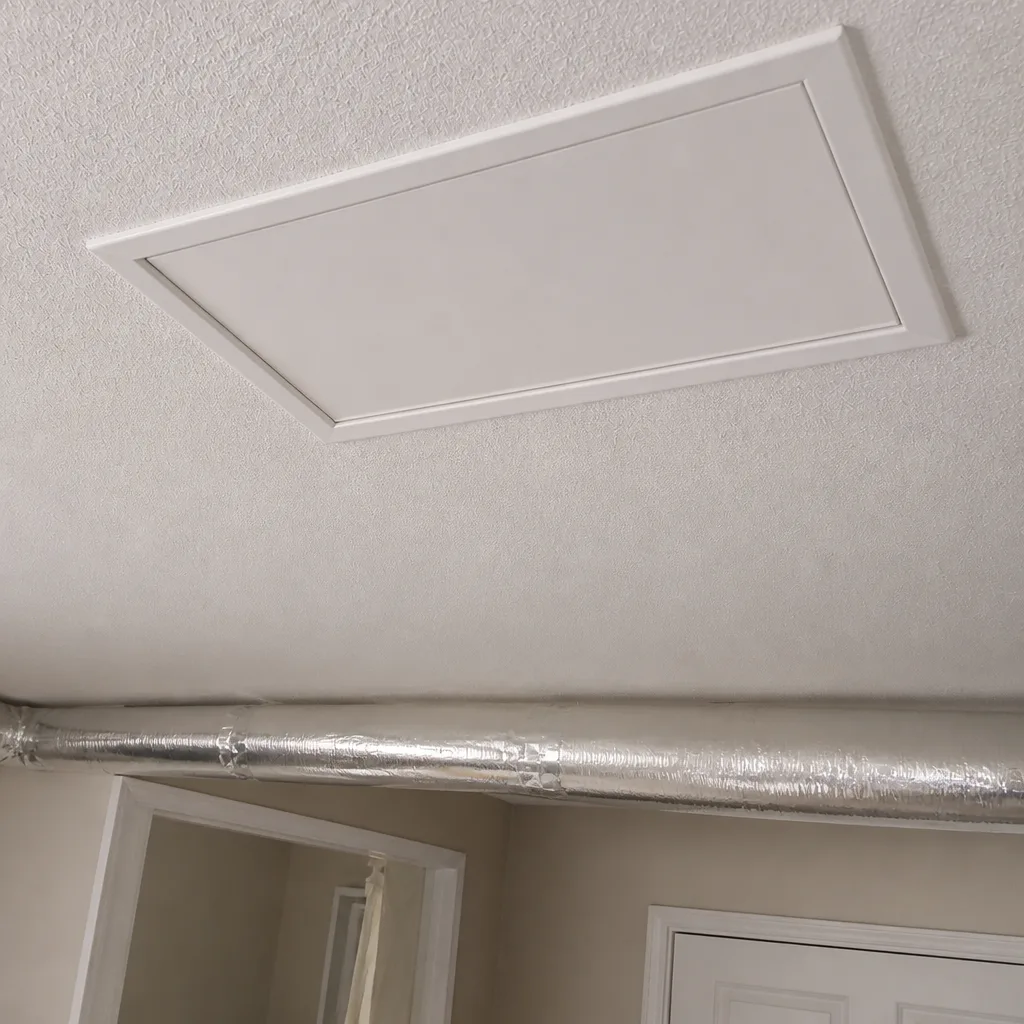 After
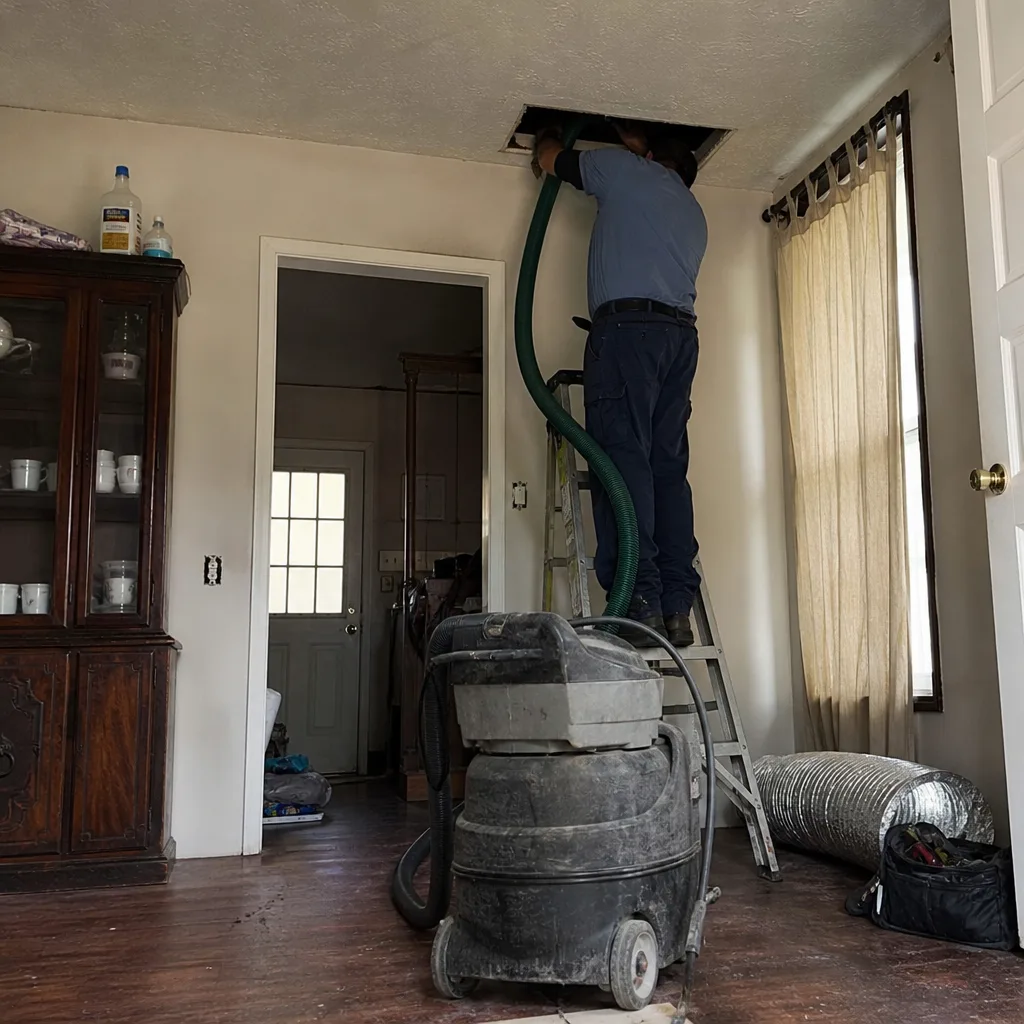 Before
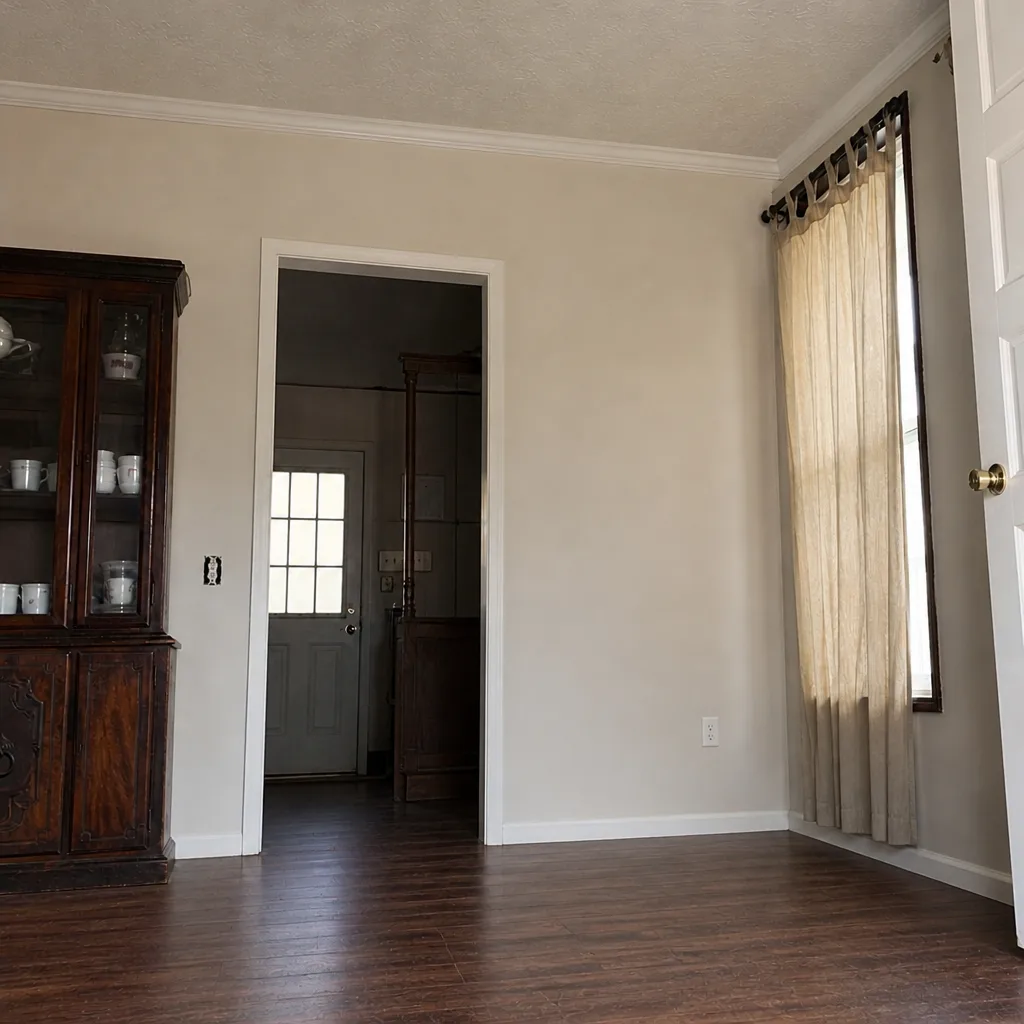 After
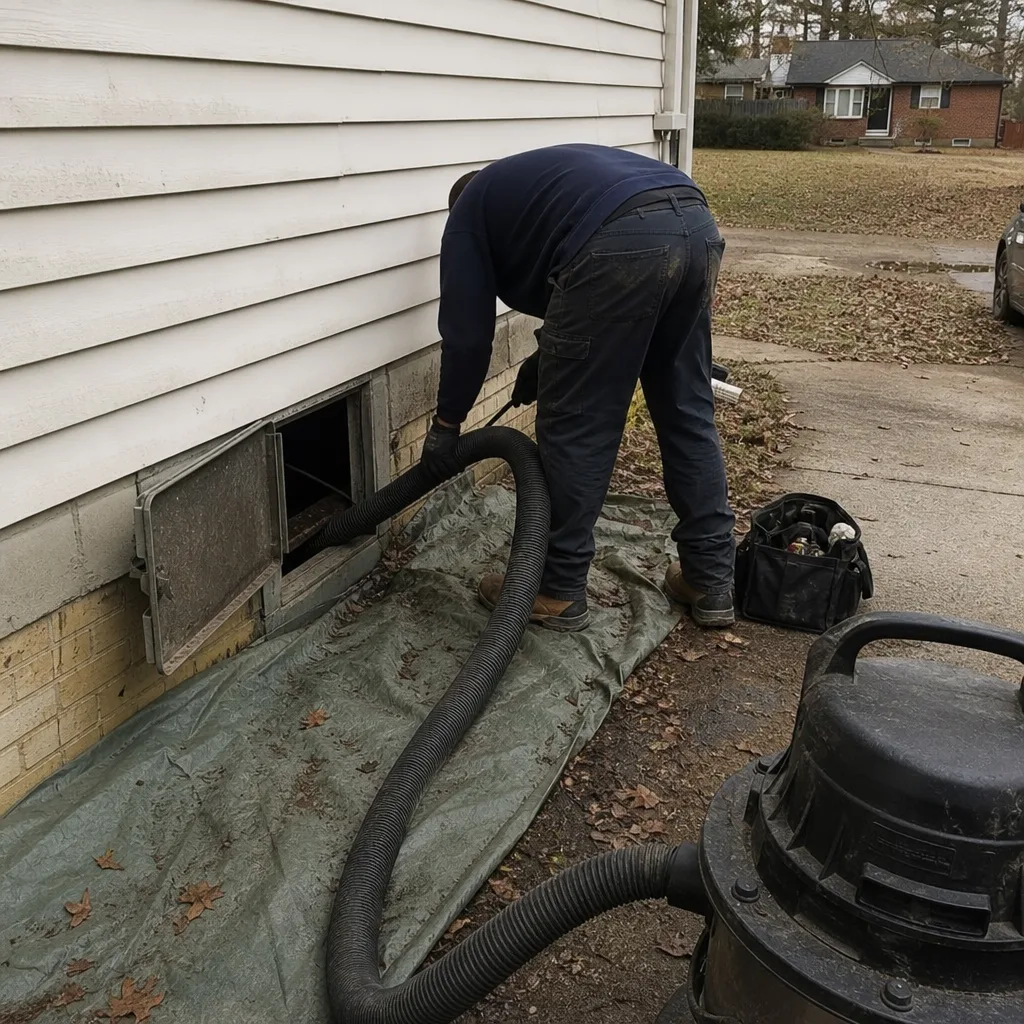 Before
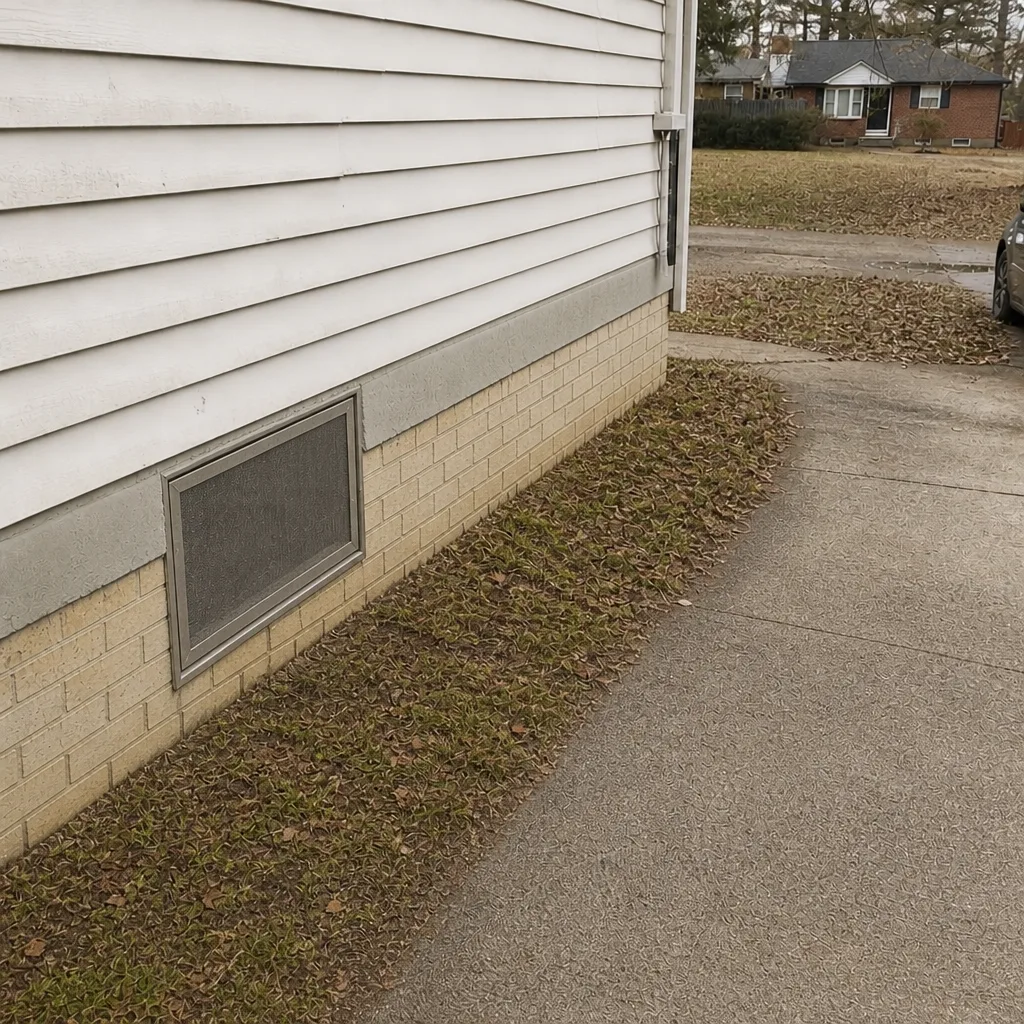 After
When to Call a Professional
Call a professional before restarting the system if any of these is true. Water reached the air handler, ductwork, or any low register. The house lost power for days and the attic or crawl space got humid. You smell something musty at a return. A duct run is torn, sagging, disconnected, or visibly wet. Or you’re not sure what happened and you’d rather know before you run the equipment. Fayetteville homeowners also call after a renovation when dust, debris, and drywall material should come out of the system rather than circulate through the house. Wexford Air Duct Cleaning offers free estimates in Fayetteville. Call (888) 670-4029. We answer 24/7. Fast dispatch from 7am to 7pm, Sunday through Friday.
Frequently Asked Questions
Often yes, and always worth an inspection. Even with the system off, floodwater reaching a register or humid air sitting in flex duct for days can leave moisture and debris inside. Whether you need full cleaning depends on what the inspection finds at the air handler, the plenum, and the branches. Call (888) 670-4029 for a free estimate and we’ll tell you what the system actually needs.
Keep it off and shut off the breaker until an inspection clears it. Don’t run the air conditioning on the assumption that cooler air will dry the house faster. If water or high humidity sat inside the system, running the blower spreads what’s in the duct through every room. Call us for an inspection before restarting – we answer 24/7 at (888) 670-4029.
Visible signs include water at the air handler, torn or sagging flex duct, wet or matted insulation, sediment inside registers, and a persistent musty smell at more than one return. If any of those are present, an inspection is warranted. In our experience across Fayetteville, the systems that need repair almost always show at least one of those signs.
Coberage varies by policy, but documentation drives the outcome either way. Photograph everything before cleanup, keep the thermostat history, and request a written inspection and post-remediation report from the professional. A written report is the record a carrier will review. Call (888) 670-4029 for a free estimate and we’ll make sure the report matches the work you need.
No, this is the mistake to avoid. Running the system before an inspection pushes moisture, debris, and any growth inside the duct into every room. It also doesn’t dry the insulation in flex duct, which is the part most vulnerable after a storm. Get it inspected first. Call (888) 670-4029 and we’ll book an assessment.
Most homes do well with a cleaning every few years, and sooner if someone in the house has allergies, there are pets, the home is older, or a renovation just finished. After a storm or flood event, add an inspection regardless of the usual schedule. Call (888) 670-4029 for a free estimate and we’ll recommend based on what your system shows.
The Bottom Line
The best damage control after a Fayetteville storm is a protocol you follow before the storm, not after. Seal the registers. Shut the HVAC breaker off. Photograph the system. When the storm passes, don’t restart the air until an inspection clears it. If water, high humidity, or a compromised duct run means the system needs work, document everything – photos before cleanup, a written report from the professional after, and an invoice that separates cleaning from repair. That’s the difference between a system that comes through a storm and one that keeps circulating the aftermath for months. If you’re not sure where your house stands, call us and we’ll take a look.
Contact Us for a Free Estimate
Storm or no storm, air quality in a Fayetteville home starts at the duct. If you’ve been through a storm, a renovation, or a long stretch of humidity and you’re not sure what your ductwork needs, we’ll come out and tell you, with photos and a written estimate. We clean with Rotobrush rotary brush systems on every job, we bring professional Nikro HEPA vacuums so what comes out of the duct stays out of the room, and we work with Honeywell and Aprilaire filtration systems when whole-home air quality needs an upgrade alongside the cleaning. We also handle dryer vent cleaning as a dedicated service, because a clogged dryer vent is one of the leading causes of residential house fires and deserves the same systematic approach as the ductwork. Estimates are free. Call (888) 670-4029. We answer 24/7. Fast dispatch from 7am to 7pm, Sunday through Friday. You can also learn more about Wexford Air Duct Cleaning and how we approach every job.
Written by the team at Wexford Air Duct Cleaning.