
Last updated November 16, 2026
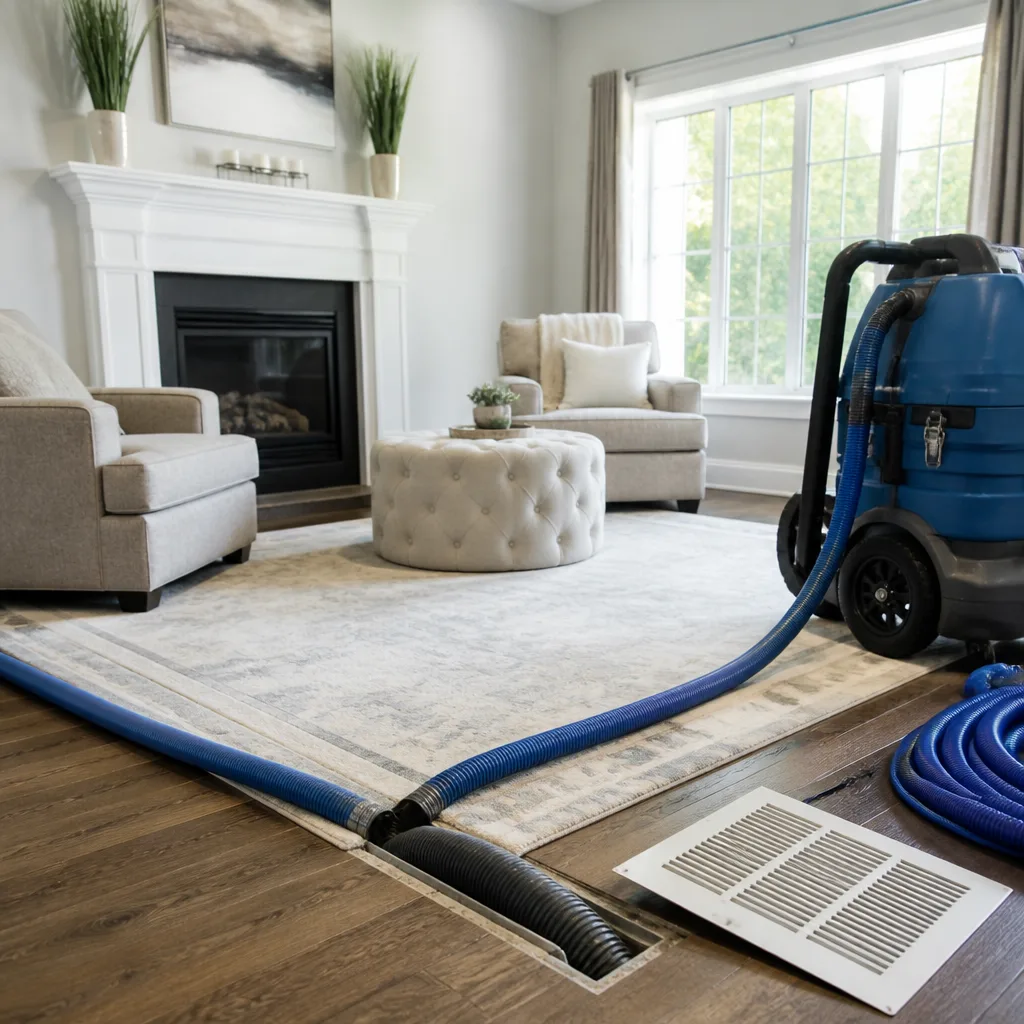 Whole-home duct cleaning
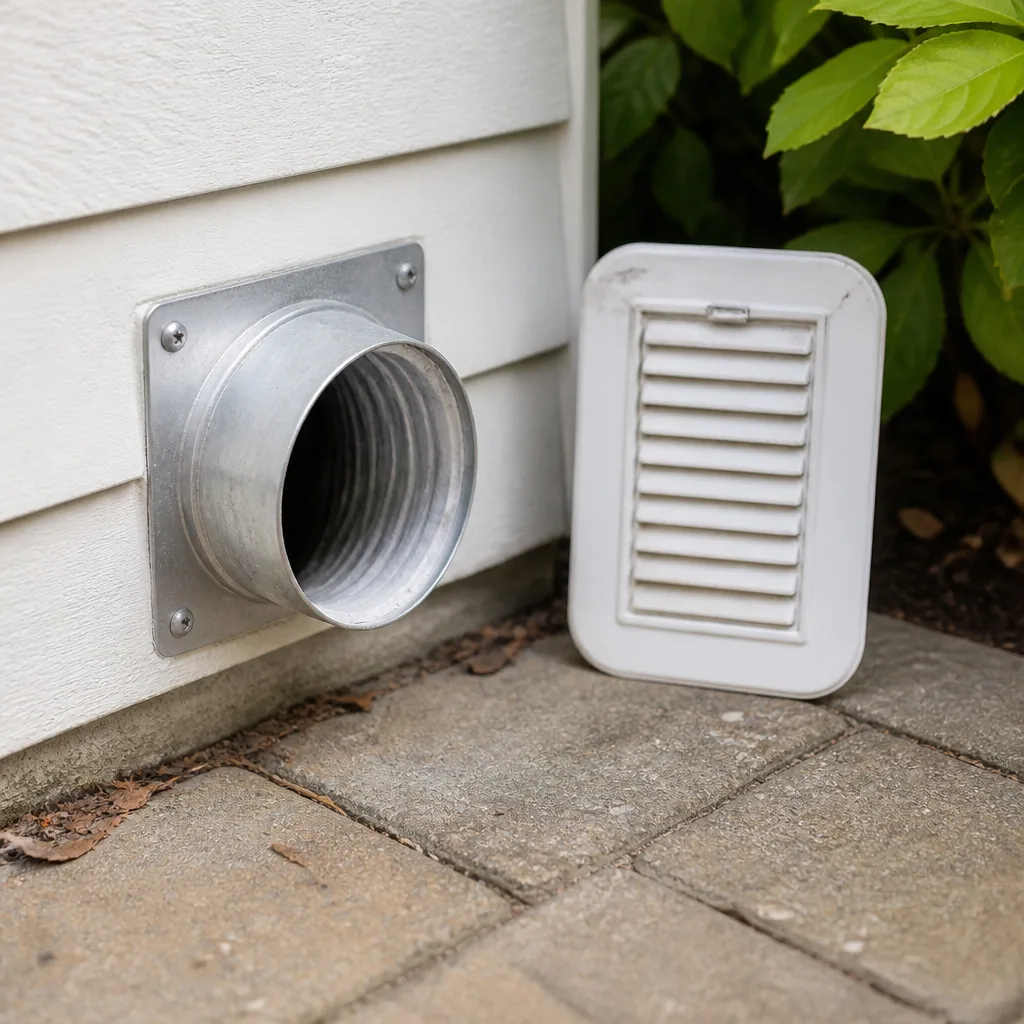 Dryer vent cleaning
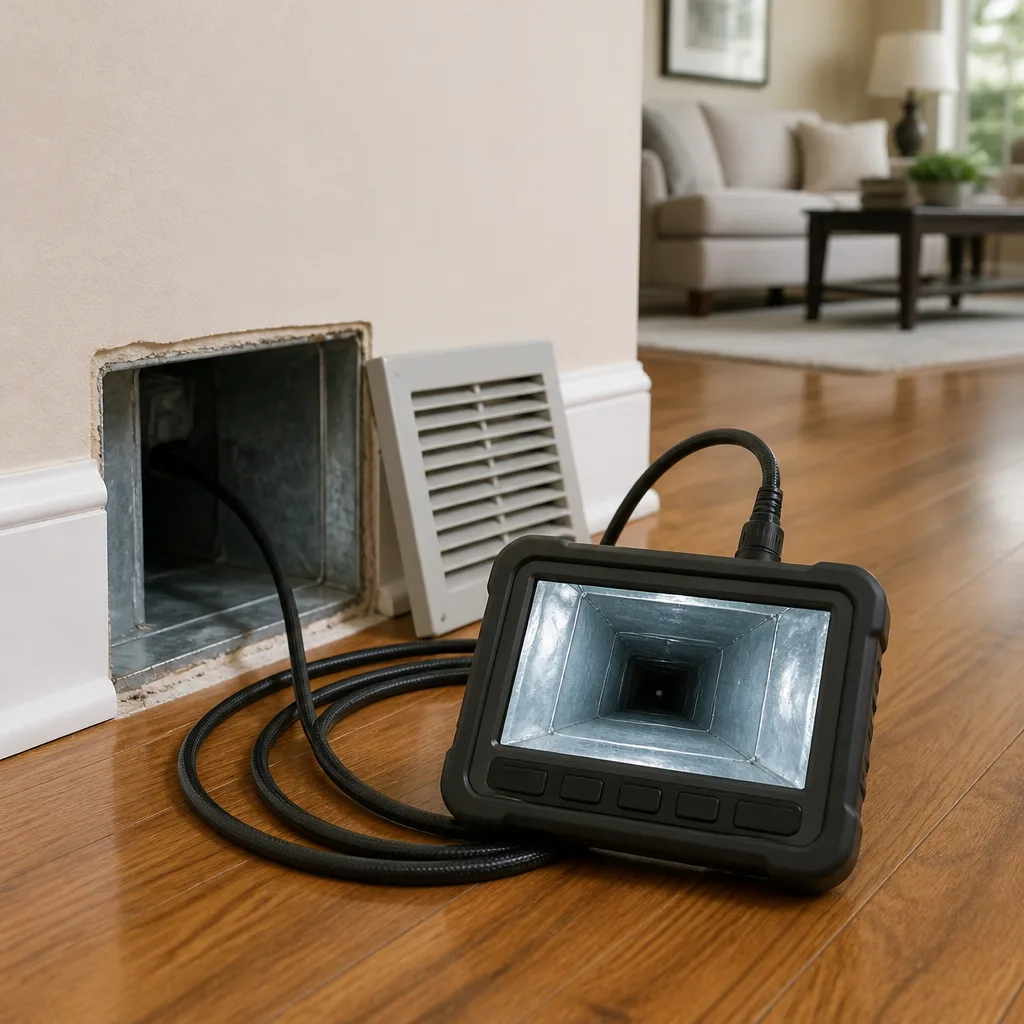 Camera inspection
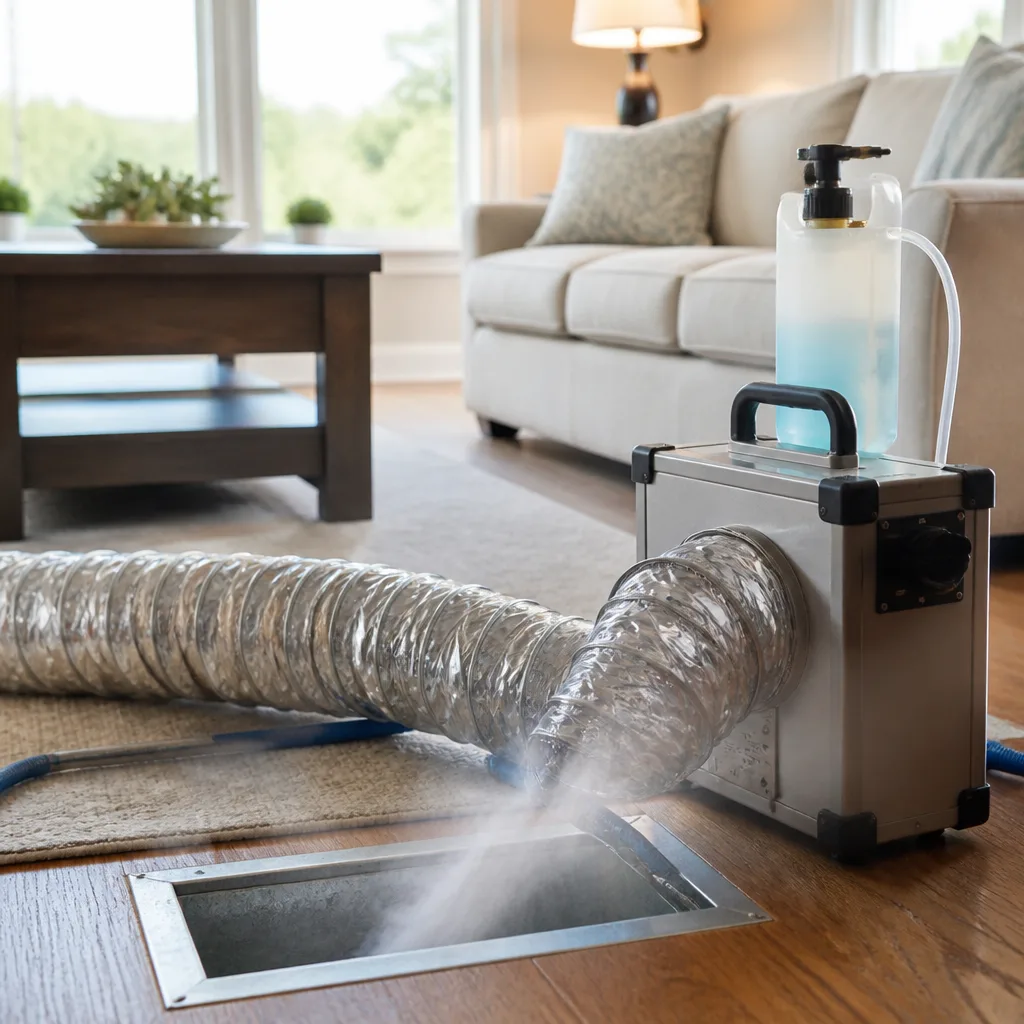 Sanitizing & deodorizing
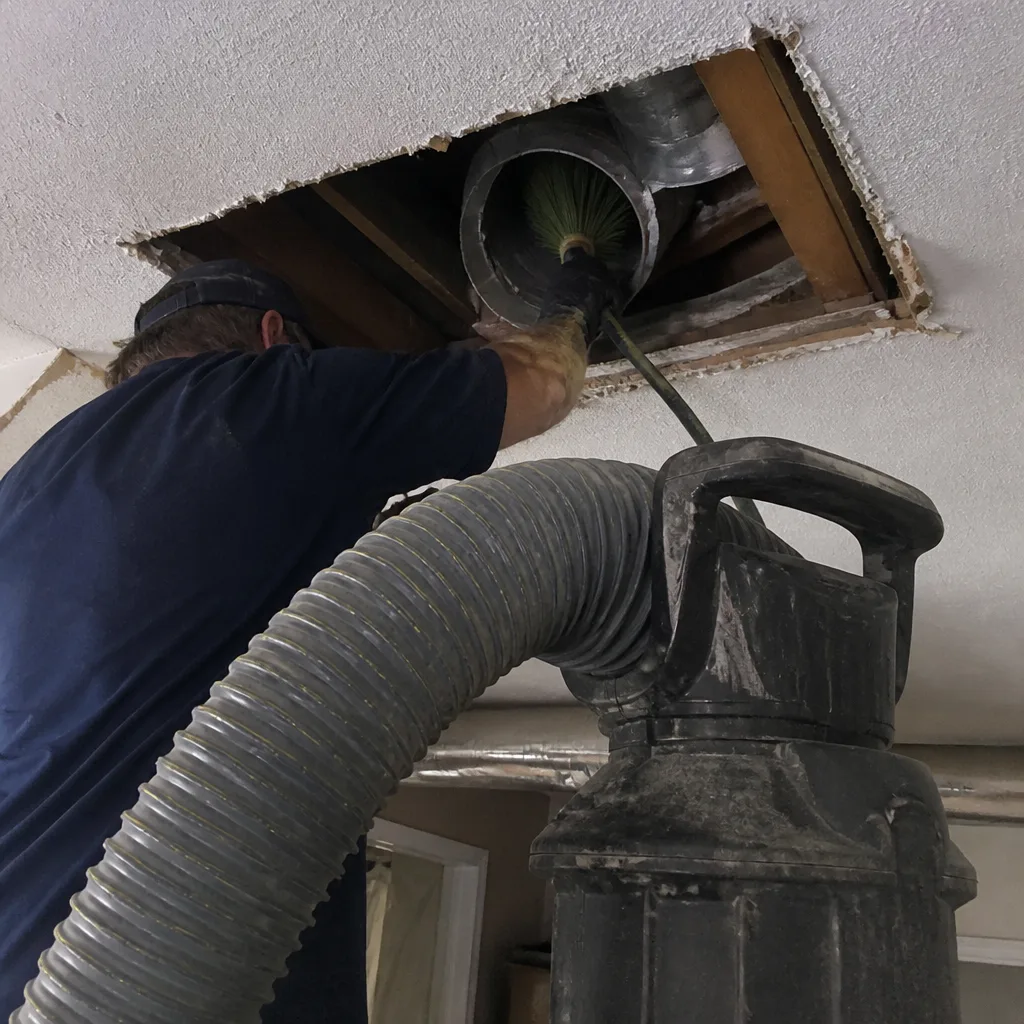
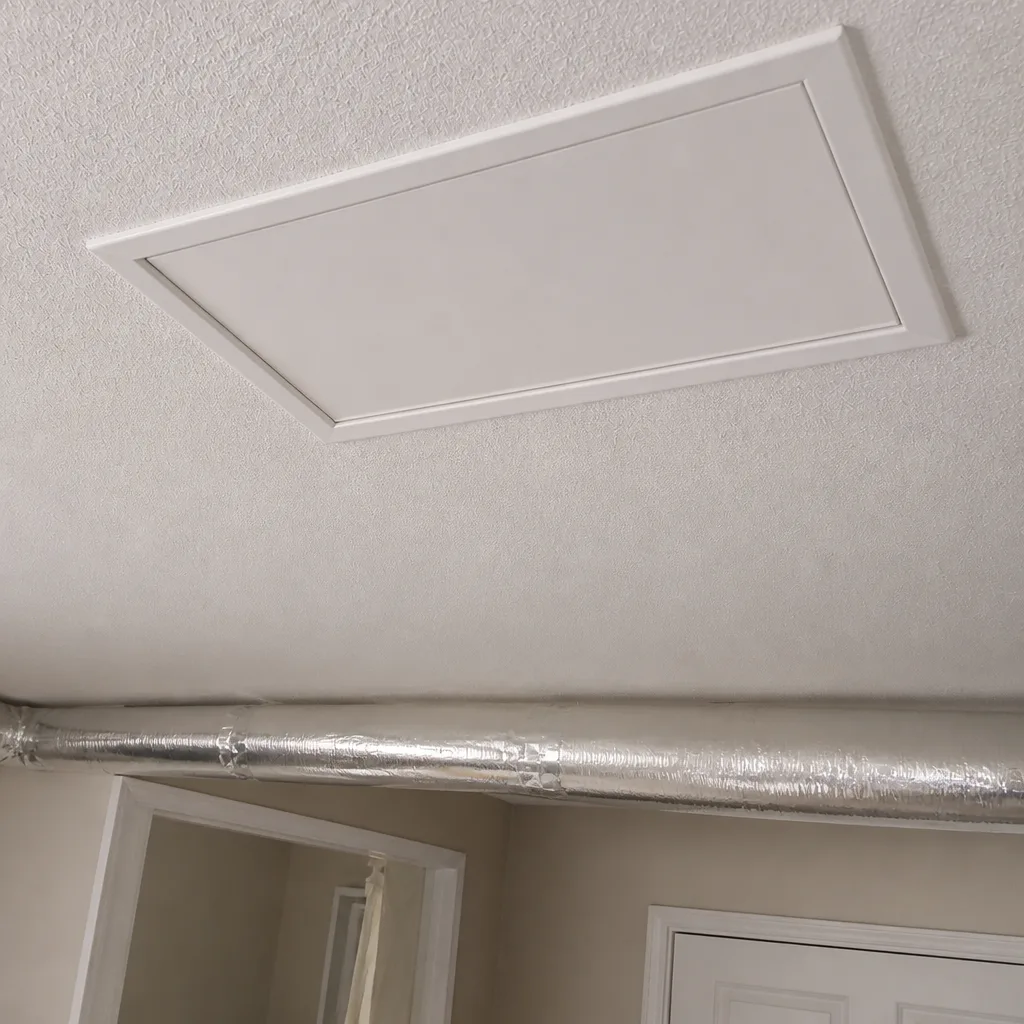
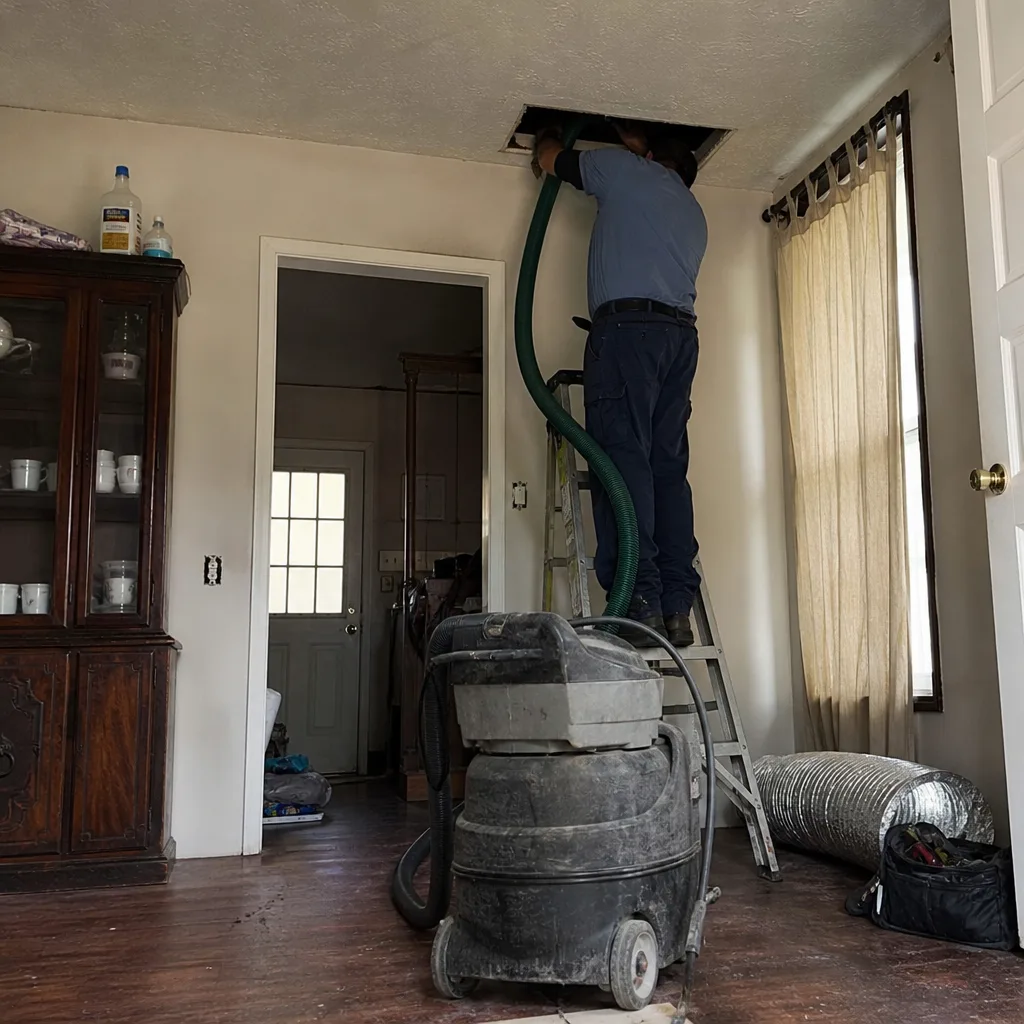
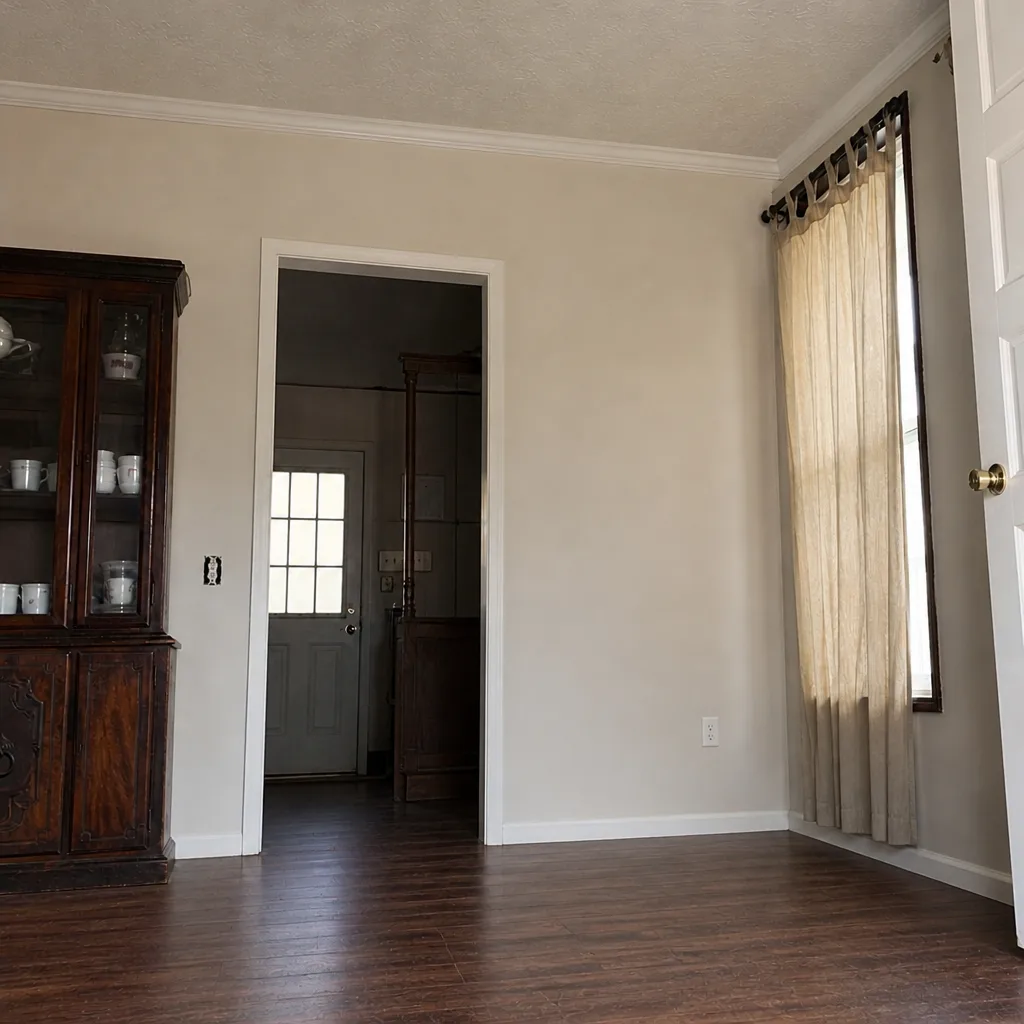
Whole-system duct and dryer vent check with before-and-after photos - you see exactly what came out of your vents
That "$99 whole-house special" is a bait ad - the real number appears once they are in your hallway, or the "clean" is a shop-vac at the register. We photograph the inside of your ducts before and after instead.
Air Duct Cleaning Troubleshooting in Fayetteville: Common Problems and How to Fix Them
If your house is dustier two weeks after a duct cleaning than it was before, the technician almost certainly dislodged debris without adequate negative pressure containment. That’s a process problem, not a “your ducts were just really dirty” explanation. Most post-cleaning complaints we hear about in Fayetteville fall into a handful of predictable categories: containment failures, missed moisture, and ductwork that got disturbed during access. Each one has a signature you can identify. This guide walks through the symptoms, what they actually mean, and what to ask for when you call a company back out to Fayetteville.
Quick Answer
The most common air duct cleaning problems in Fayetteville are dust returning within days, musty odors, reduced airflow, and debris blowing out of supply registers. Nearly all of them trace back to one of three root causes: insufficient vacuum pressure during cleaning, moisture in the duct system that was never addressed, or ductwork that was crushed, disconnected, or left with a damper closed after the technician finished. Each problem is diagnosable and most are correctable.
Styles & brands we work with
- Whole-home duct cleaning
- Dryer vent cleaning
- Camera inspection
- Sanitizing & deodorizing
Table of Contents
- Why Is Dust Coming Back Days After a Cleaning?
- What Causes a Musty Smell After Duct Cleaning?
- Why Is My Airflow Weaker After the Cleaning?
- How Does Fayetteville’s Humidity Affect Duct Systems?
- What Does Proper Containment Actually Look Like?
- Homeowner Checklist: Re-Service vs. Dispute
- When Does Ductwork Need Repair, Not Just Cleaning?
- Dryer Vent Problems That Get Mistaken for Duct Issues
Why Is Dust Coming Back Days After a Cleaning?
Dust returning quickly almost always means either the cleaning dislodged debris that wasn’t captured, or it disturbed a breach in the duct system that lets attic or crawlspace air into the supply side. The first is a containment failure. The second is a mechanical failure. You can usually tell the difference by where the dust is showing up and whether it started immediately or over the course of a week or two.
Containment failure looks like this: fine dust settling on horizontal surfaces within 24 to 72 hours across the whole house, especially near supply registers. The technician ran a rotary brush or air whip through the ducts without a HEPA vacuum pulling negative pressure on the system at the same time. Debris got knocked loose, went airborne inside the ductwork, and found its way out through every supply boot. A shop vacuum or a portable unit without HEPA filtration can’t hold enough negative pressure on a whole-house system to prevent this.
Mechanical failure looks different. Dust appears concentrated near one or two rooms, or you notice it on the return grille but not the supplies. That points to a disconnected flex run, a boot pulled away from the subfloor during access, or a return chase that was opened and not sealed back correctly. Fayetteville has a lot of older homes with flex duct in the attic and pier-and-beam construction on the older neighborhoods. Both make it easy to knock a connection loose during access without realizing it.
Our technicians have up to 12 years of experience, and this is one of the first things we check: was the system under negative pressure the whole time, and was every access point sealed when the job finished. If you’re not sure how to evaluate the original job, calling Wexford Air Duct Cleaning for a second look is a reasonable next step. We give free estimates and we’ll tell you what we find.
What Causes a Musty Smell After Duct Cleaning?
A musty smell after duct cleaning usually means there’s moisture somewhere in the duct system that the cleaning process didn’t dry out or never addressed. The cleaning itself rarely causes odors. What it does is stir up air in places that were previously stagnant, which can expose an existing moisture problem that was already there.
In Fayetteville, the humidity from May through September is the single biggest factor pushing moisture into duct systems. The two spots we look at first:
- The return plenum. If the return duct runs through an unconditioned attic or crawlspace, humid air condenses on the cooler metal or flex liner and stays wet. Over a summer, that’s enough to grow biological growth on the interior surface. Cleaning the ducts without addressing the moisture source just stirs it up.
- Uninsulated metal supply runs. A metal trunk or run through a hot attic sweats in summer the same way a cold drink does. The condensation drips into the duct liner and into the insulation around it. That’s a duct insulation problem, not a cleaning problem.
If the smell is present at the supply registers immediately after the cleaning and fades over a few days, it’s likely aerosolized dust and it’ll clear. If it lingers, gets stronger when the system runs, or comes back seasonally, that’s moisture. The fix is finding and correcting the source (insulation, a disconnected run, a condensate drain that’s draining into the duct chase), not cleaning again.
The same goes for mold-adjacent situations. Abatement Technologies equipment in a cleaning setup is a signal the company is set up for containment-level work, which matters if you have a known moisture issue in the system. Not every crew brings that level of gear, and you should ask before you book the job.
Why Is My Airflow Weaker After the Cleaning?
Reduced airflow after duct cleaning almost always traces to one of three physical changes made during the job: a flex duct crushed or kinked during access, a damper left closed that was open before, or a supply boot reconnected incorrectly. None of these are “the air just feels different now.” They’re mechanical and they’re identifiable.
Here’s how to narrow it down:
- Check every register by hand. Hold a piece of tissue or your palm against each supply. If one or two rooms are noticeably weaker and the rest feel the same, the problem is local to those runs. If the whole house is weaker, the problem is at the air handler or main trunk.
- Look at every accessible damper. Dampers in branch runs are meant to be left where they were before the job. Technicians sometimes close them for cleaning or forget to reset them. In an attic or basement, look for the little handle on each run.
- Check for crushed flex. Flex duct that runs through a tight attic space, past a truss, or under a walkway can be stepped on or crushed during service. Any visible kink, sag, or sharp bend in a flex run is a restriction. That run needs to be re-supported or replaced.
- Check the supply boots. Where a boot meets the subfloor, a bad reconnect leaves a gap that dumps air into the crawlspace instead of into the room. Look for daylight, or feel for air leaking at the base of the register box.
If you’re in a home with pier-and-beam construction, which covers a lot of older Fayetteville neighborhoods, the crawlspace side of the supply boots is where a sloppy reconnect shows up. A company that offers air duct repair alongside cleaning is set up to find and fix this. A company that only cleans will tell you the airflow problem is your HVAC unit.
How Does Fayetteville’s Humidity Affect Duct Systems?
Fayetteville’s summer humidity puts specific pressure on duct systems that homeowners in drier climates don’t deal with. Two problems show up here that barely register in dry parts of the country: condensation on uninsulated metal runs, and biological growth at return plenums that draw humid attic air.
The mechanics are simple. Cold surfaces in warm, humid air sweat. In an attic that reaches 130 degrees with 70 percent relative humidity, an uninsulated metal trunk line at 55 degrees from the AC is going to collect water on its exterior. That water runs down the insulation jacket, soaks the interior liner, and eventually drips into the duct through seams. Once the interior of the duct stays damp, biological growth starts. You smell it before you see it.
The return side is worse, and it’s the one most guides skip. A return chase that picks up air from a humid attic or from a crawlspace that isn’t sealed is pulling moisture into the system on every cycle. That moisture condenses on the evaporator coil, drips into the drain pan, and if the pan doesn’t drain cleanly, backs up into the return plenum. The plenum stays wet, and that’s where the musty smell comes from. Every summer.
What to check before your next cleaning:
- Is the insulation on every attic run intact all the way to the boot, with no crushed or missing sections?
- Does the condensate drain from the air handler run to the outside and actually flow?
- Is the return chase sealed at the attic or crawlspace boundary, or is it open to unconditioned air?
- Are there stains, water lines, or soft spots on the duct board or liner?
If any of those check as a no, address the moisture before the cleaning. Otherwise you’re paying to clean around a problem that will be back by August.
What Does Proper Containment Actually Look Like?
Proper containment during duct cleaning means the entire duct system is held under continuous negative pressure by a HEPA-filtered vacuum while mechanical agitation dislodges debris. The debris goes into the vacuum, not into your living room. There are three things to look for when a company arrives:
- The vacuum is HEPA-rated and sized for a whole house. Nikro HEPA units and similar professional gear hold a seal on the system and trap fine particulate. A shop vac held to a register is not the same thing. Consumer vacuums recirculate fine dust back into the air, which is exactly the problem the cleaning was supposed to solve.
- Every register is sealed or covered. Open registers during cleaning let debris escape into rooms. On a proper job, supplies and returns are covered or individually connected while the main vacuum runs.
- Mechanical agitation is rotary, not just compressed air. Rotobrush rotary-brush systems work the interior surface of the duct where dust actually sticks. Air alone loosens surface dust but doesn’t scrub the lining.
Ask the company what vacuum they use, how they seal the system during the job, and whether you’ll get before-and-after photos of your own ducts. Those three questions separate a containment-grade job from a compressed-air-and-hope job. If the answer is vague, keep calling.
For a closer look at how the process should go on a full-system basis, see our page on air duct cleaning. That page walks through the sequence, the equipment, and what a written scope should include.
Homeowner Checklist: Re-Service vs. Dispute
Before you call the company back to complain, run this checklist. It’ll tell you whether you’re looking at a re-service call or a different problem entirely, and it’ll give you specifics to discuss when you call instead of just “something’s not right.”
- Note when the problem started. Dust within 48 hours means containment. Dust over a week or two means a mechanical issue. Odor that only shows up when the system runs means moisture.
- Test every register, not just the ones you use. A weak room on one side of the house is a local duct issue, not a cleaning failure.
- Look at the return grille before and after. Take photos now, compare against any photos the company left. If they didn’t leave photos, ask for them.
- Look in the attic or crawlspace yourself if it’s safe. You’re not diagnosing, you’re looking for a disconnected flex run, a crushed section, or an open return chase. If you see one, take a photo.
- Check the thermostat filter. A filter that was not replaced after cleaning can be clogged with dislodged dust. That’s a two-minute fix.
- Compare against the written scope. If you paid for main trunk and branch cleaning and one section wasn’t done, you have a legitimate dispute. If the scope didn’t include the return system, that’s a conversation, not a failure.
If you’ve done all six and there’s still a real problem, you’re in dispute territory. Call the company with the specifics. Most reputable outfits will re-inspect and correct a containment problem. If they won’t, that tells you what you need to know about working with them again.
If you’re starting fresh with a new company, ask two things before booking: what vacuum and containment equipment they bring, and whether they offer repair alongside cleaning. Ours is one of the few operations in the area with Abatement Technologies containment gear and a full repair capability on the same truck. That means if we open a duct and find a crushed run, we fix it while we’re there.
When Does Ductwork Need Repair, Not Just Cleaning?
Ductwork needs repair, not cleaning, when the problem is structural: leaks at seams and boots, disconnected runs, crushed flex, deteriorated duct board, or sagging runs that no longer carry full airflow. Cleaning a compromised duct system is wasted money because the system can’t hold pressure. The vacuum can’t seal, the airflow loses volume to leaks, and the dust you removed gets replaced by attic or crawlspace particulate pulled in through the gaps.
Signs your ducts need repair before or instead of a cleaning:
- Rooms that never get enough conditioned air, especially the furthest rooms from the air handler
- Visible dust on the inside of the return grille within days of cleaning
- Whistling or rushing sounds at seams, boots, or the air handler cabinet
- Cold spots on the ceiling or floor above a duct run in winter, meaning heat is leaking into the attic or crawl
- Visible damage: crushed flex, sagging runs, sections of duct board with soft or stained areas
In our experience, Fayetteville homes in the older neighborhoods and anywhere with attic flex duct that’s been through multiple HVAC replacements tend to have at least one disconnected or crushed run. The fix is a repair visit, then a cleaning once the system is sealed. Doing it the other way around wastes both trips.
If you’ve got a known dryer vent issue alongside duct problems, our dryer vent cleaning service follows the same systematic approach. That’s a real fire risk and worth handling at the same time.
Dryer Vent Problems That Get Mistaken for Duct Issues
A slow-drying dryer, a warm laundry room, or a smell at the back of the laundry closet often gets blamed on the HVAC ducts. Most of the time, it’s a clogged dryer vent, and it should be treated as its own problem. Dryer vents clog with lint the same way supply ducts collect dust, but the consequences are different. It’s a fire risk, not an air quality problem.
Signs you’re looking at a dryer vent issue rather than a duct issue:
- Clothes take more than one cycle to dry, year over year
- The exterior dryer vent flap doesn’t lift freely when the dryer runs
- The laundry closet gets hot and humid while the dryer is running
- A burning smell from the dryer during the cycle
- It’s been more than a year since the vent was cleaned
Dryer vent cleaning is not the same job as duct cleaning, and it shouldn’t be bolted on as an upsell. The vent path is often long, buried in a wall, and full of turns. It needs a rotary brush sized for the run and a vacuum that captures the lint as it’s loosened, not just an air blast from the outside.
If you’re in a Fayetteville home and you’re not sure whether the issue is in the HVAC ducts or the dryer vent, the fastest way to know is to have both checked. Call (888) 670-4029. We answer 24/7. Fast dispatch from 7am to 7pm, Sunday through Friday.
Common Mistakes to Avoid
- Running a shop vac on the registers yourself. A consumer vac doesn’t seal or hold negative pressure on the system, so it recirculates fine dust back into the room. It can also pull connections loose without you noticing.
- Booking a cleaning before addressing moisture. In Fayetteville’s summer humidity, cleaning a damp system just re-aerosolizes the biological growth. Find and fix the moisture source first, or the smell comes right back.
- Accepting a per-vent price as a whole-system price. The price should be one flat number for the whole system, agreed before the work starts. Per-register pricing is where bait-and-switch calls start.
- Skipping the return side. A lot of “duct cleaning” jobs hit the supplies only. The return is where the dust and moisture live, so a scope that doesn’t include it isn’t a full job.
- Choosing a company that only cleans. If a run gets crushed or a boot pulls loose during the job, a cleaning-only crew has to come back or leave it. A company that also does repair can fix it on the spot.
- Not asking for before-and-after photos. Photos of your own ducts are the only reliable way to verify the work was done. Any company that won’t provide them is telling you something.
- Airing out a “musty smell” instead of investigating it. A seasonal musty smell is moisture. Waiting for it to clear on its own just moves the same problem to next summer.
See the difference
 Before
 After
 Before
 After
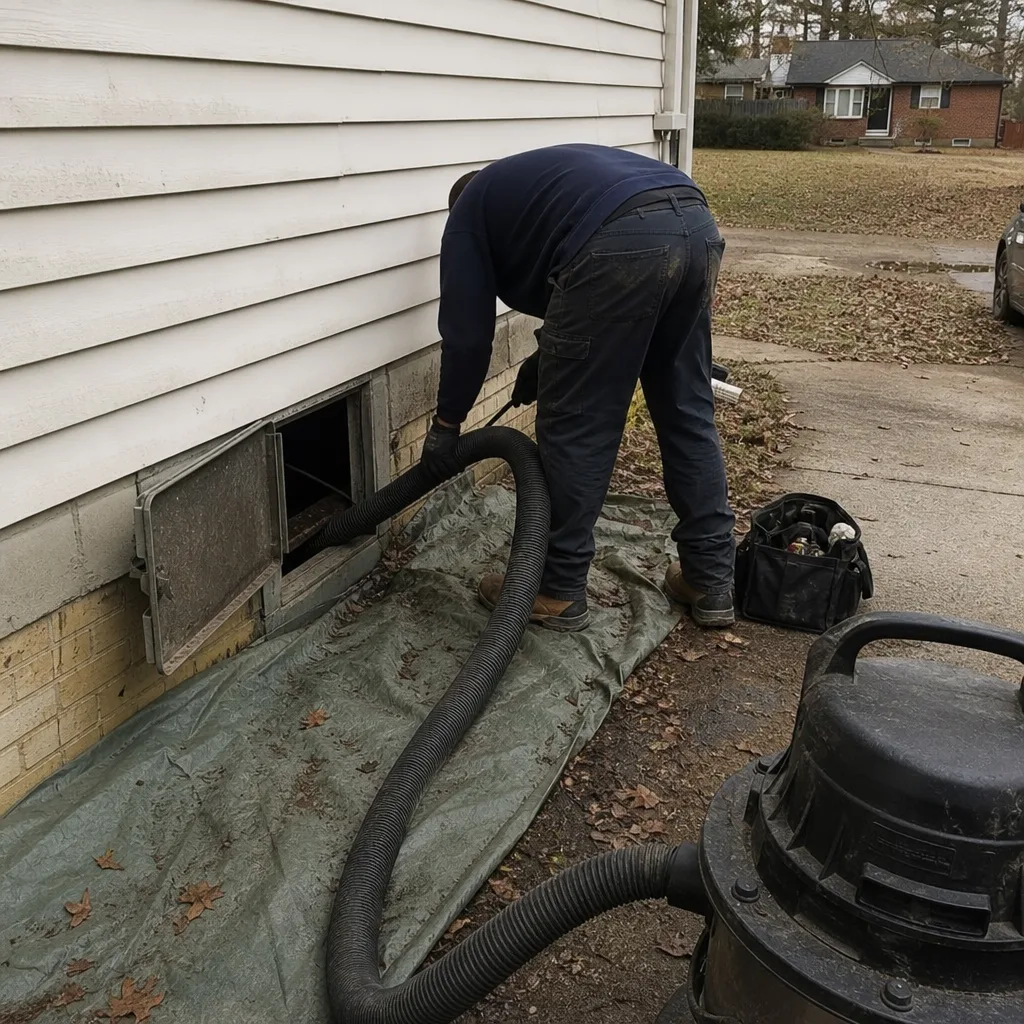 Before
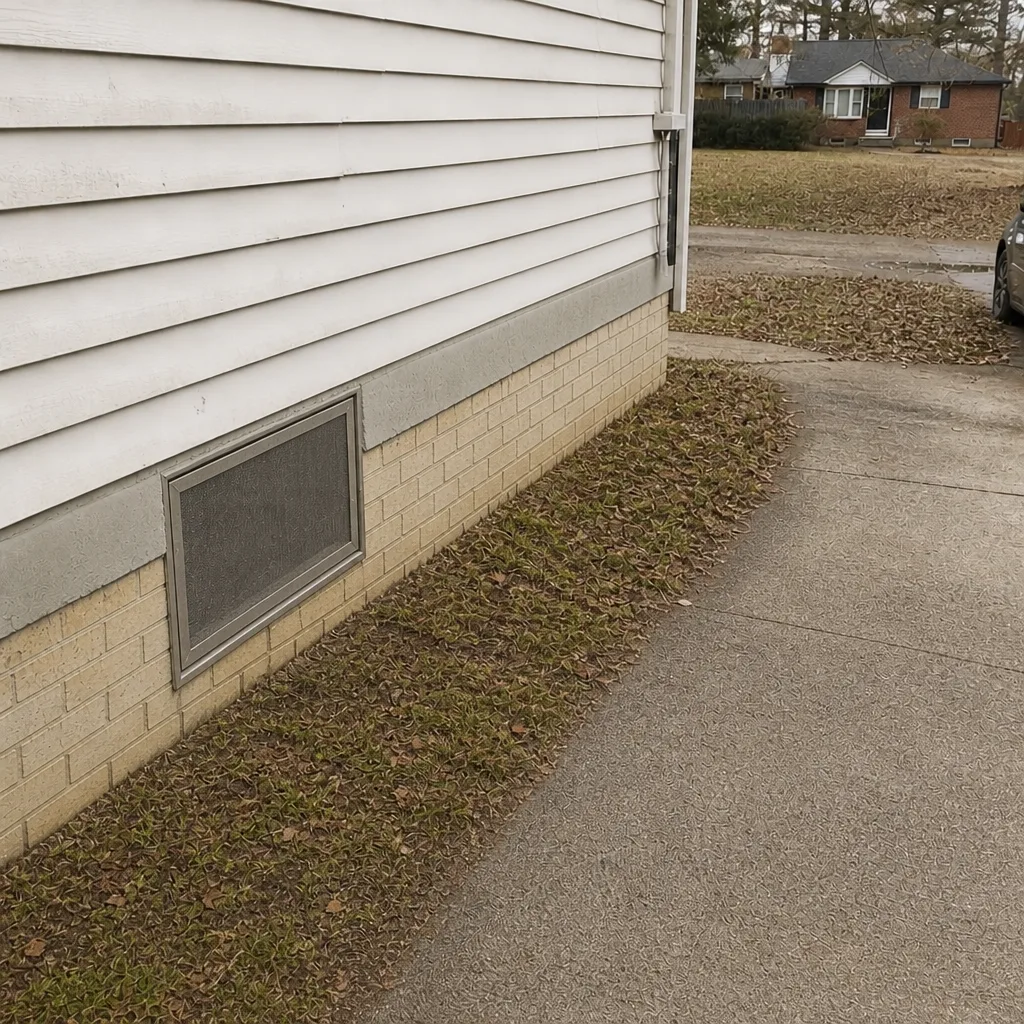 After
When to Call a Professional
Call a professional duct company when the problem is structural, not surface. That means: dust returning to the same rooms within a week of cleaning, airflow that’s clearly weaker in two or more rooms, a musty smell that comes back each summer, visible cracks or disconnects in the attic or crawlspace ductwork, or a dryer that’s drying slowly and you’re not sure why. Those are the cases where a diagnostic visit beats another cleaning. Small things like a clogged filter or a closed damper you can check yourself, and running through the checklist in this guide will tell you whether that’s what you’re looking at. For the Fayetteville area, Wexford Air Duct Cleaning offers free estimates. Call (888) 670-4029. We answer 24/7. Fast dispatch from 7am to 7pm, Sunday through Friday.
Frequently Asked Questions
Before-and-after photos of your own ducts are the reliable answer, and a reputable company will offer them without being asked. Look for photos at each register, at the trunk lines, and at the air handler cabinet. If the company won’t provide photos, or shows you stock photos of the equipment instead of your system, ask for your own before you pay.
Musty smell after duct cleaning almost always means moisture in the system was stirred up but not addressed. In Fayetteville’s humid climate, that usually points to condensation on uninsulated attic runs, a return plenum staying wet, or a condensate drain issue at the air handler. The fix is finding and correcting the moisture source, not re-cleaning the ducts. Call (888) 670-4029 if you want a diagnostic visit.
For most Fayetteville homes, a cleaning every three to five years is reasonable, with adjustments for pets, recent renovation, smoke, or a known mold or moisture problem. Homes with pets that shed heavily or with a history of renovation dust benefit from more frequent service. A specific interval should come from an inspection, not a marketing schedule.
Cheap quotes usually reflect missing equipment, missing scope, or both. A crew with a shop vac and no containment setup can quote a fraction of the price of a crew with HEPA vacuum gear, rotary agitation, and a full-system scope including the return. The lower price often means the return side isn’t touched, or the containment step is skipped. Call for a real estimate rather than comparing coupon signs. (888) 670-4029.
Duct cleaning alone usually doesn’t fix weak airflow. If a far bedroom is under-supplied, the cause is almost always a crushed flex run, a disconnected boot, a closed damper, or a long trunk with too much pressure drop. That’s a repair problem, not a cleaning problem. Have the system inspected first, and repair the ductwork before cleaning it.
We clean and service both. Dryer vent cleaning is a standalone service, not a bolt-on upsell, because the vent runs long, buried, and often clogged in ways the HVAC ducts aren’t. The fire risk makes it worth treating as its own job. Call (888) 670-4029 to schedule both at once, or just the vent. You can also see more about how we work around Fayetteville on our city page.
The Bottom Line
Most of what homeowners in Fayetteville describe as “a bad duct cleaning” is diagnosable. Dust returning within days is a containment failure. Lingering smell is moisture. Weak airflow is a mechanical problem in the ductwork, not the cleaning. All three are fixable, and all three should be addressed before you spend money on another cleaning. Our approach starts with using the same tools restoration contractors rely on: Rotobrush rotary brushes, Nikro HEPA vacuum systems, and Abatement Technologies containment. We clean, we repair, and we tell you what we found. For a free estimate, call (888) 670-4029. We answer 24/7. Fast dispatch from 7am to 7pm, Sunday through Friday. You can start at Wexford Air Duct Cleaning to see the full service lineup.
Written by the team at Wexford Air Duct Cleaning.